Mobile tours: 1 day to discover Paris, by bus and on foot
Published on
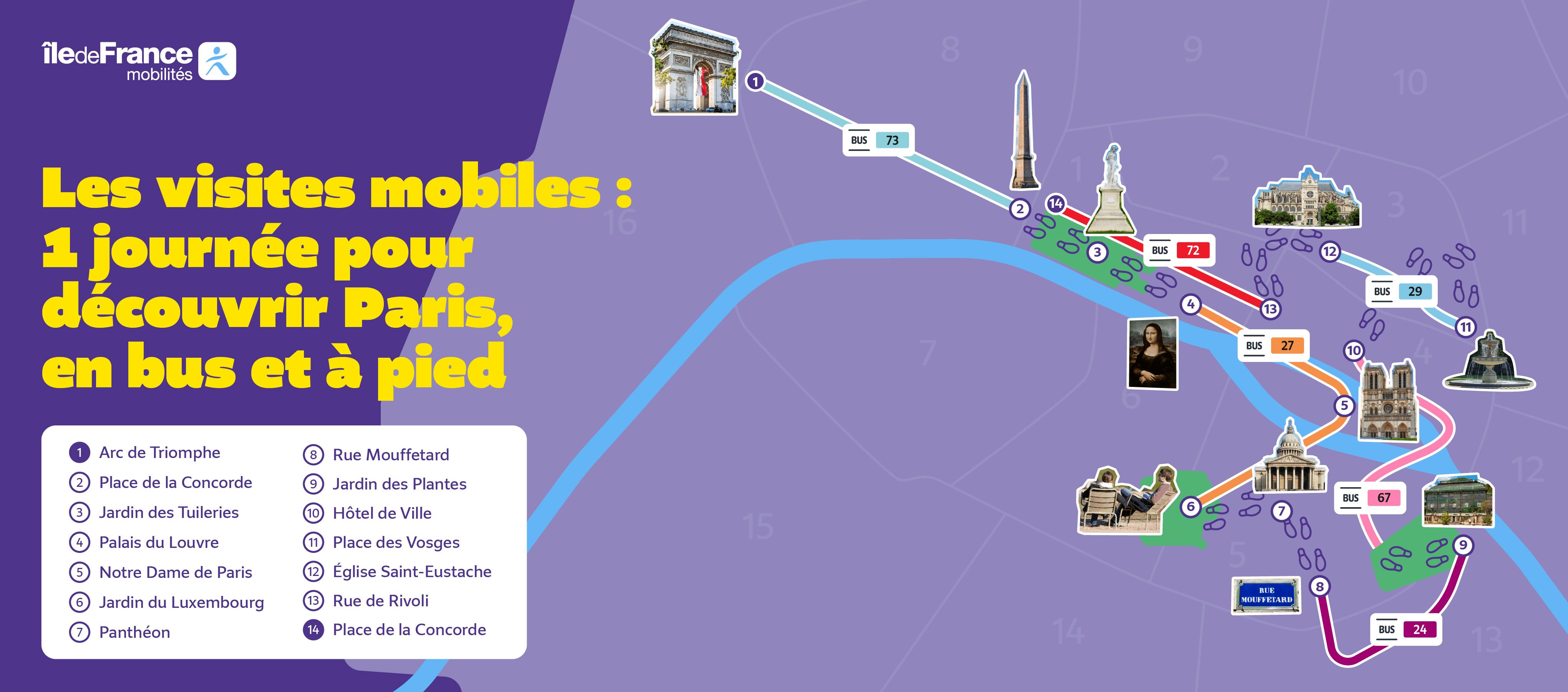
Six bus lines, one day, no itinerary to prepare. This 100% bus route takes you from the Arc de Triomphe to the Marché des Enfants Rouges, via the Seine, the Latin Quarter and the Marais with a return for the sunset at Place de la Concorde. A whole day of walking to discover the essentials of Paris, sitting by the window, interspersed with walking breaks.
There are several ways to see Paris. Map in hand, feet on the cobblestones, checking the map on your phone on every street corner. Or like this: sitting by the window on a bus, with the Navigo 1‑Day Pass or Paris Visite already validated, watching the city go by without having to decide anything for a few minutes.
Parisian buses are one of the capital's worst-kept secrets. They give access to a Paris that the metro does not know, that of facades, bridges, platforms, squares that open up suddenly behind a bend.
This full-day tour crosses Paris from west to east and north to south, aboard six bus lines - and a few crossings on foot.
You can sit and watch. You can also go down, explore, go back up. And if you've had enough, you can jump on a subway, go back to rest and come back afterwards. The choice is yours.

The Champs-Élysées, aboard bus 73
Bus 73. Get on at the "Charles-de-Gaulle – Étoile – Champs-Élysées" stop, until the "Concorde" stop - about 12 minutes
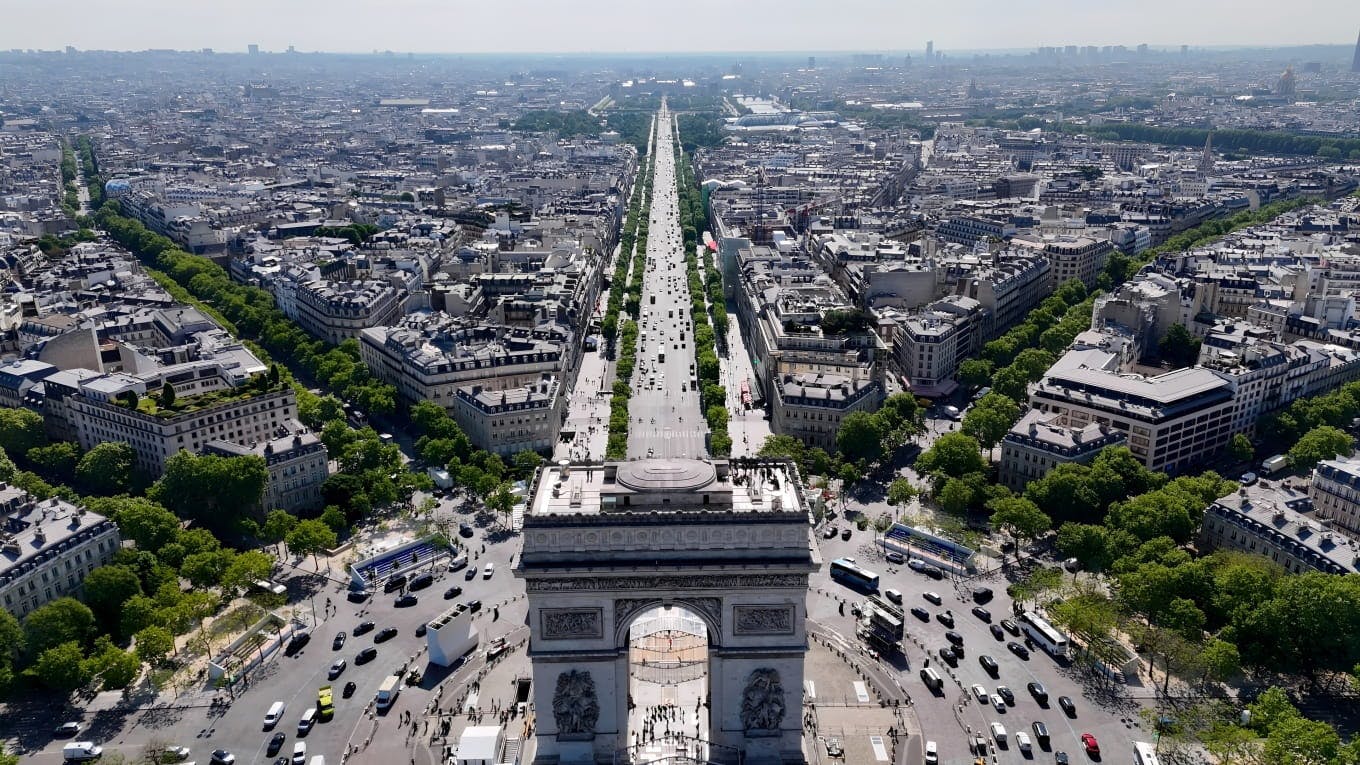
Stand at the foot of the Arc de Triomphe, at the top of the Champs-Élysées. Contemplate the perspective that runs from the Grande Arche de La Défense, in the west, to the Obelisk of the Place de la Concorde, in the east.
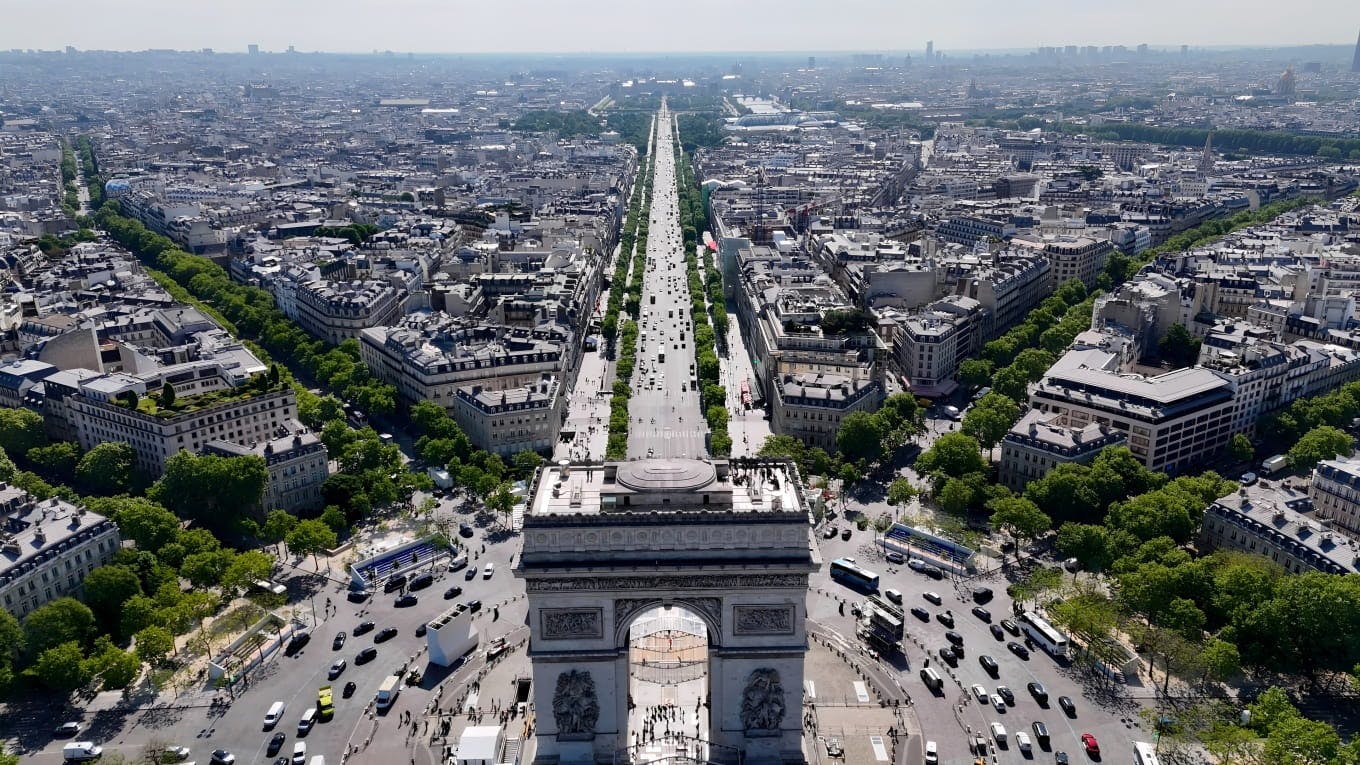
Then jump on the 73 bus, it goes down the entire length of the avenue: five stops, ten minutes, a panorama that nothing can replace. The Haussmannian and Art Nouveau facades pass by, the Grand Palais appears on the right, on the Seine side between the trees, and the obelisk marks the end of the perspective from the Place de la Concorde. It's an avenue that we think we know, and that we see differently from the height of a bus.
Get off at the "Concorde" stop.
Walking in the Tuileries Gardens
From the "Concorde – Cours la Reine" stop to the "Pont des Arts" stop via the Jardin des Tuileries - about 25 minutes walk
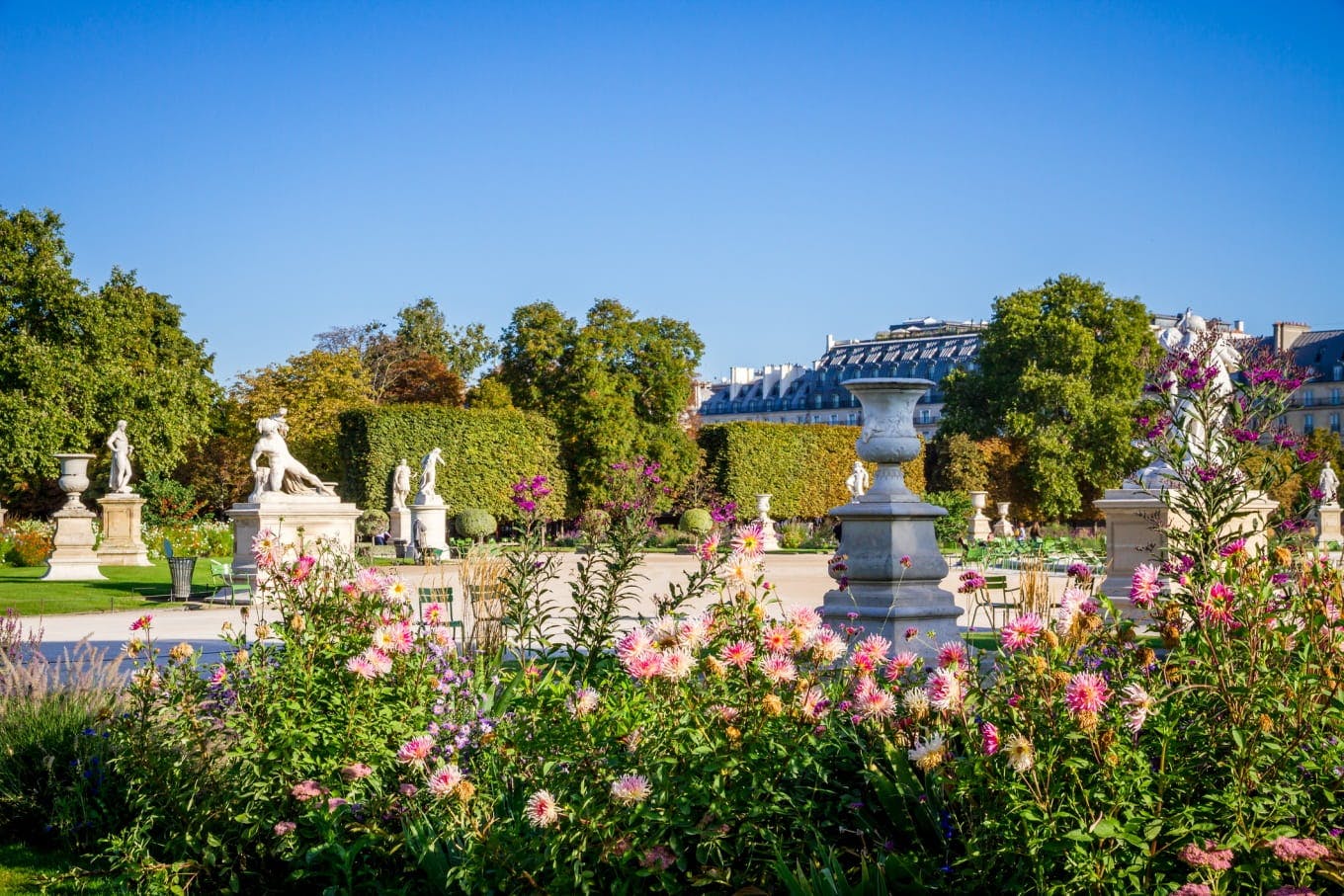
From the Place de la Concorde, the Tuileries Garden opens up in front of you. This square is one of the few places in Paris where you can simultaneously admire the Louvre in front of you, the National Assembly on the right, the Hôtel de Crillon and the Hôtel de la Marine on the left, the Eiffel Tower and the Champs-Élysées behind, and the Obelisk that overlooks everything.
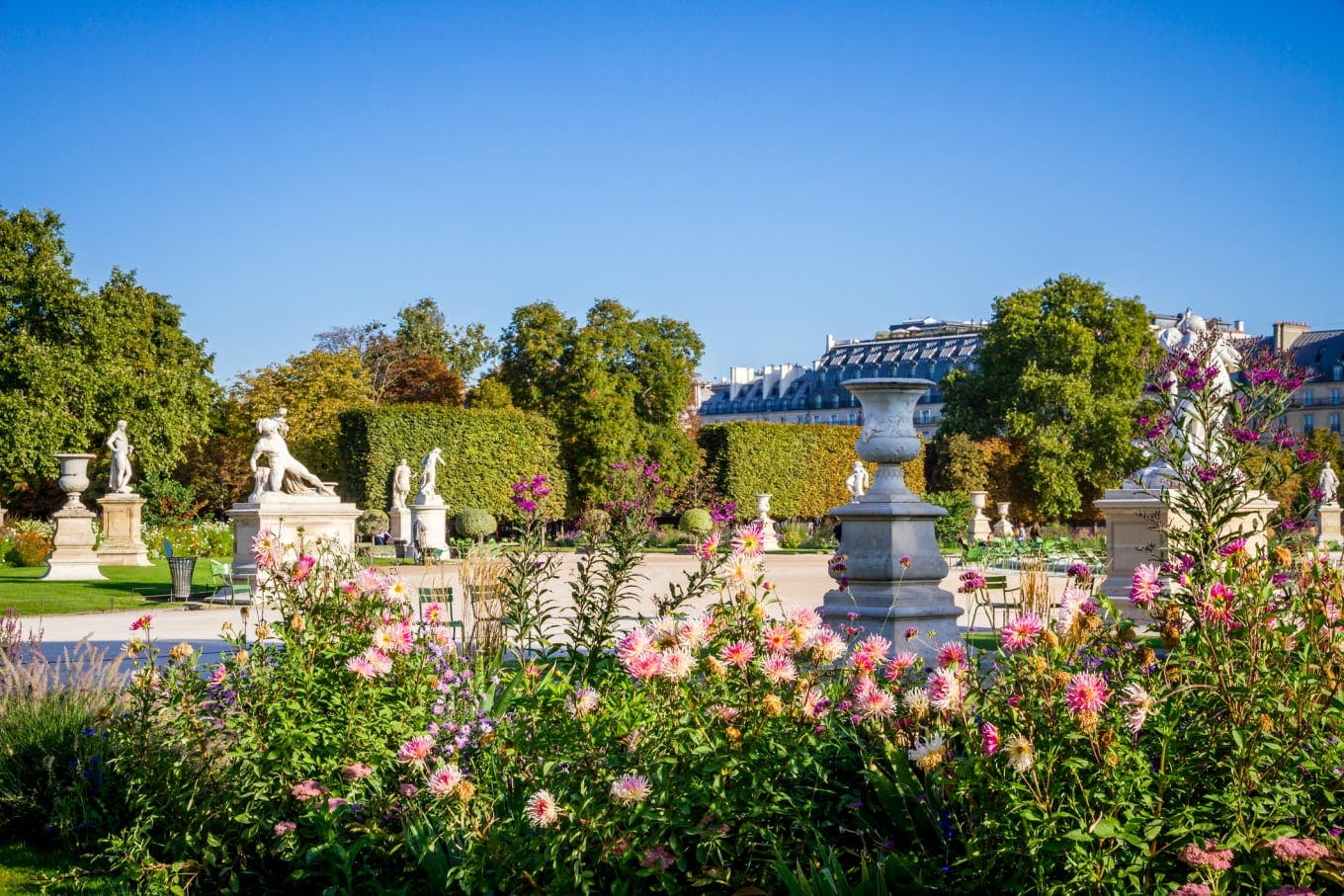
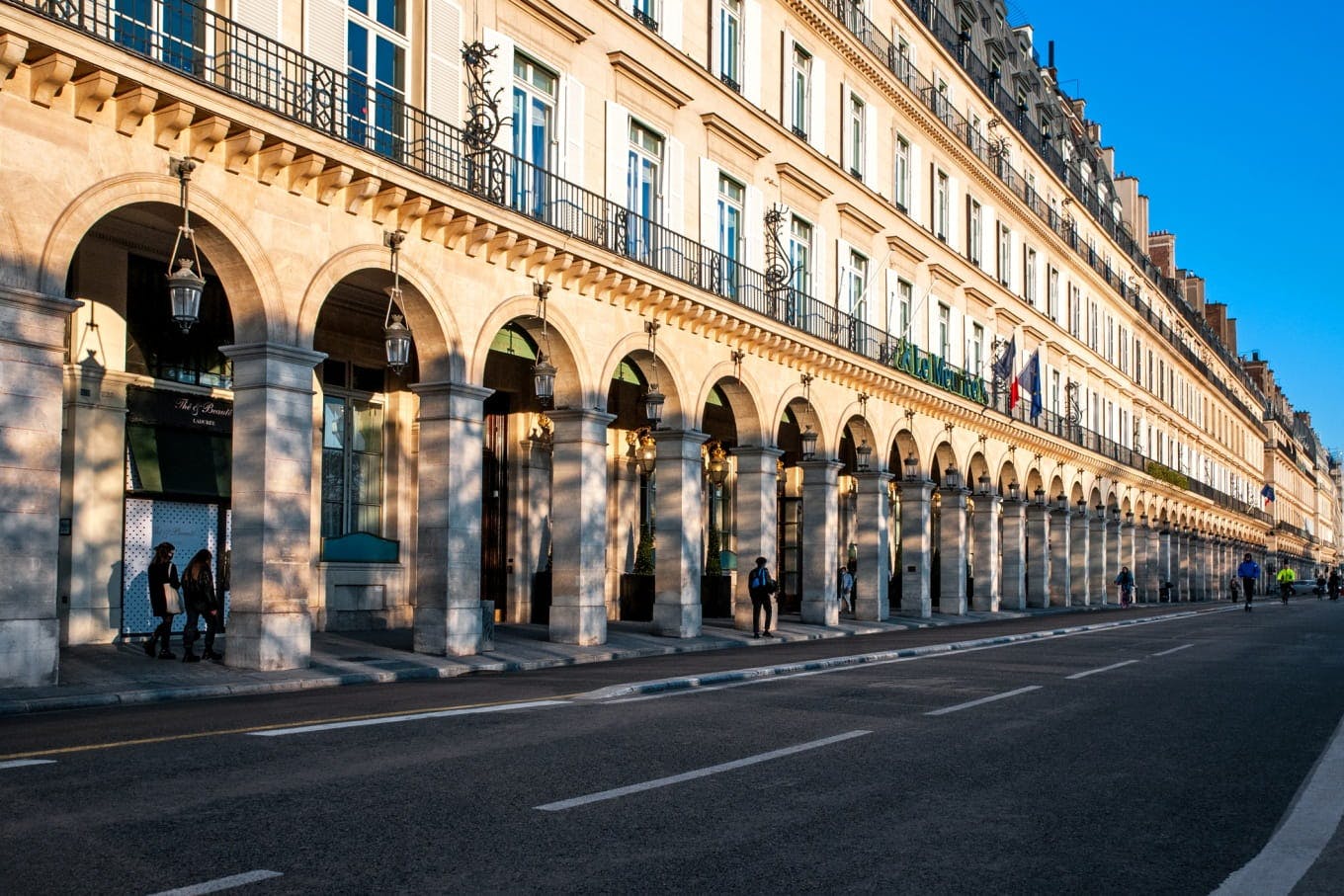
Cross the Tuileries, this beautiful elegant garden, and along the way take a look at the arches of the rue de Rivoli that runs along it. If you're in the mood for a refreshing break, enjoy one of the cafes that dot the Tuileries. Resume your walk to the Louvre Pyramid, in front of you. Cross the Cour Napoléon, then continue to the right, towards the banks of the Seine. In front of you, the Pont des Arts and, on the other side of the Seine, the sumptuous dome of the Institut de France.
Stay on this side of the Seine and reach the "Pont des Arts" stop
Notre Dame and the Latin Quarter, aboard bus 27
Bus 27 direction Porte d'Ivry, get on at the "Pont des Arts" stop and get off at the "Luxembourg" stop - about 15 minutes
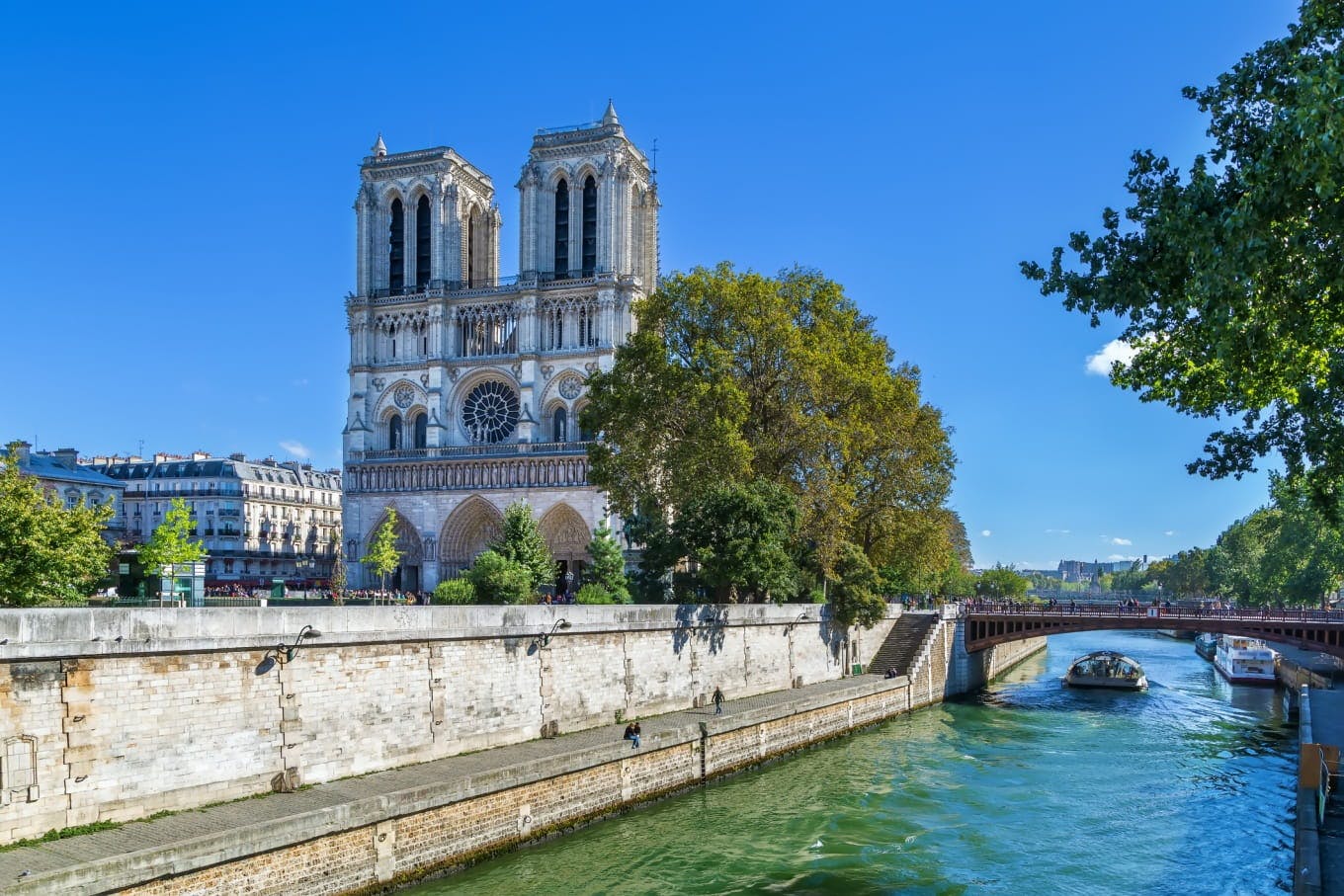
Bus 27 connects the Gare Saint-Lazare to the Porte d'Ivry through the Latin Quarter, the historic heart of Paris. In this direction, it runs along the Seine on the right bank, crosses to the Île de la Cité, and goes up the left bank by the Boulevard Saint-Michel. At the "Pont Saint-Michel – Quai des Orfèvres" stop, on the Île de la Cité, Notre-Dame Cathedral is two hundred meters in front of you, its rebuilt spire pointing back to the Paris skyline.
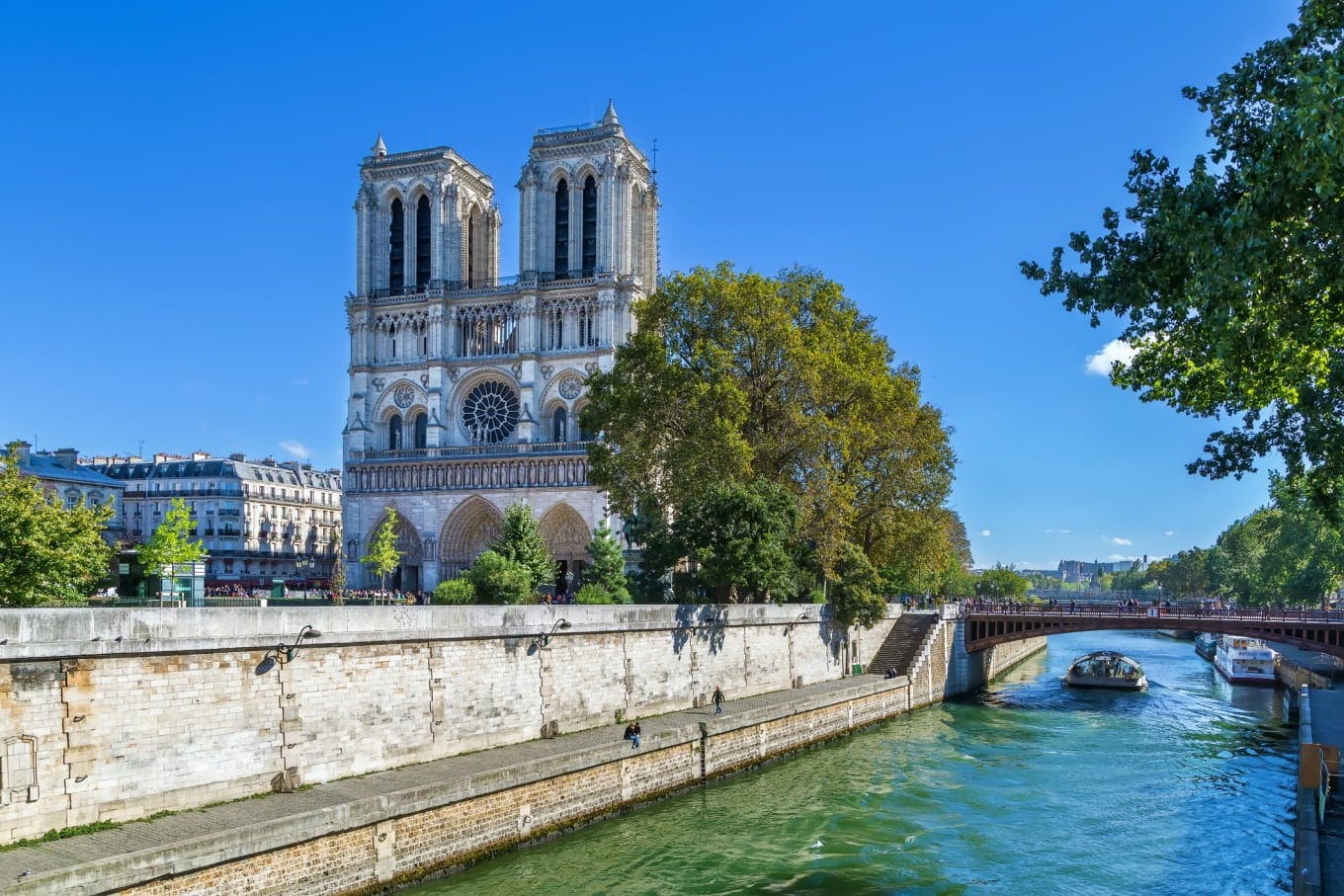
The bus then crosses the Seine to arrive on the left bank and goes up the Boulevard Saint-Michel. The facades of the Sorbonne University appear on the left at the "Les Écoles" stop.
Get off at the next stop, "Luxembourg".
The wonders of the Jardin du Luxembourg - on foot
You enter the Jardin du Luxembourg through the "Gay-Lussac" gate. This sumptuous garden is the former private park of the Luxembourg Palace. Built in the seventeenth century for Queen Marie de Medici, it now houses the Senate. The Medici Fountain is a ten-minute walk away at an angle that hurried visitors don't always find.
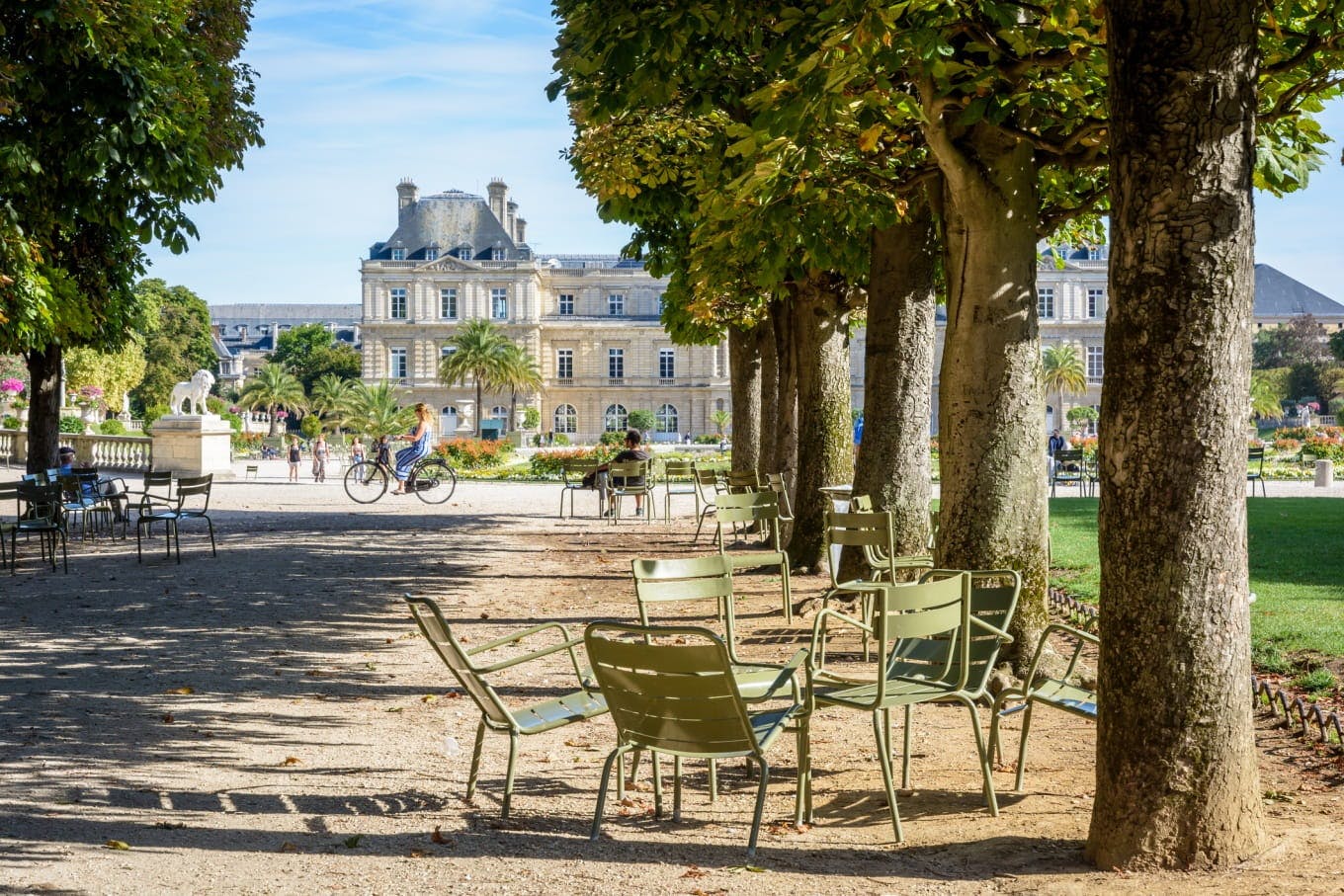
Take a tour of the garden, admire the Paris Observatory to the south, and look fondly at the children who are pushing small sailboats on the large basin. And if you feel like a break, grab two chairs - one reclined for your body, the other straight for your feet, rest assured everyone is doing that - and enjoy a well-deserved break.
Leave Luxembourg through the entrance by which you arrived, take the rue Soufflot, and look up: the Pantheon overlooks you.
The Pantheon and Rue Mouffetard - on foot
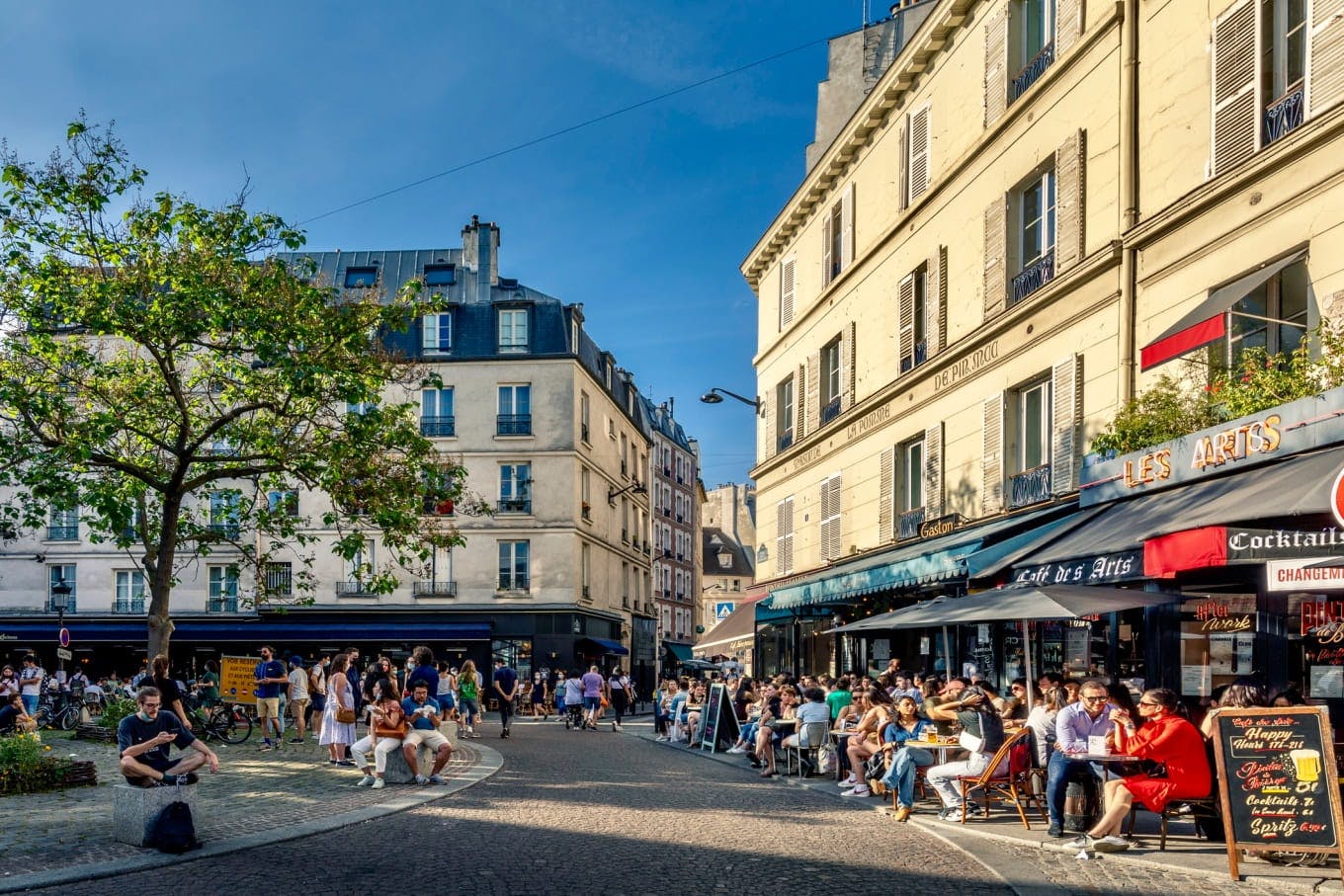
Pass the Pantheon on the right and walk to the Place de la Contrescarpe, right next door. Picturesque, touristy, full of small bars, no longer quite authentic, it is still a must-see. Walk down the charming Rue Mouffetard. You are bound to find something to put together a nice lunch break.
Would you like to take a break at home, at your hotel?
With your transport ticket - Navigo Jour or Paris Visite - all journeys are included unlimited on all modes of transport! So, jump on a subway, regain your strength and find the ride a little later.
If you continue the walk, go straight on to Place Claude Sautet and jump on bus 24 at the "Monge - Claude Bernard" stop, direction "Châtelet".
From the Latin Quarter to the Jardin des Plantes, aboard bus 24
Bus 24 towards Maisons-Alfort Veterinary School
From the Monge - Claude Bernard stop, bus 24 takes the boulevards Saint-Marcel and de l'Hôpital to the Seine and the Jardin des Plantes. On the way, it runs alongside the impressive hospital of La Pitié-Salpétrière and the Gare d'Austerlitz.
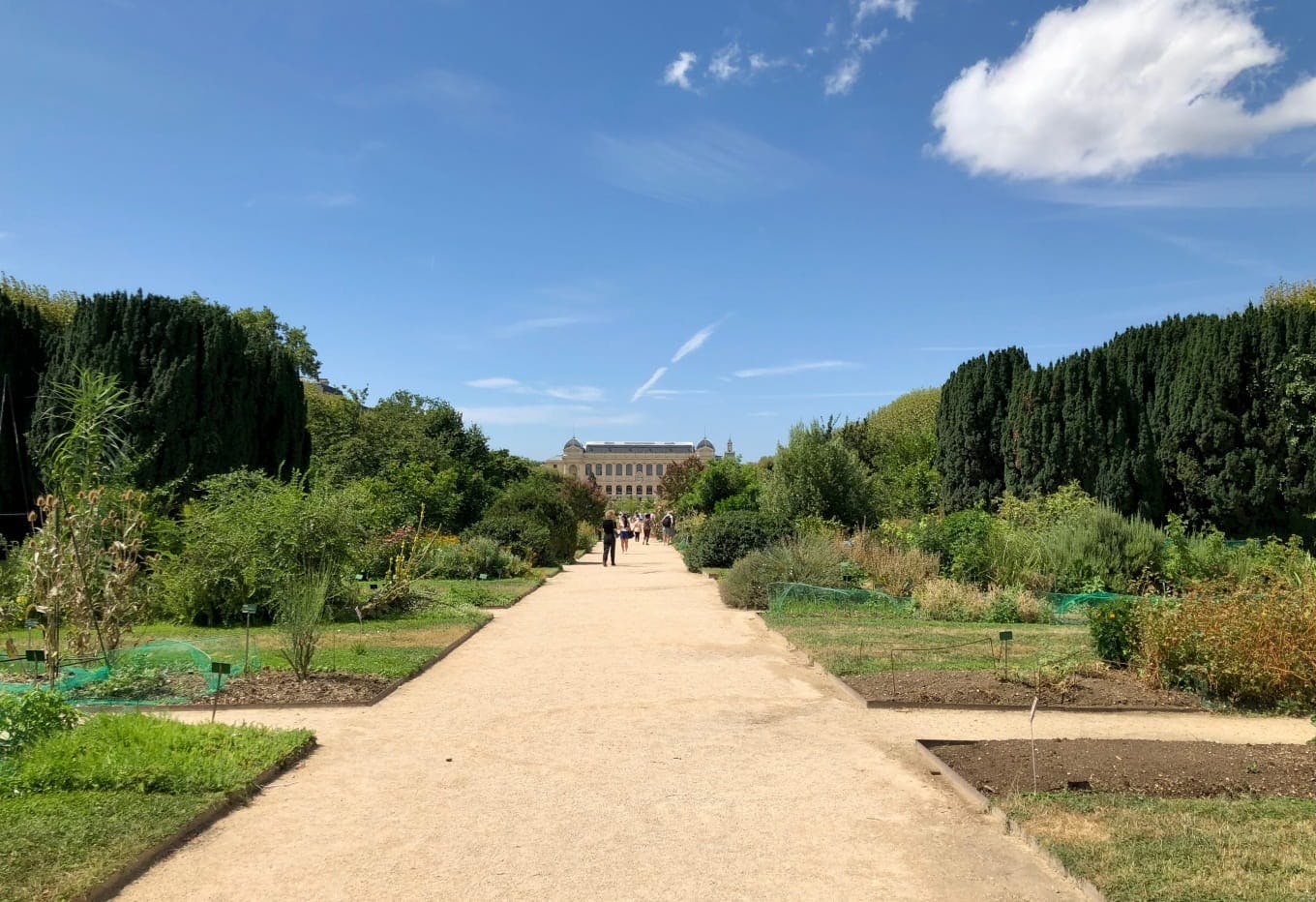
And that's where you get off, at the Gare d'Austerlitz stop. But not to take a train, rather to take in the splendid Jardin des Plantes. This very old botanical garden, which houses the National Museum of Natural History, is worth a long detour between its alleys, its secret corners and its small labyrinth. And for a studious and astounding break, visit the famous Great Gallery of Evolution!
From the Jardin des Plantes to the Hôtel de Ville, by bus 67
Exit the Jardin des Plantes through the Porte Monge, right next to the labyrinth, and go to the bus stop "Cuvier - Jardin des Plantes", to take the 67.
Along the way, you will come across the spectacular Institut du Monde Arabe, cross the Ile Saint-Louis (a beautiful place for a break!) and cross the towers of Notre Dame Cathedral as you walk up the banks of the Seine, right bank, to the "Hôtel de Ville" stop.
Entrance to the Marais from the Hôtel de Ville, on foot
From the bus stop "Hôtel de Ville" to Rue de Bretagne - about 15 minutes walk
From the Place de l'Hôtel de Ville (the town hall of Paris), go up to the north by the rue du Temple or the rue des Archives. The Marais began to be felt immediately, the streets narrowed, and private mansions appeared between the shops. Continue straight on until you reach Rue de Bretagne.
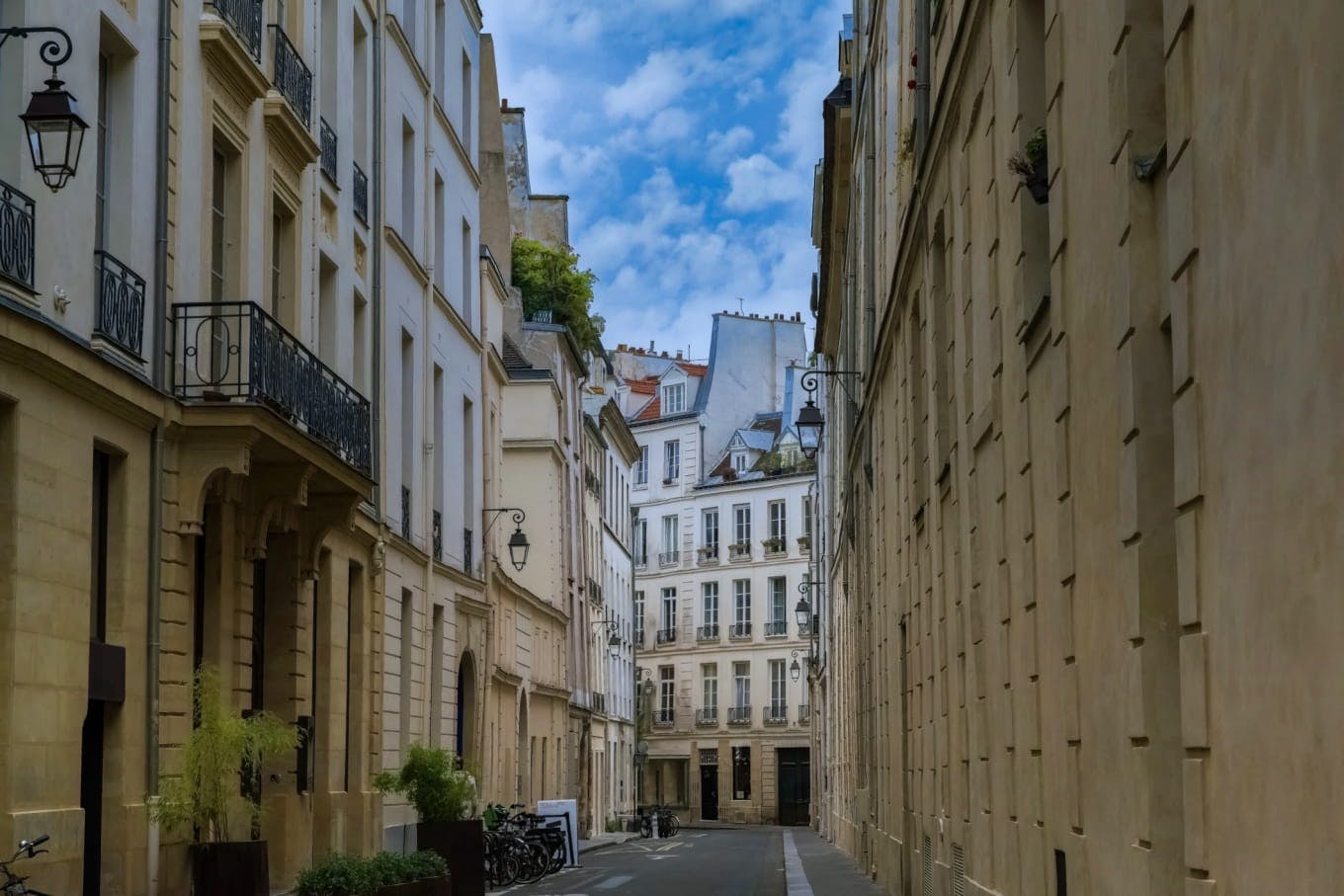
At number 39: enter the Marché des Enfants Rouges. Founded in 1615, it is the oldest covered market in Paris. It almost became a car park in the 1990s and local residents fought to keep it. Under the slate roofs, about twenty stalls offer standing or seated dining, from the Moroccan caterer to the Japanese stand and the Italian grocery store.
Stroll around. The Marais is one of the few Parisian neighborhoods where you can get lost for an hour and find something on every street corner. Rue Vieille du Temple, rue des Archives, place des Vosges, walk, walk, if the legs still allow it.
From Montorgueil to Les Halles: bus 29
Take bus 29 towards "Gare Saint-Lazare". Get on at the "Turenne – St Gilles" stop to the "Étienne Marcel – Montmartre" stop - about 10 minutes
Go to the "Turenne-St Gilles" stop of bus 29, at the corner of rue de Sévigné and rue du Parc Royal. The charming bus ride will take you through the Marais from east to west to the trendy district of Montorgueil.
Stop at the "Étienne Marcel – Montmartre" station and walk to Rue Montorgueil. This street, both authentic and touristy, charming, will take you straight to "the belly of Paris", the former slaughterhouse district that has become the commercial heart of the city: Les Halles.
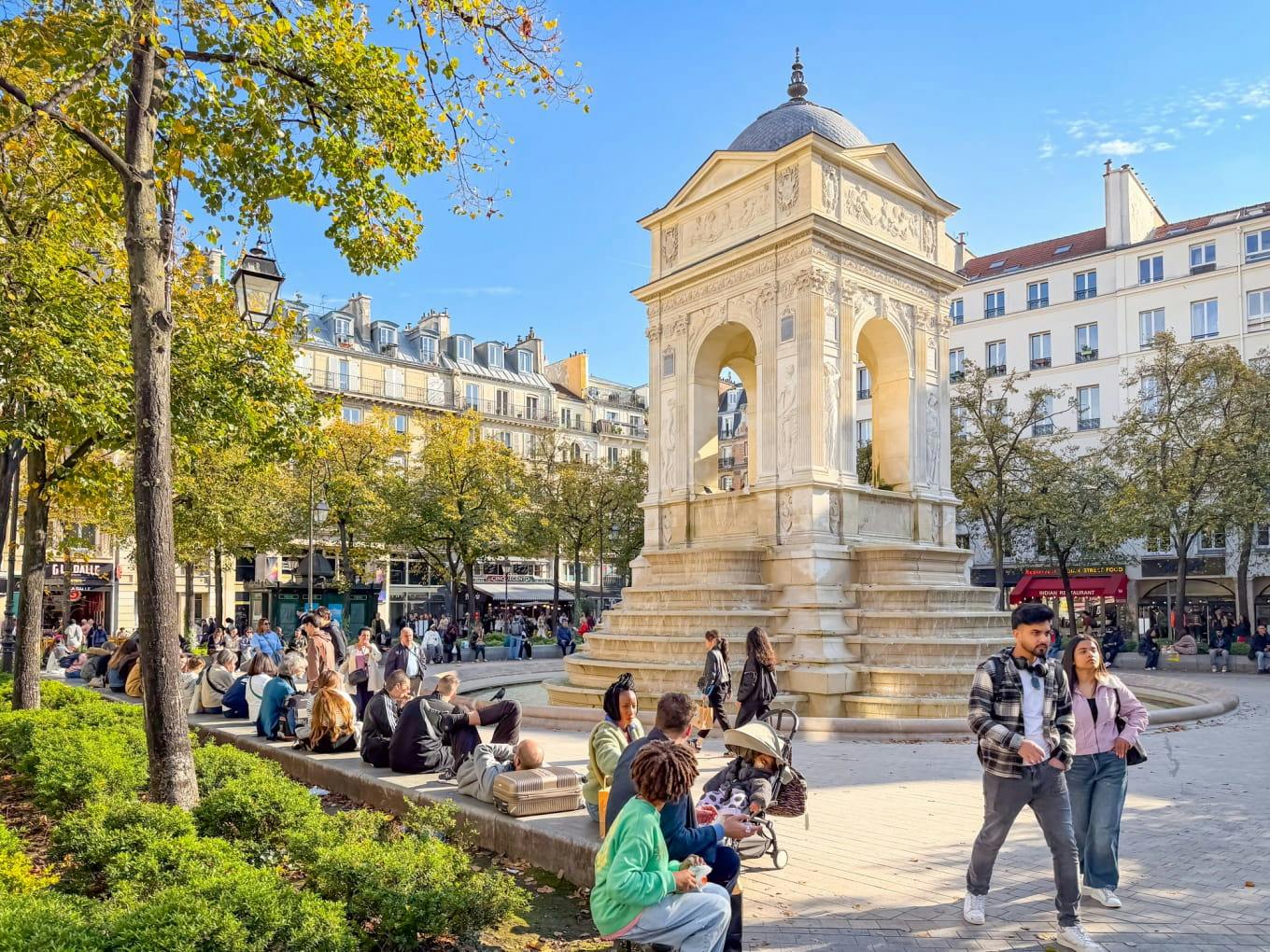
At number 51 rue Montorgueil: stop in front of the Stohrer shop. Founded in 1730 by the pastry chef of King Louis XV, it is the oldest pastry shop in Paris still in operation. The rum baba was invented here. The interior decoration is classified as a Historic Monument. It's the place to fall at the end of the afternoon, for a snack that has memory.
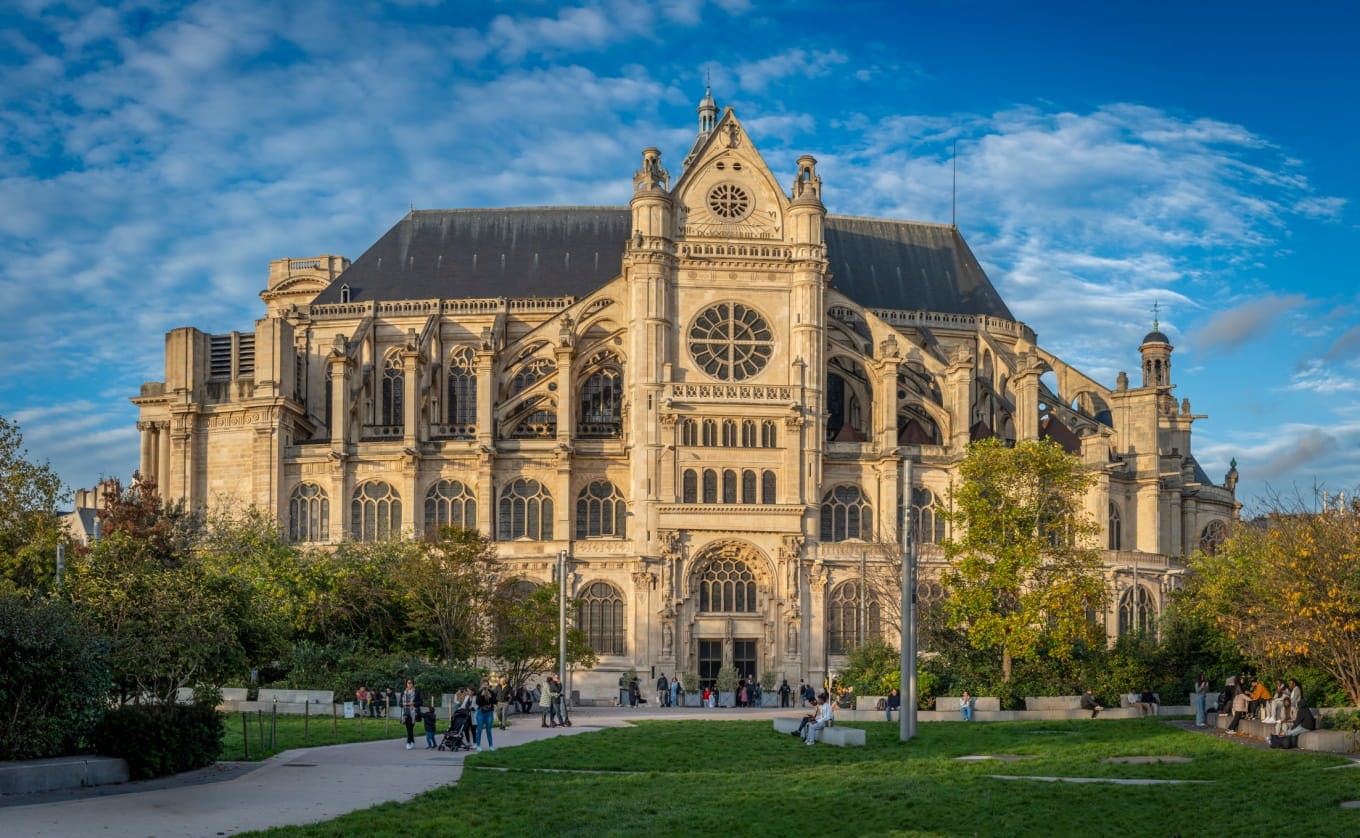
The rue Montorgueil leads to the Saint-Eustache church, one of the largest and least visited in Paris, then to the Nelson Mandela garden which naturally leads you to the rue de Rivoli.
Return at sunset: bus 72
Bus 72 towards "Parc de Saint-Cloud". Climb up to the "Rivoli – Pont Neuf" stop to the "Concorde" stop - about 10 minutes
When you arrive at rue Rivoli, go to the "Rivoli – Pont Neuf" stop, and take bus 72, direction "Parc de Saint-Cloud". The line goes up the rue de Rivoli and runs along the Palais du Louvre and the Jardin des Tuileries to the west: Rivoli-Pont Neuf, Louvre-Rivoli, Palais Royal-Musée du Louvre, Pyramides-Tuileries, Castiglione, then Concorde. All along the route, the décor is sumptuous. When you arrive at the Place de la Concorde, at the foot of the Champs-Élysées, go downstairs.
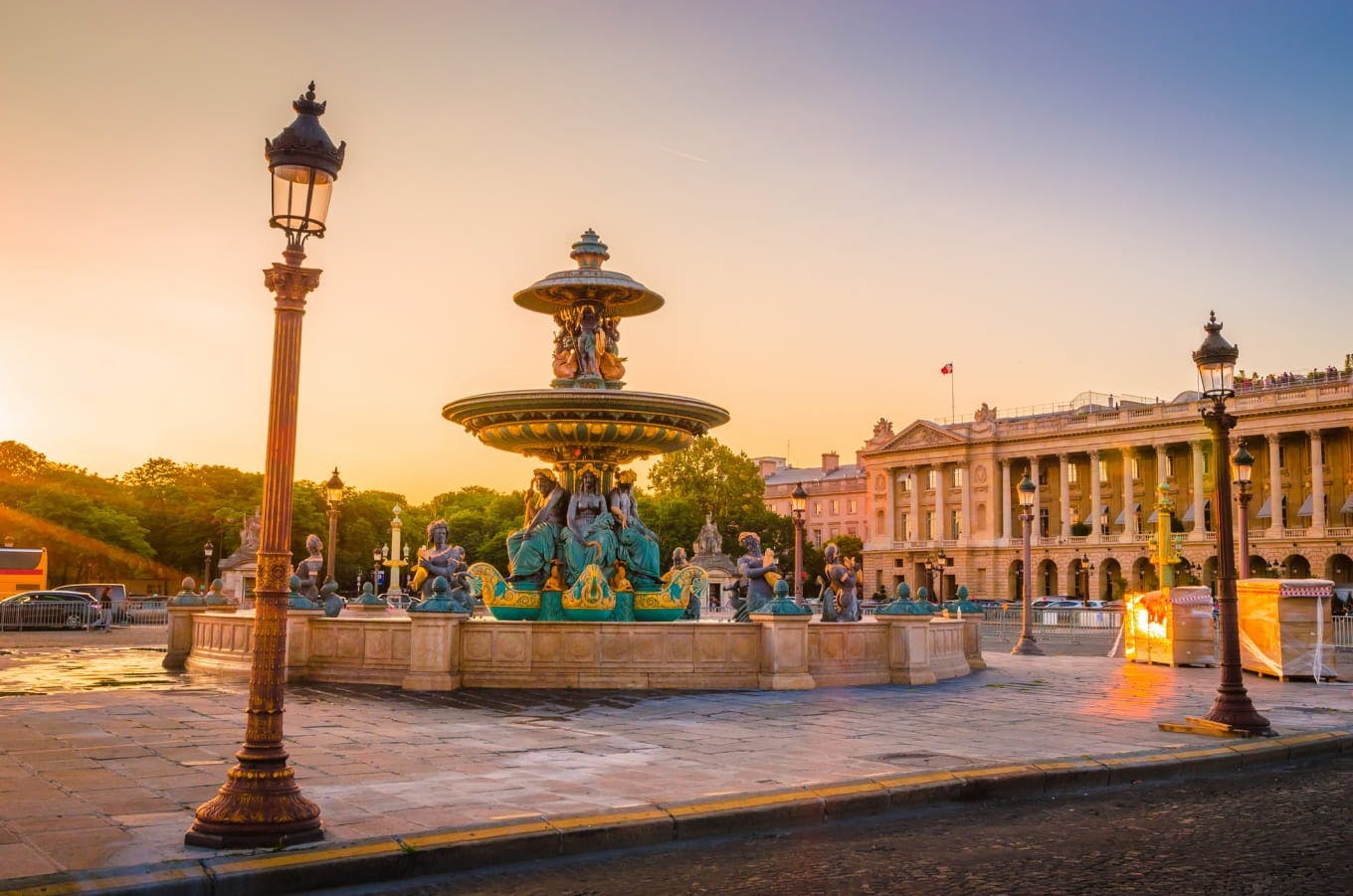
At the end of the day, if the timing is right, the sunset is in the axis of the Champs-Élysées. Sit on the Place de la Concorde, in the axis of the Arc de Triomphe, and enjoy the golden light on the most beautiful Parisian monuments.
Looking for other ideas for visits to Paris and the Île-de-France region?
Walks, castles, exceptional viewpoints, little-known districts, forests and canals: discover our guide to the must-sees of Paris and its region.