3 billion euros to transform the stations of Île-de-France
Île-de-France has no less than 455 train stations crossed daily by the RER and Transilien trains of the densest public transport network in the world. The adaptation and modernisation of these stations to the needs of 21st century passengers is a real challenge that Valérie Pécresse, President of the Île-de-France Region and Île-de-France Mobilités, has chosen to take up.
"The renovation of our stations is essential as part of the 'Transport Revolution' that I have launched," she explains, "because the station of today and tomorrow is no longer just a place where people come to catch their train. This is why I have decided to launch a broad action and investment plan for modern, safe and more welcoming stations for passengers."
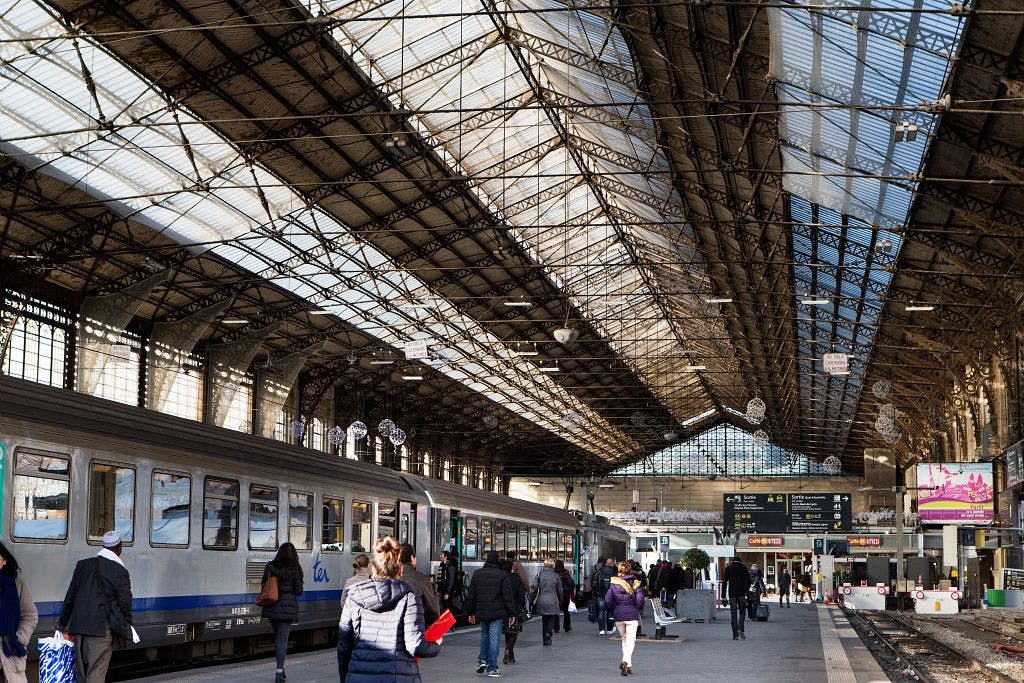
Modernised and safe stations by 2025

The renovation effort is underway in more than 150 stations where work is underway or under study for the embellishment of structures, the improvement of traffic (construction of footbridges or tunnels to cross the platforms), the improvement of flows and passenger information thanks to more signage and screens. Priority is given to the major stations in the outer suburbs.
In addition, one of the priorities is to make stations accessible for people with disabilities. The necessary work is therefore underway for a budget of 1.4 billion euros so that 266 stations are accessible by 2025.
100% of railway stations will be fully video-protected by 2021. They will also all be under automatic control, i.e. closed by ticket validation gates, in 2021. The human presence, which is essential in the station, is reinforced this year with 700 additional security agents deployed in the field.
New stations focused on intermodality and passenger services
Île-de-France Mobilités has decided to invest in the creation of 150 comfortable and heated connected spaces in stations this year, equipped with electrical outlets and free Wi-Fi. In addition, 120 stations, i.e. all stations with more than 5,000 passengers per day, will be equipped with toilets by 2021, compared to only 46 currently.

As a mobility hub, the new railway stations must facilitate connections with other traditional modes of transport (bus, car, bicycle, etc.) and more alternative modes of transport (carpooling, car-sharing, electric bikes, etc.). To this end, Île-de-France Mobilités encourages the use of bicycles as a means of feeder to the station with the creation of 20,000 Véligo secure parking spaces by 2020, but also the upcoming launch of a regional long-term rental service for electrically assisted bicycles.
The car is not forgotten since 10,000 additional parking spaces in Park & Ride are created for 2021. Carpooling is also encouraged, in particular with the integration of the carpooling feature into the Vianavigo public transport route planner.
Finally, innovative public transport solutions will gradually be added to the existing offer, in particular with the upcoming experimentation of autonomous vehicles on the Esplanade of Paris La Défense for the last mile of travel, where conventional buses cannot circulate.
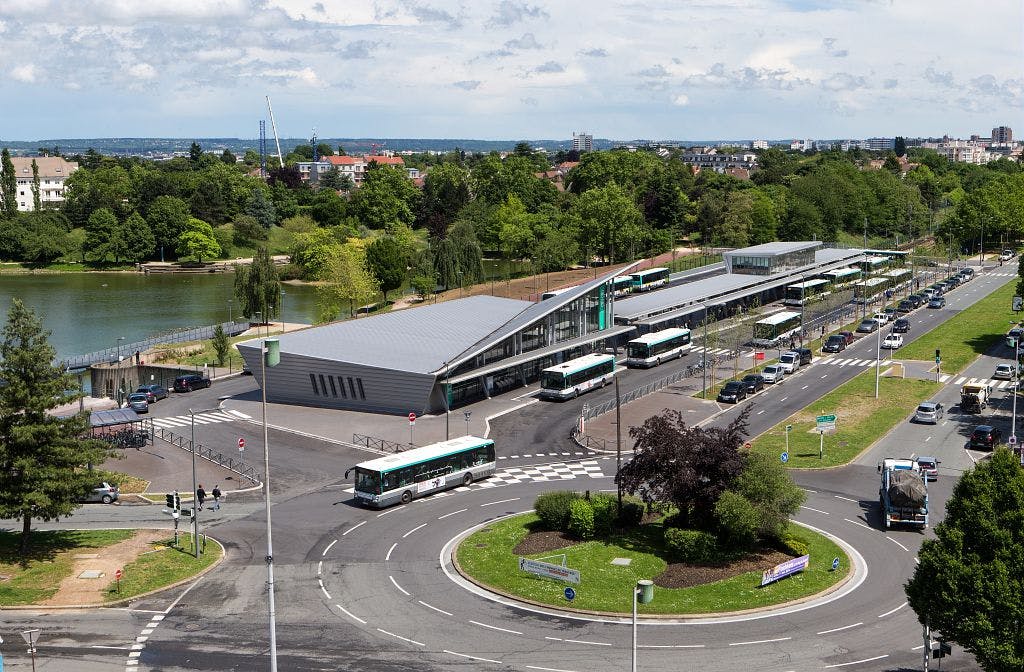
Île-de-France's bus stations become Eco-bus stations
The bus is the most used mode of transport by Ile-de-France residents. The rehabilitation and transformation of bus stations in the Île-de-France region is therefore an essential step in the "Transport Revolution" in order to offer a better quality of service to passengers.
The new Eco-Bus stations should improve the comfort of waiting for users, strengthen their sense of safety, and provide them with a better overview and legibility of the station. This renovation and creation programme will concern 52 Eco-stations over 10 years for a budget of 200 million euros, at a rate of about 5 per year. Two projects are currently being studied with the Château de Vincennes bus station and the Gare de Lyon bus station (rue de Bercy).