Transport and solidarity: do you know the Mobility Voucher?
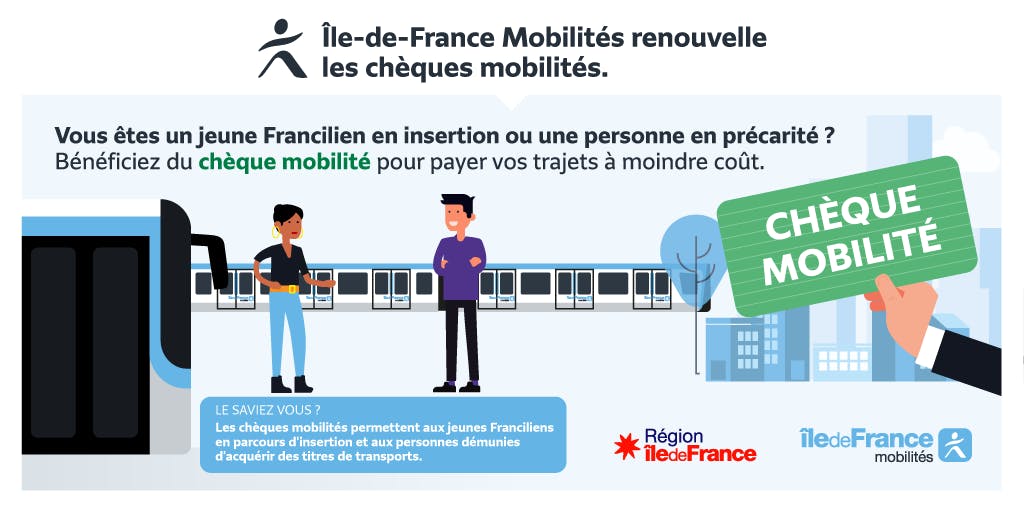
What is the role of the Mobility Voucher?
Decided in 1998 by Île-de-France Mobilités and the Île-de-France region, the Chèque Mobilité is a scheme that allows young people enrolled in an integration programme and the most precarious people supported by a social action service to buy, at a lower cost, transport tickets for their occasional trips.
Who is the Mobility Voucher for?
Young people in the process of integration
In Île-de-France, mobility vouchers can be awarded to young people engaged in an integration programme developed with the help of a professional adviser from the reception network - with the exception of vocational training and apprenticeship courses for which specific transport aid already exists.
Continuing vocational training trainees under 26 years of age
These young people, who are involved in regional schemes that allow them to benefit from free transport, have access to the Chèque Mobilité scheme during the period of registration for the course until their free Navigo pass is issued.
The poorest people
Upon evaluation by the social action services, very disadvantaged people can benefit from the Mobility Voucher, in the form of one-off assistance.
How does the Mobility Voucher work?
Eligible people are given a cheque book of 12 cheques worth 4 or 8 euros including tax. Each Mobility Voucher allows the beneficiary to acquire a full-price transport ticket, the amount of the purchase can be topped up by the beneficiary if the amount to be paid exceeds the level of the allowance.
The renewal of the Mobility Voucher booklet depends on the situation of each beneficiary.
Who can I ask for my Mobility Vouchers?
You can apply for Mobility Vouchers from the Communal Centre for Social Action (CCAS) in your municipality or from Pôle emploi, if you are registered.
Mobility voucher: who finances?
The financing of the Mobility Vouchers ordered is provided 30% by Île-de-France Mobilités and 70% by the Île-de-France Region, within the overall limit of €3.55 million (from 1 January to 31 December) for the two funders combined, i.e. a maximum of €2.485 million per year to be paid by the Region.