How is your public transport financed?

How is your transport financed?
How does public transport work?
To make the network operational, Île-de-France Mobilités contracts with transport companies with familiar names (such as SNCF, RATP, Lacroix Savac, Transdev or Keolis), paid to ensure the maintenance, operation and modernisation of the lines, as well as the safety of passengers and the implementation of the various services at the station.
These operating contracts represent the annual expenditure for the proper functioning and development of the network. In 2022, they amounted to €10.485 billion.
Who participates in the financing of your public transport?

Who pays what for your transport?
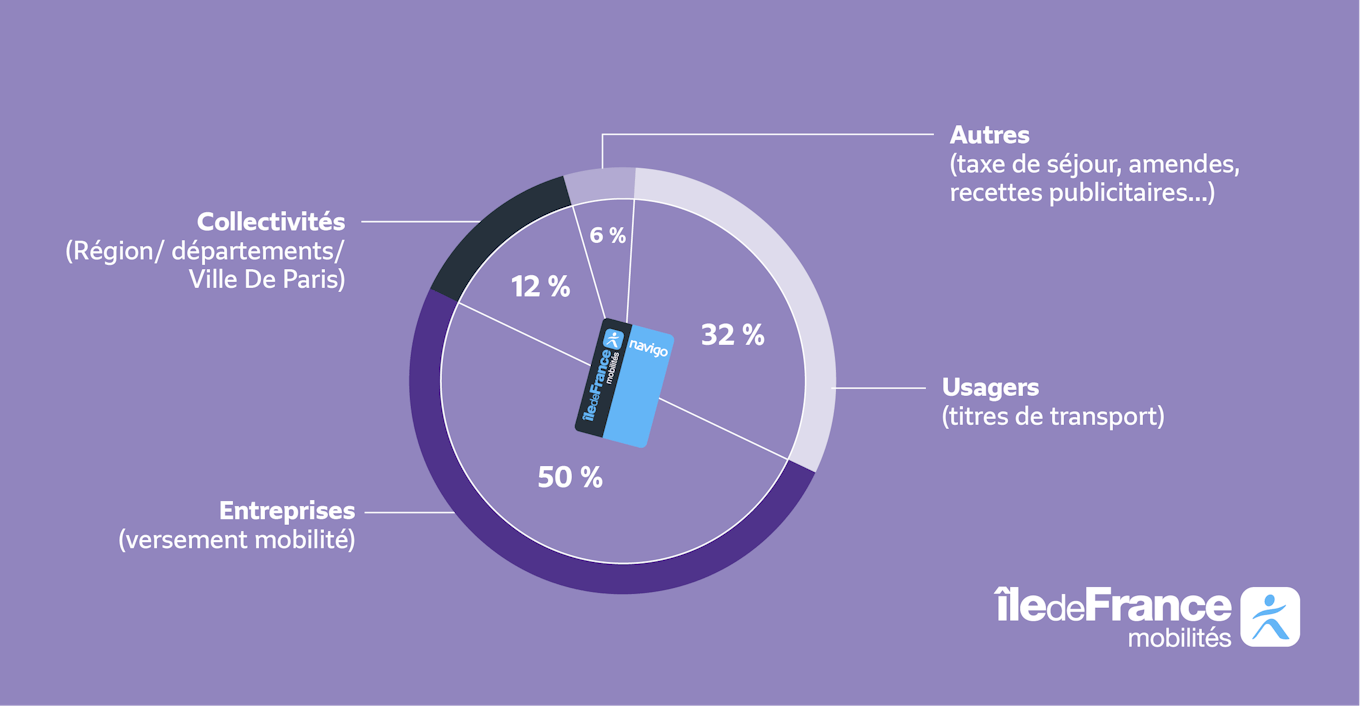
In 2022, the sale of subscriptions and tickets corresponded to 33% of Île-de-France Mobilités' total budget. Indeed, it is mainly thanks to the investment of several players that the regional network finds its financial balance.
Ile-de-France companies: 48%
Companies with more than 10 employees based in Île-de-France are the main contributors and represent 48% of Île-de-France Mobilités' total funding. In what ways do they participate in the functioning of the network? It is through:
- The mobility payment : a contribution due by private and public employers, to finance transport and mobility services
- Reimbursement : employers are obliged to reimburse up to 50% of their employees' transport tickets and can go up to 75%.
Travellers: 33%
Passengers are the second source of funding for public transport in the Ile-de-France region through the purchase of various subscriptions (annual and monthly Navigo and Imagine R) and T+ tickets. They make it possible to finance the network up to 33%.
Public competitions: 15%
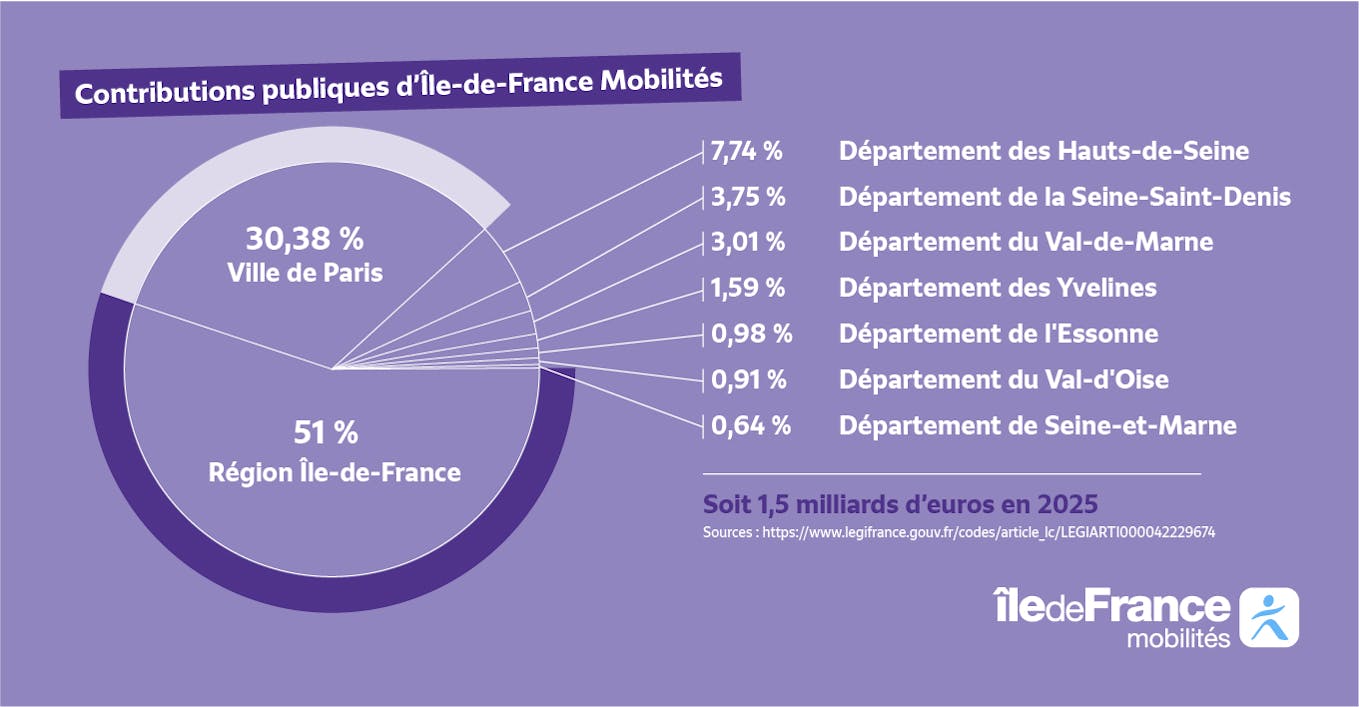
What are "public competitions"? These are financial aids awarded in the form of contributions, social actions, donations, compensation or subsidies by public institutions. But who are we talking about? From the Region, the City of Paris and the departments. Together, they contribute 15% of the annual budget.

Breakdown of funding for public assistance
The State: 2%
The State subsidizes public transport through aid and balancing subsidies that correspond to 2% of Île-de-France Mobilités' budget.
The rest: 2%
A final part, about 2%, comes from the revenue generated by the advertisements you see displayed on the platforms, in your transport or at bus stops, fines and various taxes.
Financing, the cornerstone of the social role of transport
It is this plural ecosystem of financing that allows the network to modernize each year, to gain in precision and to move towards more sustainable energies and materials.
An ecosystem that also offers Île-de-France Mobilités the opportunity to offer preferential rates and financial aid (such as the Navigo Solidarity Pass, the Free Youth Integration Pass or reduced single ticket fares for example) thus giving as many people as possible access to public transport.

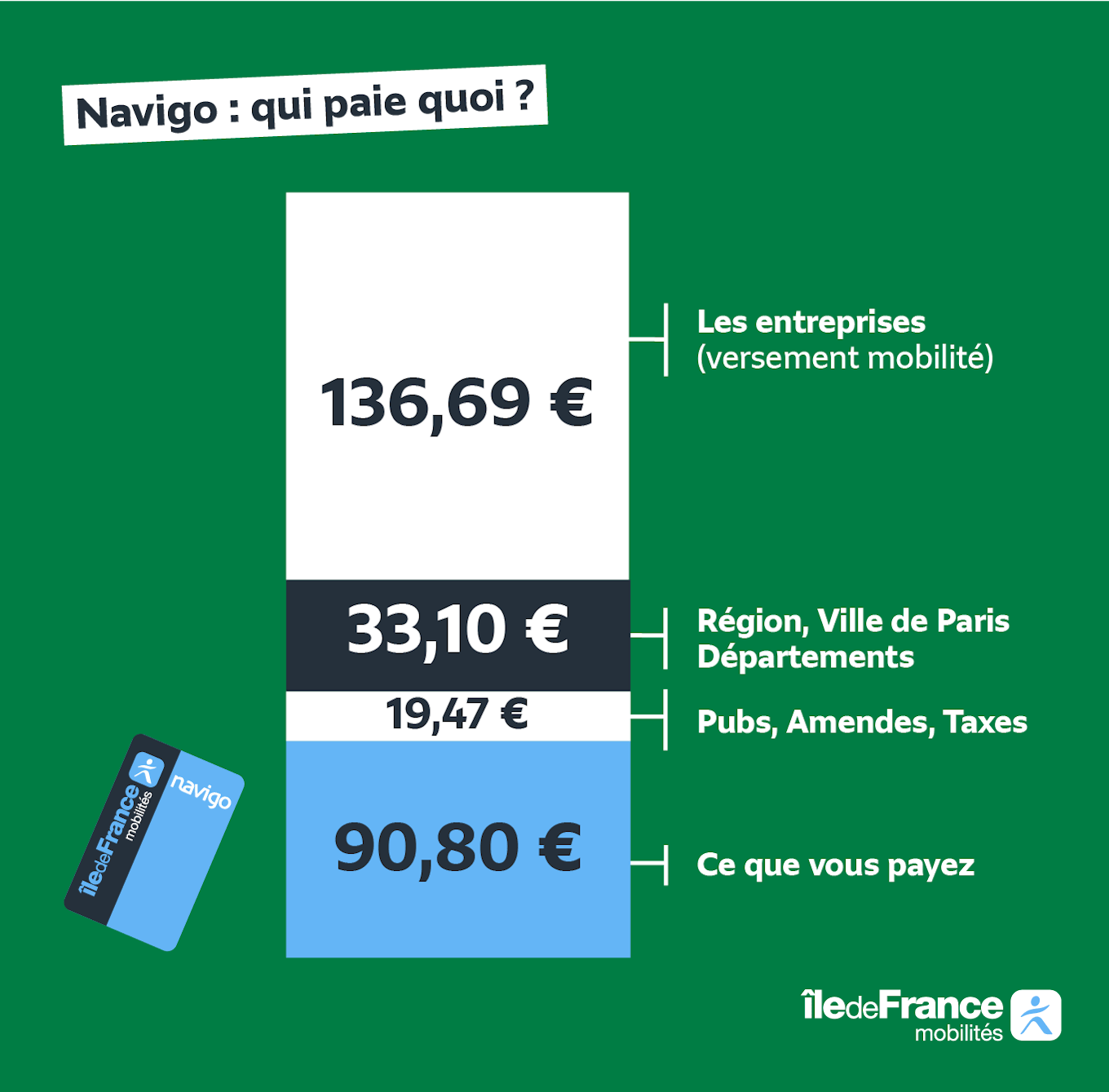
The true cost of a monthly Navigo pass
Similarly, this funding allows all passengers to pay only part of their ticket. Indeed, the real cost of the monthly Navigo Pass, without aid, subsidies or external funding other than that of the user, would be 252 euros instead of the 84.10 euros/month charged to Ile-de-France residents.
Transport financing is therefore a cornerstone of Île-de-France Mobilités' vision of transport. Fair, accessible and, above all, scalable mobility.