Île-de-France Mobilités and 25 European cities commit to "zero-emission" buses
Road transport as a whole is responsible for 20% of greenhouse gas, nitrogen oxide and fine particle emissions in Europe. The energy transition of public transport modes is therefore a major public health issue in the fight against congestion and pollution. To meet this challenge, Île-de-France Mobilités has proposed to its European partners to act together to accelerate the energy transition of buses.
In Île-de-France, this transition has already been initiated to reach 100% clean vehicles by 2025 for the dense area and to achieve 100% clean buses for the entire Region by 2030. To meet this strong commitment, Île-de-France Mobilités launched last January the largest call for tenders in Europe for the purchase of electric buses with an order potential of 1,000 buses over 2 years. Athens, Madrid, London and Berlin share the same momentum.
With diesel buses still representing 90% of the urban bus fleet today, the acceleration of this transition to clean buses will not be achieved without a willingness to act both politically and industrially.
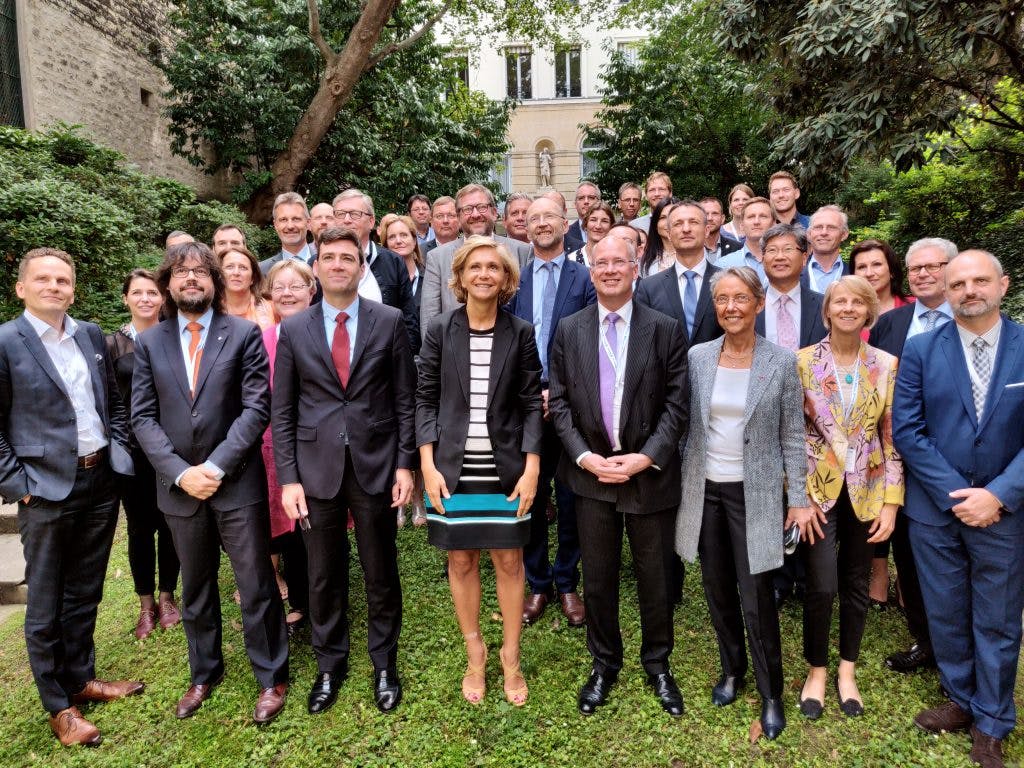
This is why, on the initiative of Valérie Pécresse, a joint declaration was signed by the public transport organising authorities of the major European cities (EMTA), in the presence of the Minister for the Ecological and Inclusive Transition, in charge of Transport, Élisabeth Borne, in order to reaffirm a common ambition to concretely accelerate the adoption by European cities of clean buses in urban areas.
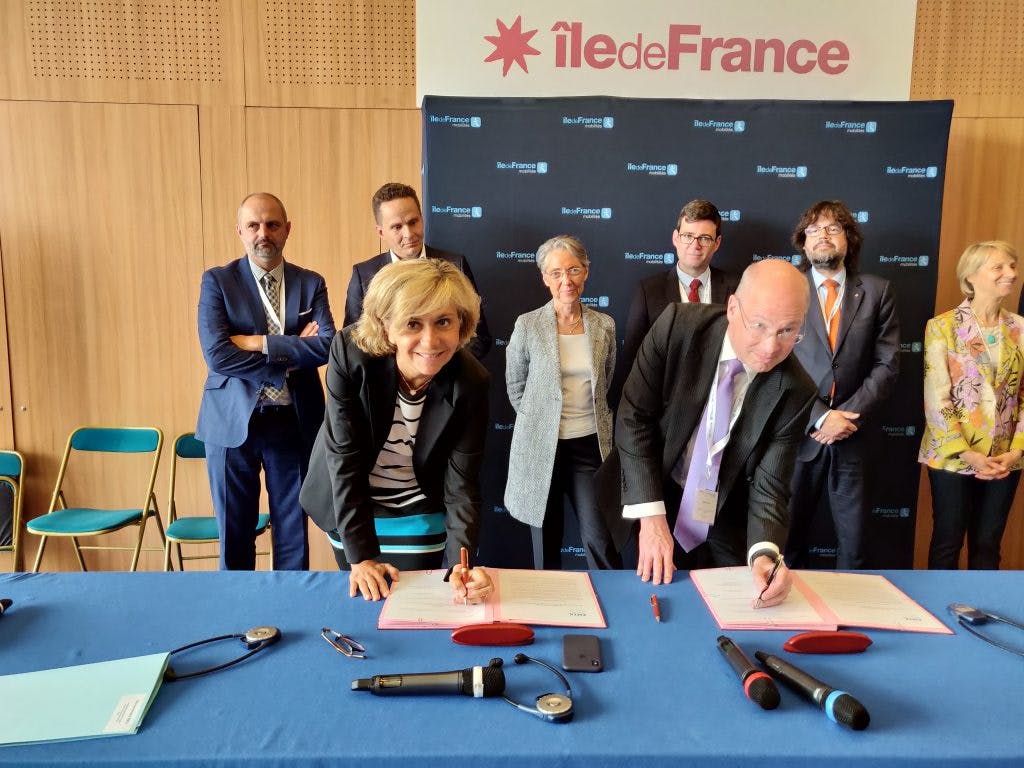
"We must move towards a zero-carbon region and this concerns first and foremost our public transport. Today, 67 electric buses are in service on the Ile-de-France network and this year we have accelerated the transition to clean buses with more than 2,000 clean electric or bio-NGV buses will be ordered by 2020. To succeed and accelerate this energy transition of our buses in major cities, the European authorities and the industry must be there. With this declaration, we are calling on the European Commission, within the framework of the Horizon Europe programme, to provide even more support for research and industrial innovation in the sector, in particular with more flexible and operational mechanisms for financing experiments and projects. Valérie Pécresse reaffirmed.
Île-de-France Mobilités has also set up an ambitious policy to develop new forms of mobility such as carpooling, electric bicycles, autonomous shuttles and park-and-ride facilities near train stations that help mitigate these urban phenomena and improve air quality for Ile-de-France residents.