Île-de-France Mobilités continues to modernise stations

Connected stations: 80 new stations equipped with connected waiting areas

At the beginning of 2017, Île-de-France Mobilités launched the microworking space development programme to equip 70 stations with connected spaces. Thus, before taking their train, tram or bus, travelers can make the most of their waiting time in these comfortable and heated spaces, equipped with electrical outlets and free Wi-Fi.

Île-de-France Mobilités is continuing to install these spaces as planned and has decided to equip 80 additional stations in the Paris region. SNCF Gares & Connexions is in charge of setting up the programme, which is fully funded by Île-de-France Mobilités.

The spaces are between 2 and 50m2 and are generally located in the heart of the main station building. They are available to all travelers who want to get ahead of their working day and save time, or simply to charge their phone!

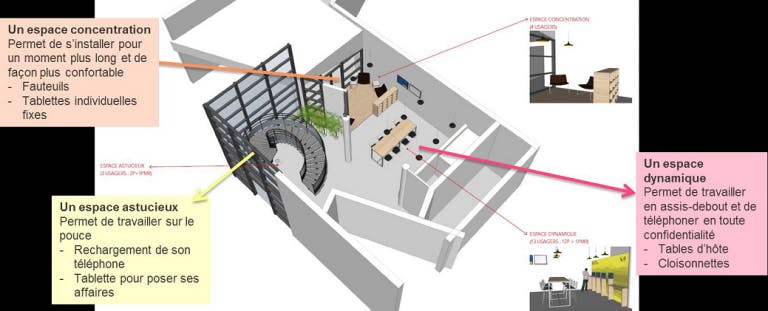
Infographic: Connected station space

A concentration area allows you to settle down for a longer and more comfortable moment, armchairs, individual fixed shelves. A spacious space allows you to work on the go, recharge your phone, tablet to put your belongings. A dynamic allows you to work in sit-stand and to make calls in complete confidentiality, table d'hôte, partitions.

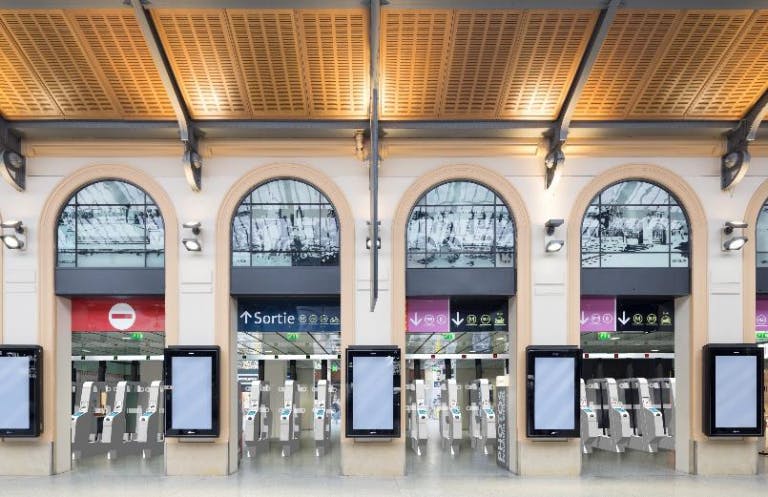
Secure stations: the Saint Lazare station is equipped with gantries

The Gare Saint Lazare is the second station in Europe in terms of passenger flows behind the Gare du Nord. Despite its importance and the fact that it is mainly people from the Ile-de-France region who use it, it is now the only major station in the Île de France region not to be equipped with gantries.

In September 2016, Valérie Pécresse asked SNCF to set up this equipment, which is necessary both to effectively fight against fraud, but also to prepare for the Smart Navigo revolution (post-payment, use of smartphones, etc.).

Île-de-France Mobilités is covering 100% of the cost of the installation, i.e. 14 million euros.

The installation of these gantries, which will be completed in the summer of 2019, will be carried out with the greatest possible impact on passenger traffic in the station. In addition, the installation of these gantries is also an opportunity for SNCF to reorganise the approach to the platforms to better arrange shops and services, but also to improve information (timetable displays) and signage.

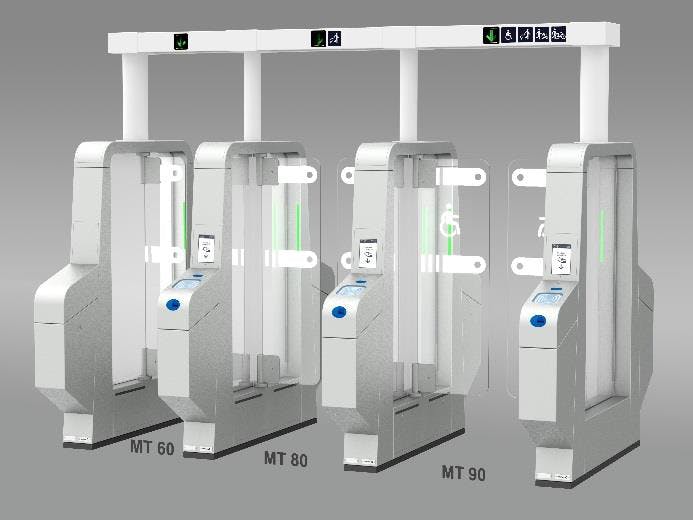
1,800 "turnstiles", some of which are more than 30 years old, will also be replaced by these new models or added in stations that are not equipped, so that by the end of 2019, 90% of passengers passing through a station in the Paris region will actually go through validators (compared to 80% today).

SNCF and Île-de-France Mobilités have opted for a technological leap that makes it possible to manage large flows (better detection, including for children, a pivoting door system, etc.) and takes better account of accessibility for people with reduced mobility. The SNCF Accessibility Commission, made up of representatives of the associations, was involved in the call for tenders issued by SNCF.

More accessible stations: €929 million to make stations accessible to all

Île-de-France Mobilités has just approved the second part of the financing programme for the accessibility of the 209 SNCF stations in Île-de-France for an amount of €929 million. This vast project will allow people with reduced mobility to access 268 stations in the Ile-de-France region (SNCF and RATP) without difficulty by 2024, i.e. nearly 95% of rail traffic in the Ile-de-France region. In total, 1.45 billion euros will be invested to make these stations accessible.

Today, 146 stations are already accessible in Île-de-France, 34 of which were built between 2016 and 2017.

The accessibility work means the installation of lifts, escalators, access ramps, armchairs in waiting areas, podotactyl strips for alertness, sound beacons, guide strips, raising platforms for direct access to trains and removing obstacles around stations. To carry out this work, 50% of the budget is financed by Île-de-France Mobilités, 25% by the Île-de-France Region and 25% by the SNCF.

Intermodal and accessible stations

Several station development projects have been presented to the Île-de-France Mobilités Council, such as the Poissy station project, which was discussed with the public in June 2017, the Melun station, the Saint-Denis station and the development around the Lyon-Bercy-Austerlitz stations.

The example of the complete renovation of the Saint Denis station
The 5th station in Île-de-France (excluding Parisian stations), the Saint Denis station is frequented by more than 90,000 passengers per day. It has a large transport offer (2 train lines, 2 tram lines, 3 bus lines) which is set to be further strengthened in the coming years.

The dynamism of the territory and the evolution of the transport offer augur an increase in passenger numbers estimated at 70% by 2030, i.e. 150,000 passengers per day for a station that is already congested during rush hour.

In addition, accessibility for people with reduced mobility is incomplete, and signage is difficult to read, especially for information on connections.

To meet the needs of passengers, Île-de-France Mobilités has launched studies to improve the situation. They were presented to the public from September 11 to October 6, 2017.

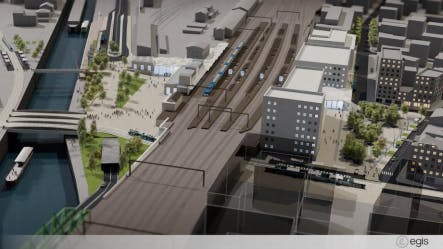
General view of the development of the Saint-Denis station

Relocation of tram station 1, raising of the platforms, creation of a new underpass, increase in spaces for bicycles, modernisation of information integrating the different modes of public transport, facilitating the passage from one to the other, etc. The work will begin with the accessibility of the station in 2018 for a total budget of 65 million euros.

Details of the project and the results of the consultation can be found here: http://www.amenagementgare-saint-denis.fr/


Press Contacts
–> Sébastien Mabille: 01 47 53 28 42 – [email protected]
–> Hélène Duguet: 01 82 53 80 90 – [email protected]

On the same subject