[Work is progressing] Preparation of the site for the future Tram 10
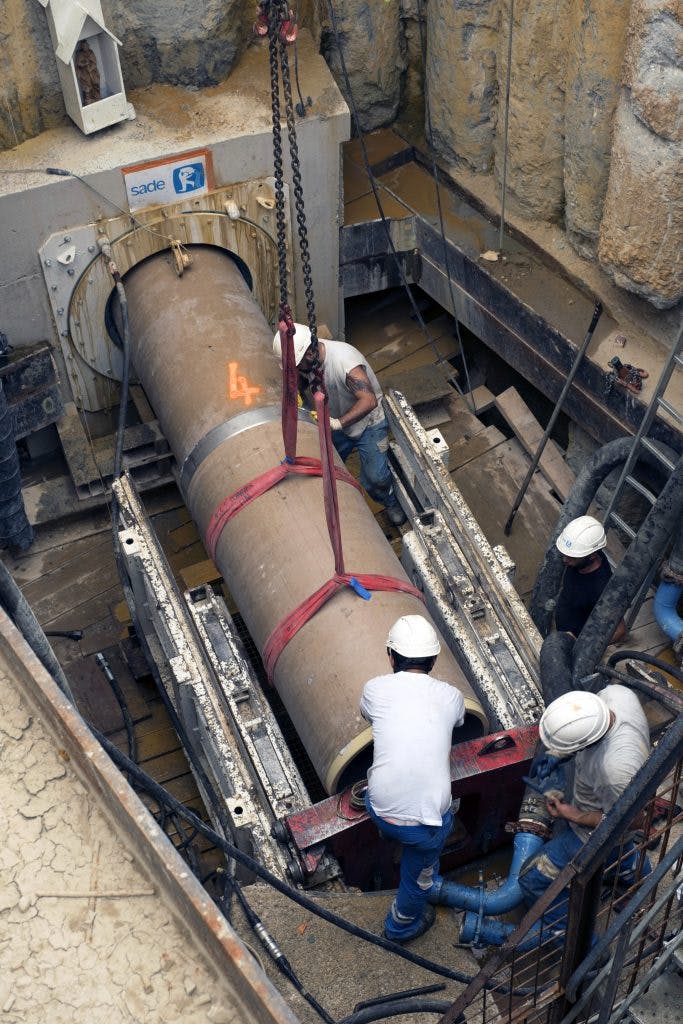
Work to prepare for the work
Before laying the tracks and carrying out the final installations of the new line, developments must be carried out beforehand, and in particular underground. Indeed, the existing networks (drinking water, wastewater, electricity, telephone, gas) located under the future tramway platform must be moved in order to allow the installation of the rails and stations but also the accesses for the maintenance of the future installations. These networks take the form of pipes buried at different depths that must be diverted from the path that will be taken by the Tram.
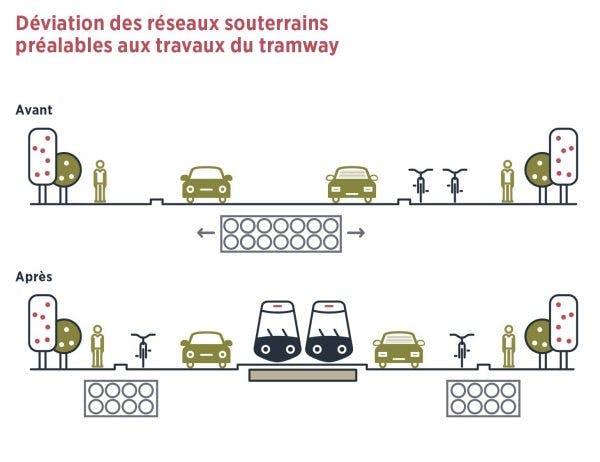
Infographic: Diversion of underground networks to tramway works. Before and After
Scheduled until 2019, this diversion work is being carried out by the concessionaires of the various networks: Bouygues Telecom, Veolia, RTE (Réseau de Transport d'Electricité) and SEDIF (Syndicat des Eaux d'Île-de-France). At the same time, the Hauts-de-Seine Department will take the opportunity to renovate and improve certain existing networks not affected by the arrival of Tram 10, such as the development of a new rainwater collector in Châtenay-Malabry.
The infrastructure work on Tram 10, the construction of the platform, the laying of the rails and catenaries as well as the stations, will start in 2019. Commissioning is scheduled for 2023.
The project at a glance
The future Tram 10 line will serve four municipalities in the Hauts-de-Seine department (Antony, Châtenay-Malabry, Le Plessis-Robinson, Clamart) by connecting the stations La Croix de Berny in Antony and Place du Garde in Clamart. In all, 14 stations will make up the line for a length of 8.2 km and a journey time of about 25 minutes. Nearly 25,000 passengers are expected each day.
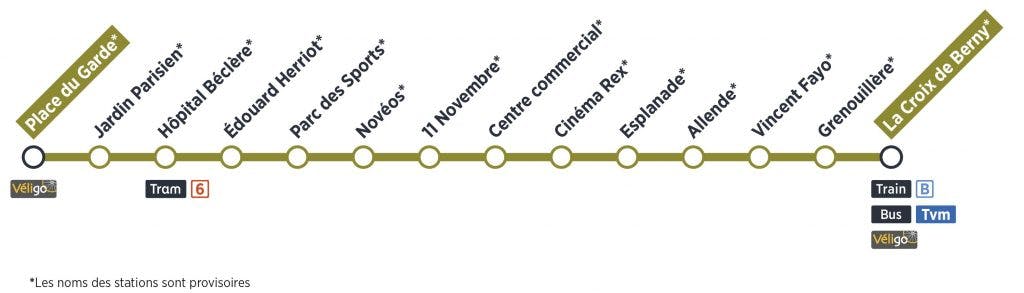
Route of the Tram 10 passage and the names of the stops. The names of the stations are provisional
The new stations will be fully accessible to people with reduced mobility and will offer a high quality of service (transport tickets vending machines, video surveillance, information panels, bicycle parking, etc.). Véligo secure spaces will also be installed at the two terminals. On the transfer side, Tram 10 will connect with Tram 6 at Hôpital Béclère station and with RER B and Bus TVM at La Croix de Berny station.
Île-de-France Mobilités and the Hauts-de-Seine Department are both project owners, the first for the construction of the transport system (the tramway platform, the stations and the catenary poles), and the second for urban integration and road developments.
Tram 10 is financed by the Ile-de-France Region (49%), the Hauts-de-Seine Department (30%) and the State (21%).
The operation of the line (maintenance, human resources, video surveillance, etc.) as well as the trams that will run on it are 100% financed by Île-de-France Mobilités.
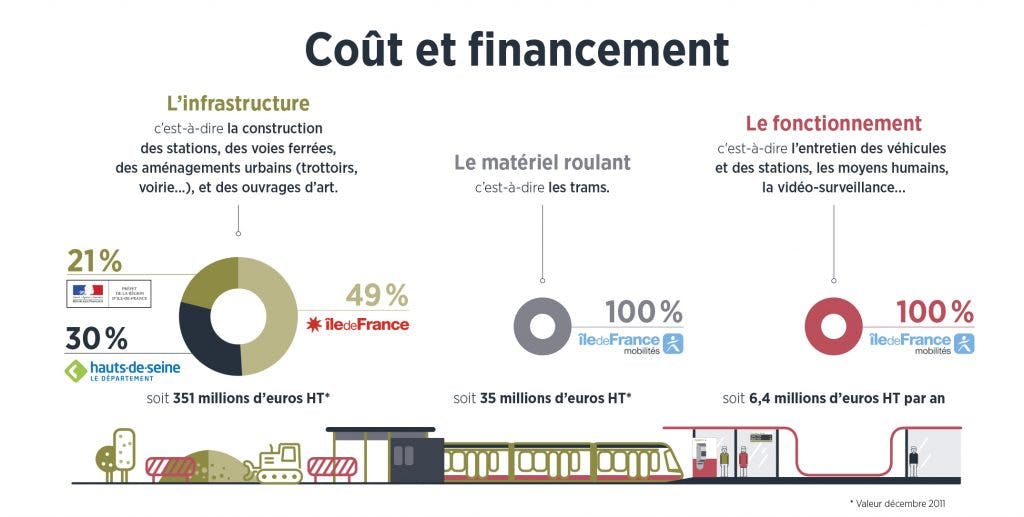
Infographic: Cost and financing. Infrastructure: construction of works, railways, urban development (pavements, roads, etc.), and engineering structures 21%, 30% the Haute-de-Seine department, i.e. 351 million euros excluding tax. Rolling stock: i.e. trams 100% in Île-de-France. The operation, i.e. the maintenance of vehicles and stations, human resources, video surveillance, etc. 100% in Île-de-France.
For more information, you can visit the website dedicated to the project: http://www.tram10.fr
Photo and icono credits: DR STIF / Jean-Luc Dolmaire/CD92