On the program?
- Pont Neuf
- Pont des Arts
- Alexandre III Bridge
- Pont d'Iéna
- Bir-Hakeim Bridge
Published on
Paris has 37 bridges over the Seine. It would be ambitious to want to visit them all in a single day, so we have prepared a walk for you to walk on the five most beautiful of them! Icons of cinema, a meeting place for lovers, the oldest bridge in Paris and technical feats: we take you there.
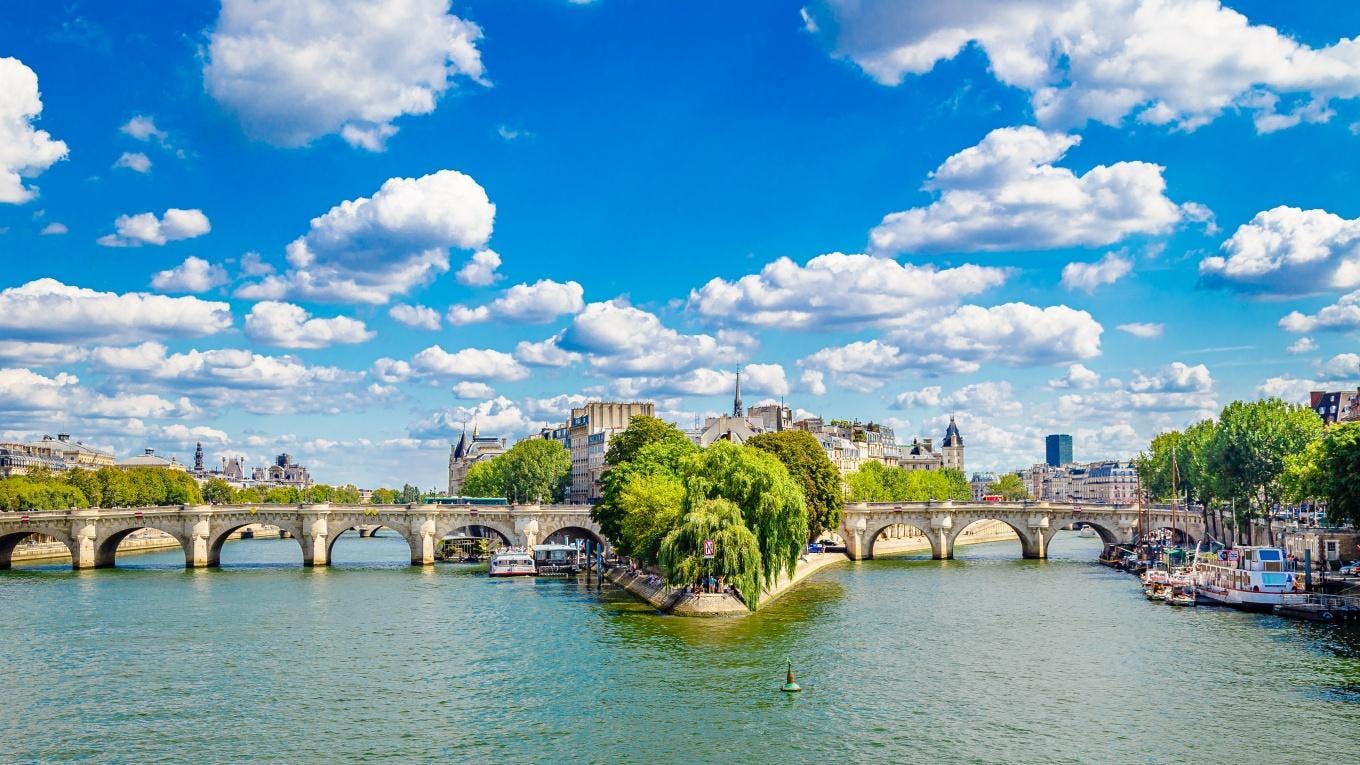
Paradoxically, the Pont Neuf is the oldest bridge still standing in Paris. Built between 1578 and 1607 under Henri III and then Henri IV, it takes its name from its innovations compared to the bridges of the time. Indeed, it is:
Pssst: go down the stairs to the Square du Vert-Galant at the tip of the Île de la Cité and admire the bridge from the level of the Seine with its 381 sculpted mascarons (grotesque faces, not the sweet desserts we know).
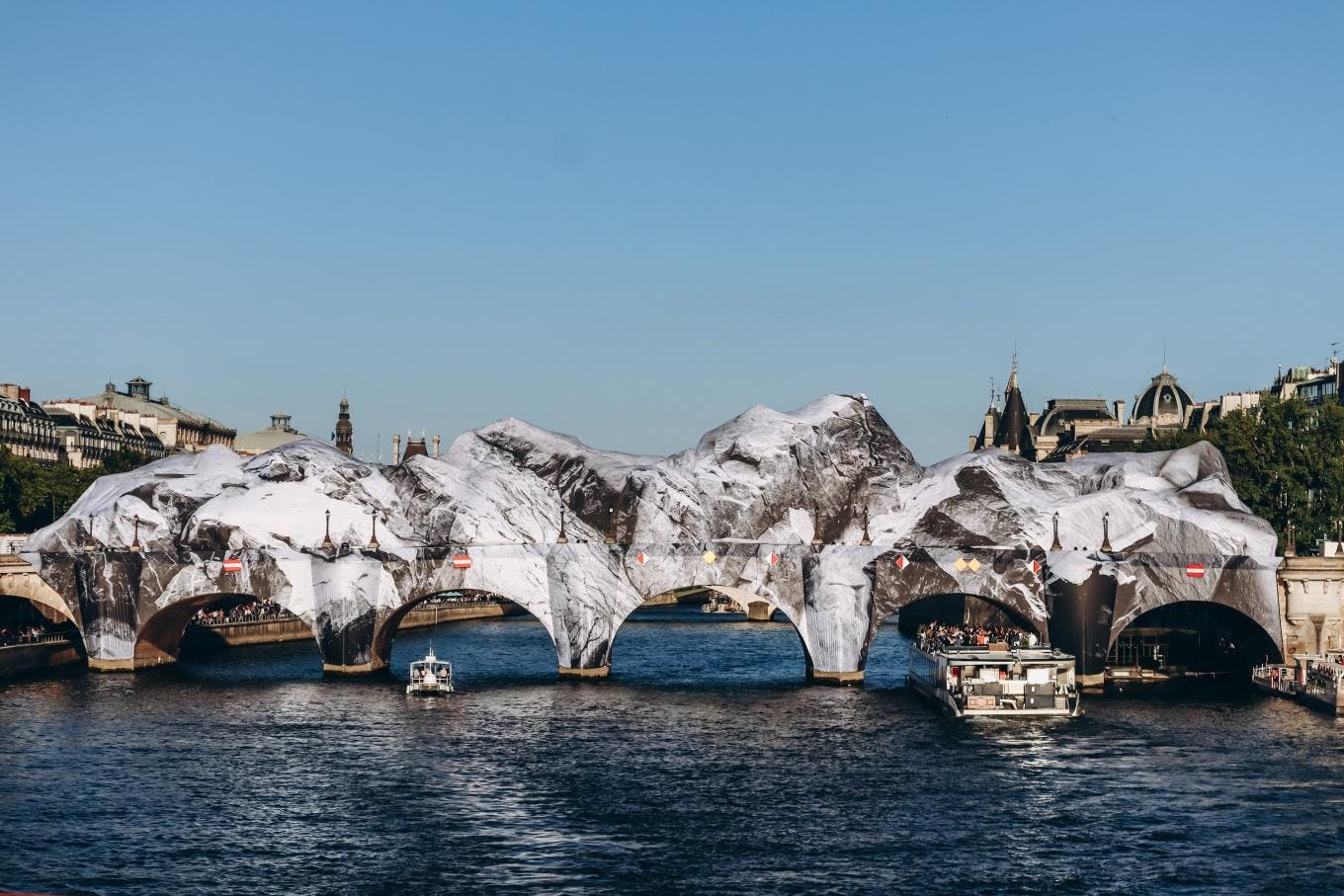
In 1985, the artist couple Christo and Jeanne-Claude completely wrapped the bridge in golden fabrics for two weeks — an artistic shock that attracted millions of visitors.
Forty years later, in June 2026, the artist JR pays tribute to them with his installation La Caverne du Pont Neuf, which this time transforms the bridge into a monumental cave (free and accessible day and night).
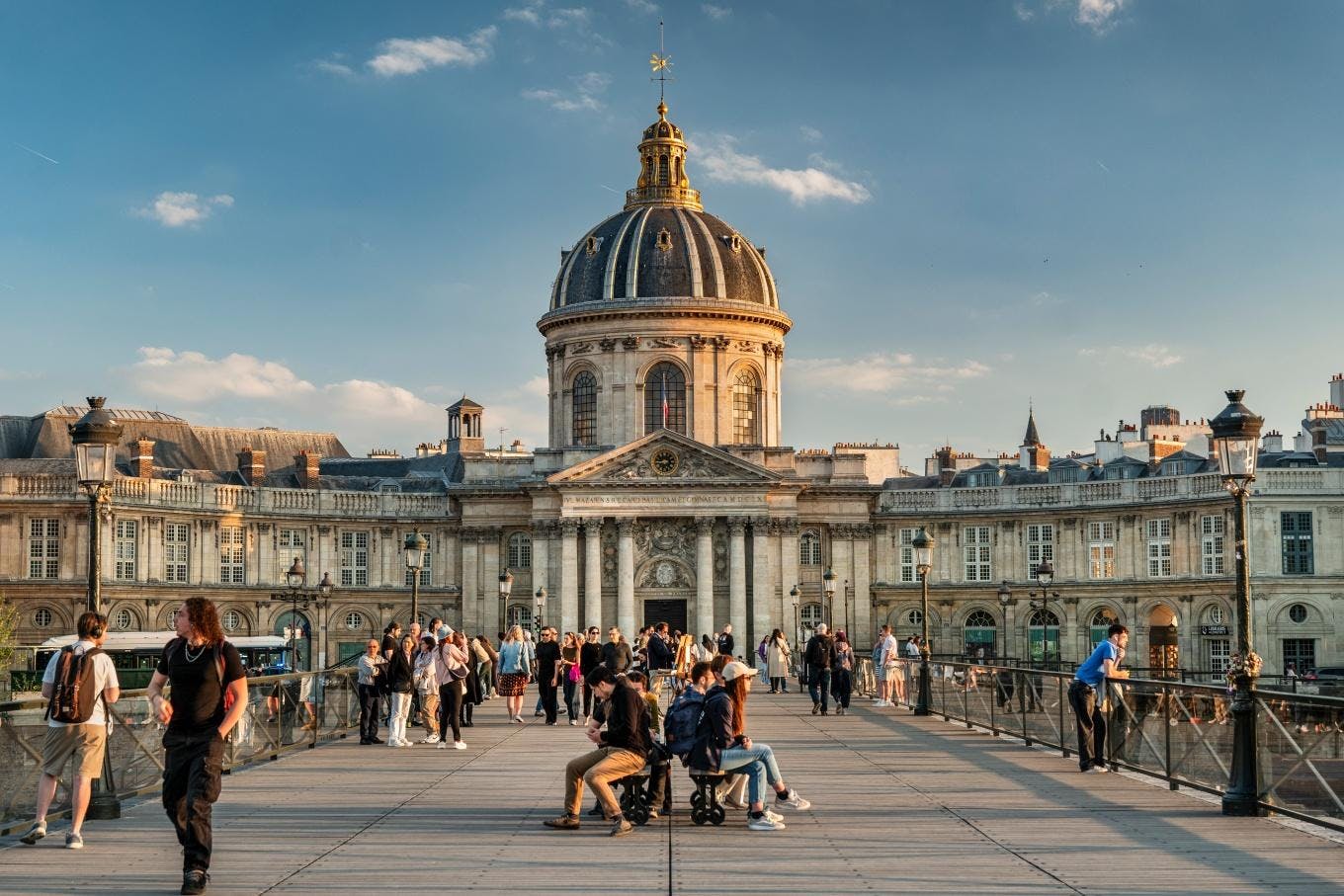
With the Pont des Arts, make way for the first metal bridge in the capital, built at the beginning of the nineteenth century on the decision of Napoleon. It owes its name to the nickname of the Louvre, located a stone's throw away, then called "Palais des Arts".
Between 2000 and 2015, hundreds of thousands of couples from all over the world hung padlocks with their names on the bridge's railing : a love ritual that symbolizes a love that lasts.
However, it is not far from 45 tons of padlocks (according to the City of Paris, editor's note) that were hung on it, weakening the bridge and forcing the City to remove everything in 2015.
Pssst: come in the late afternoon, the golden light on the Seine and the dome of the Institut de France in the background make it one of the most grandiose places on the left bank.
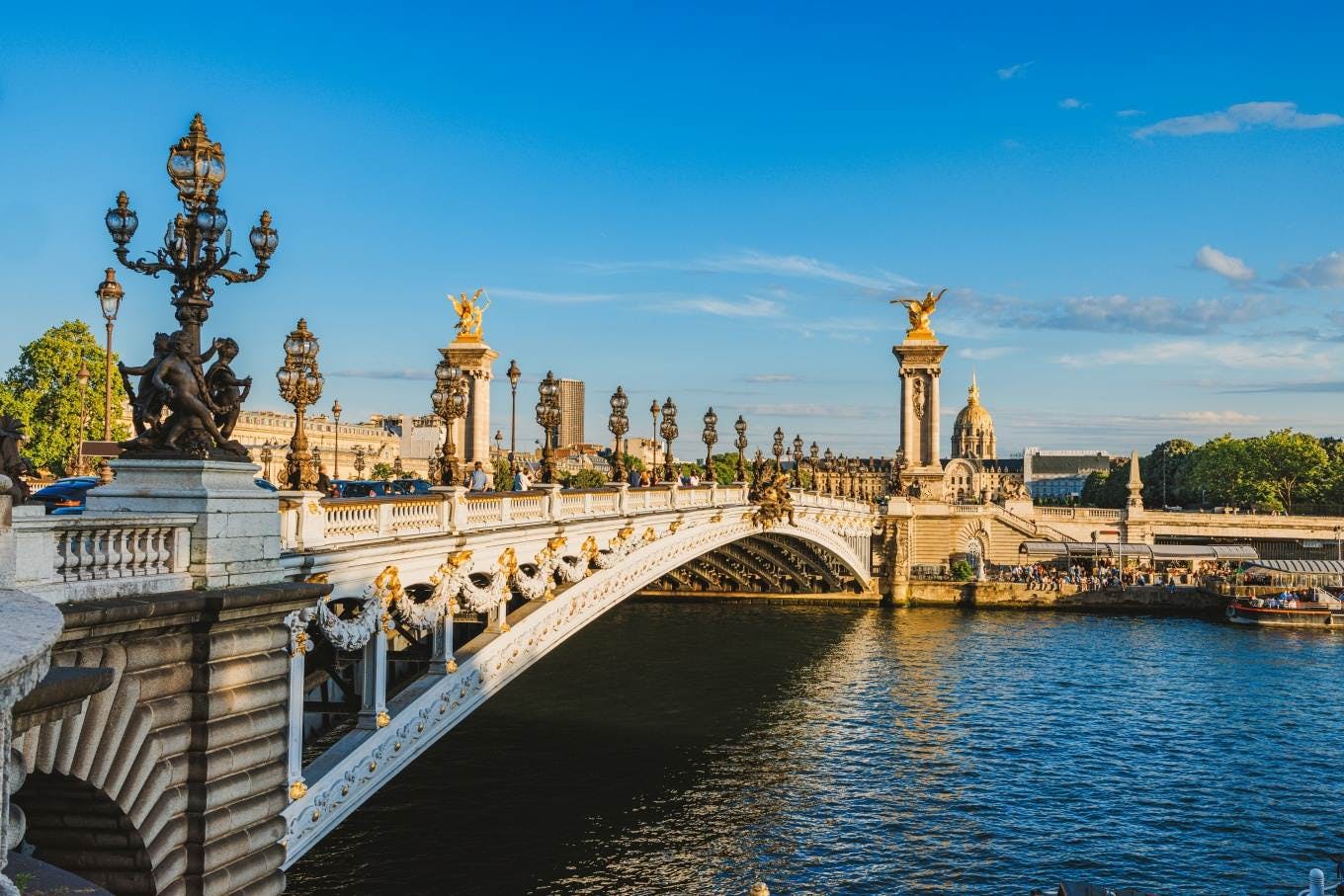
Inaugurated for the 1900 Universal Exhibition, the Pont Alexandre III - which commemorates the Franco-Russian rapprochement concluded in 1891 between Tsar Alexander III and the French president from 1887 to 1894, Sadi Carnot - is often described as the most elegant bridge in the capital.
It must be said that with 32 period bronze lampposts, its 17-metre golden pylons and its twenty or so sculptures, it has something to impress.
Pssst: you've probably seen it on TV, during the Paris 2024 Olympic Games, the Pont Alexandre III served as the start and finish point for the triathlon events.
Built between 1808 and 1814 by Napoleon, the Pont d'Iéna and its neoclassical architecture commemorate the victory of Jena against the Prussians (14 October 1806).
A little anecdote that almost went wrong : in 1815, the Prussian general von Blücher, defeated at Jena, wanted to blow up the bridge in retaliation. Missed, it was the intervention of Tsar Alexander I that prevented him from doing so.
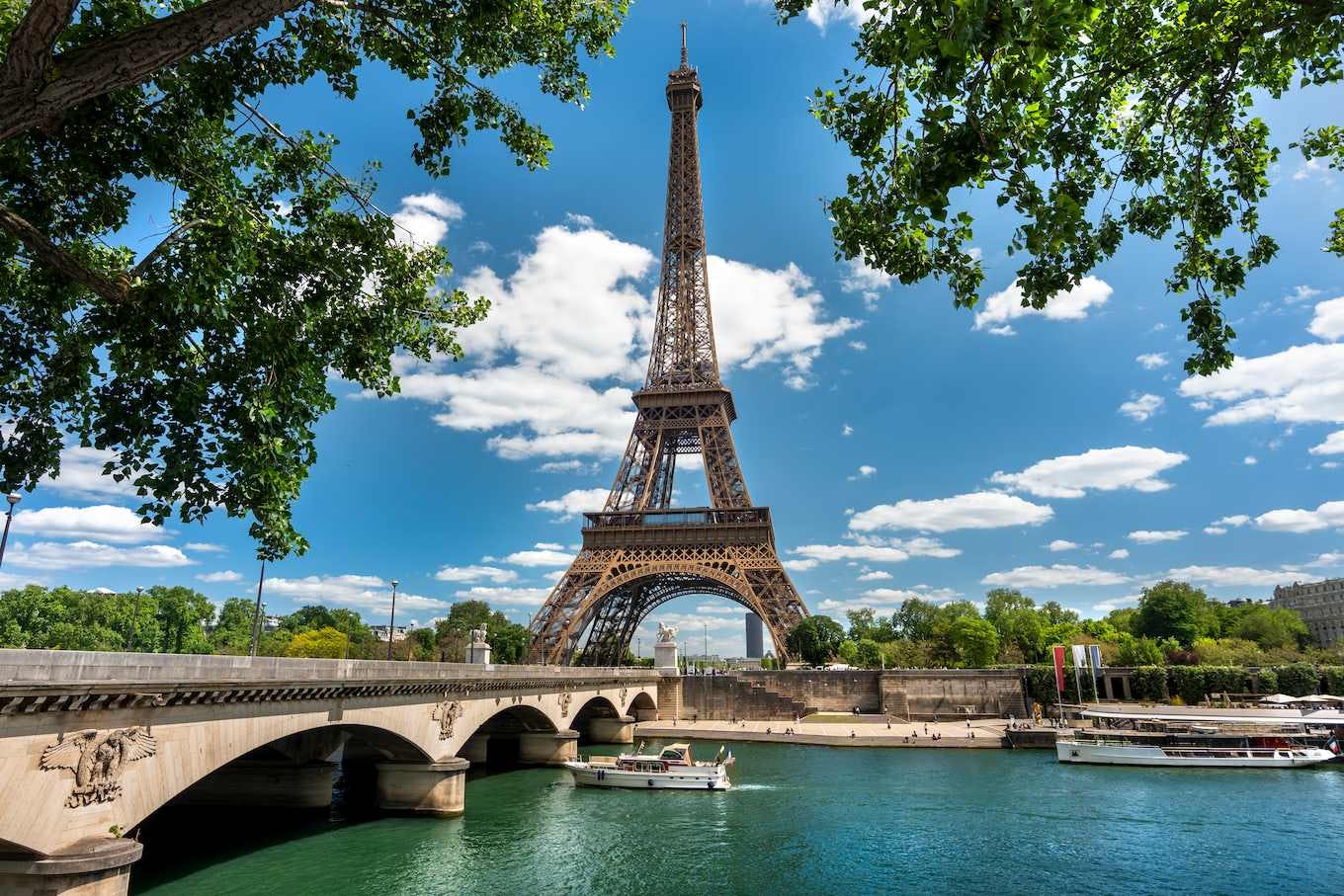
Historically open to cars, the Pont d'Iéna was temporarily pedestrianised for the Paris 2024 Games, to end up remaining so by decision of the City (buses and taxis excepted) ! Today, more than 50,000 pedestrians use it every day.
The result? It is now one of the best frontal views of the Eiffel Tower from the ground, without worrying about traffic.
Initially a simple pedestrian bridge then transformed into a bridge, we owe the Bir-Hakeim bridge to the engineer Louis Biette and the architect Jean-Camille Formigé.
Their feat? Build a bridge on two levels:
A magnificent bridge that offers an unobstructed and breathtaking view of the Seine and the Eiffel Tower, at all hours.
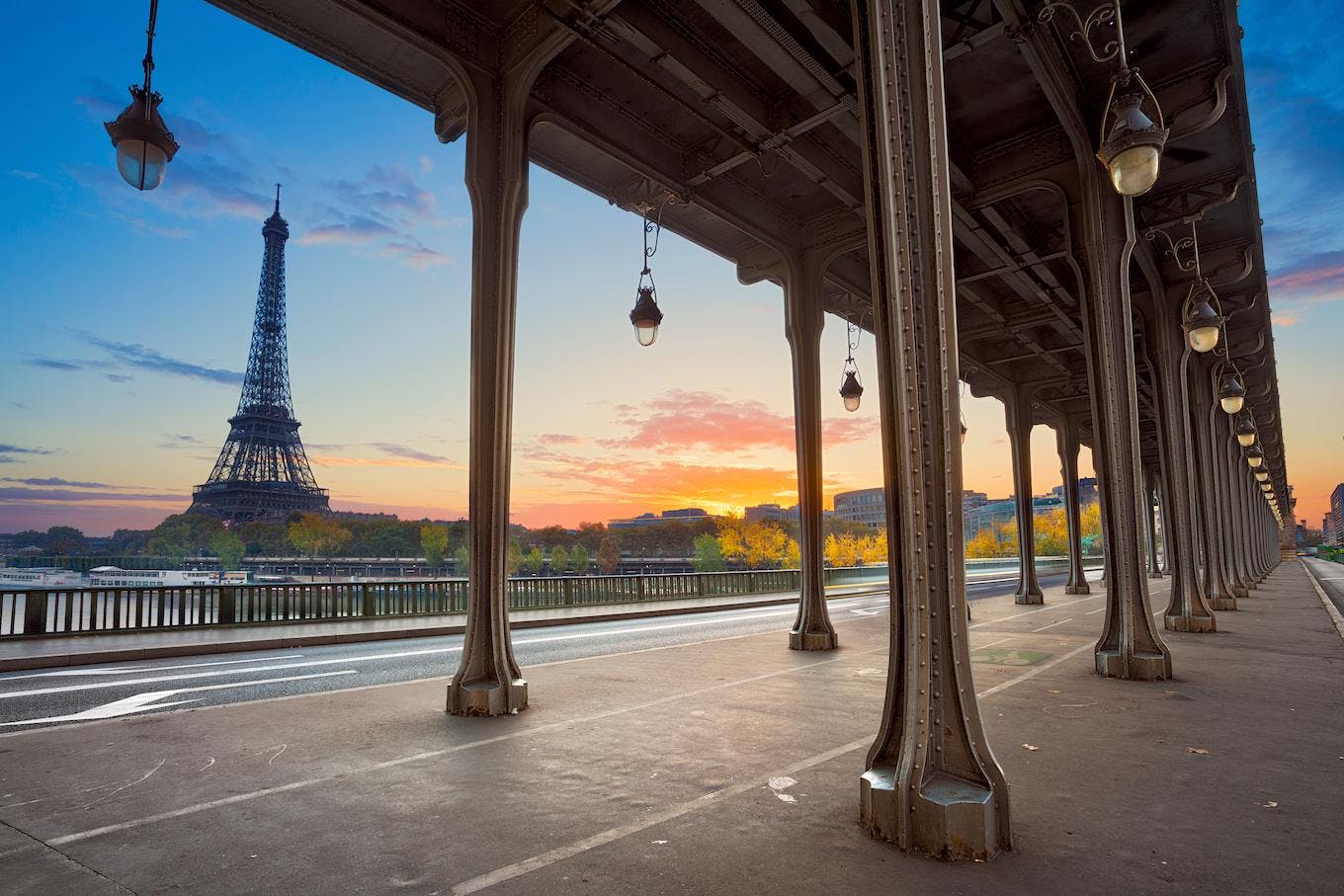
With its Art Nouveau metal galleries and the metro line that glides overhead, it doesn't get more photogenic than that.
Christopher Nolan (Inception, 2010), Luc Besson (Angel-A, 2005), Jean-Paul Belmondo (Fear of the City, 1975) and the Italian Bernardo Bertolucci (One Last Tango in Paris, 1972) have all used the central promenade of the bridge for their films.
Pssst: in the middle of the bridge, stairs go down to the Ile aux Cygnes (850 m of little-known tree-lined promenade). Follow it to the end: a replica of the Statue of Liberty awaits you.
These five bridges form a natural route between the Pont Neuf and the Pont de Bir-Hakeim, on foot or by bike, and in the direction you want, you will have it for a little more than an hour.
Tip : a good part of the quays are pedestrian, enough to take a nice walk!