Parisian districts with character not to be missed
Published on
Paris is not just about the Eiffel Tower and the Champs-Élysées. Whether you're passing through for a few days or on an extended vacation, it's hard to know where to take your steps in such a dense city. Here are six neighbourhoods that are definitely worth the trip - and how to get there easily by public transport.
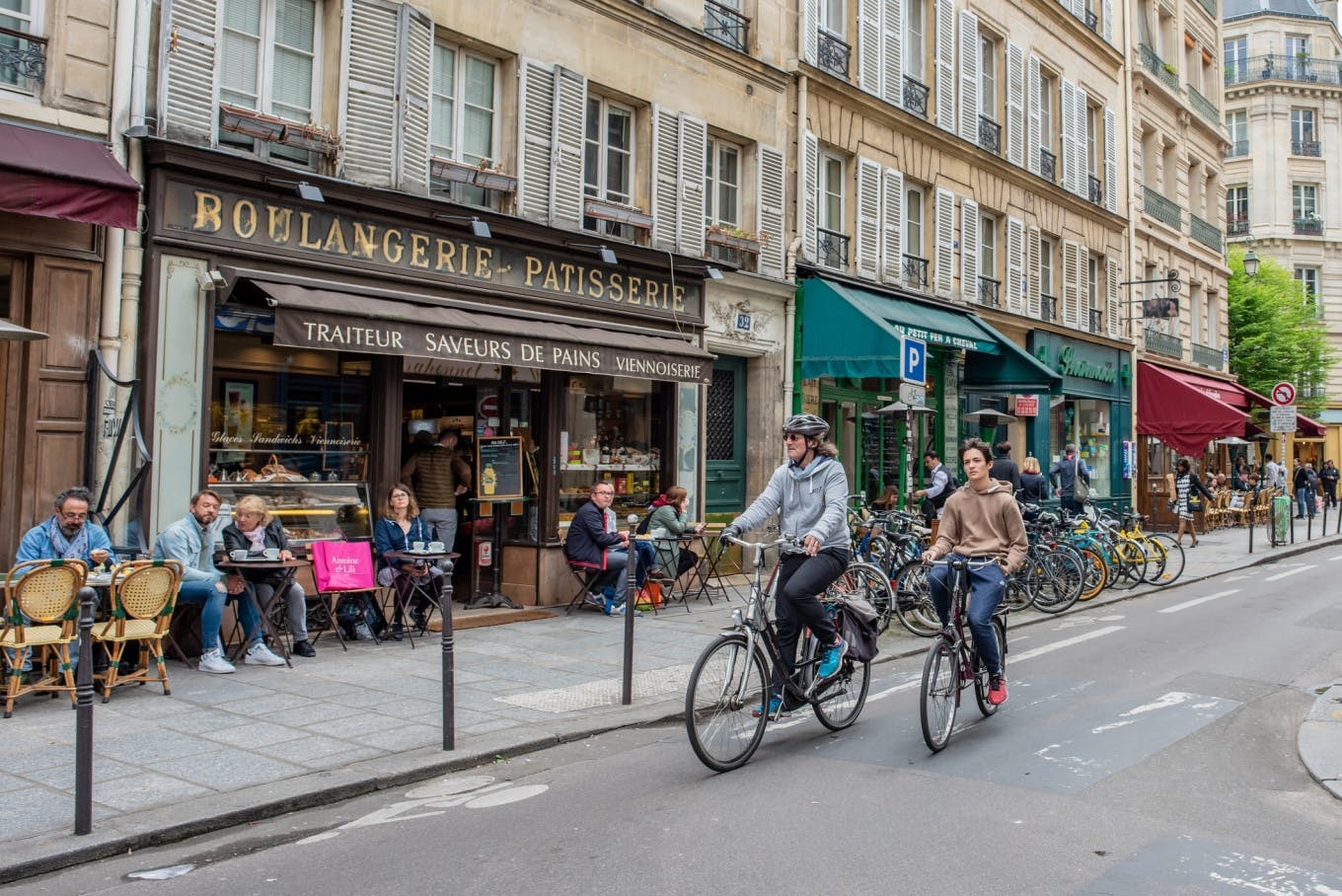
Neighbourhoods to visit
- Montmartre
- The Marais
- Bastille
- The Latin Quarter
- Belleville
- Canal Saint-Martin
Do you already know them? Do you want to go further? Working-class neighbourhoods, villages in the city or off-the-beaten-track addresses? There is something for everyone in Île-de-France. Get your fill of ideas with our selection of neighborhoods to explore.
1. Montmartre, the village suspended above Paris
It is impossible to pass through Paris without looking up at Montmartre and the domes of the Sacré-Coeur basilica. Perched at an altitude of 130 metres on the Butte, this former independent commune, annexed by Paris in 1860, has retained its village soul: cobbled streets, discreet staircases, flowery facades and cats on the windowsills.
It was here that Picasso, Modigliani, Utrillo and Toulouse-Lautrec set up their easels at the turn of the twentieth century, making Montmartre the cradle of Parisian modern art.
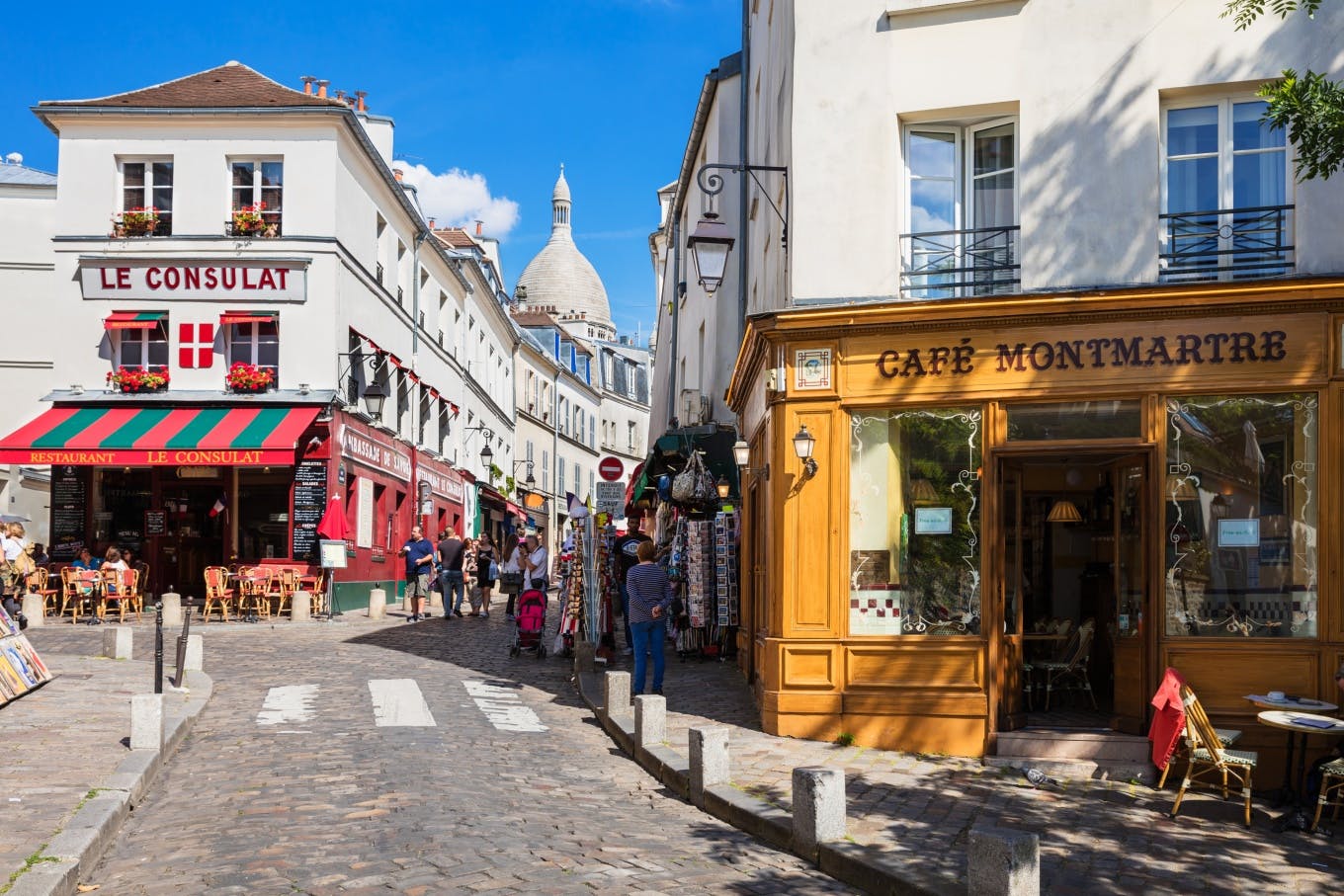
What we are looking for in Montmartre
Everyone knows Montmartre for the Sacré-Coeur and the effervescence of the Place du Tertre. But the district has many other surprises in store: a vine planted in 1933, the Museum of Montmartre nestled in the oldest house in the district, and secret passages that only attentive walkers discover.
Relatively untouched by the tourist hustle and bustle, Rue des Abbesses and Rue Lepic offer an excellent overview of neighbourhood life with its food shops frequented by Parisians, and its lively terraces.
How to get to Montmartre?
Butte Montmartre, 75018 Paris
- Metro line 12: Abbesses station, in the heart of the district - direct access by elevator or stairs (but be careful, there are 176 steps to climb)
- Metro line 2: Blanche station + 10 minutes walk via rue Lepic (and a passage in front of the mythical Moulin Rouge)
- Metro line 2: Anvers station, for even faster access to the foot of the hill via Rue de Steinkerque
- To climb to the top of Montmartre to the Sacré Coeur without climbing several flights of stairs: take the funicular at the foot of the hill.
2. The Marais, elegance around every corner
The Marais is one of the few districts of Paris to have escaped the great Haussmannian transformations of the nineteenth century. It is as if in a labyrinth of private mansions, cobbled courtyards and preserved medieval streets, many of which are classified as Historic Monuments.
At its heart, the Place des Vosges, built in the seventeenth century, remains the oldest square in Paris and one of the most beautiful in Europe.
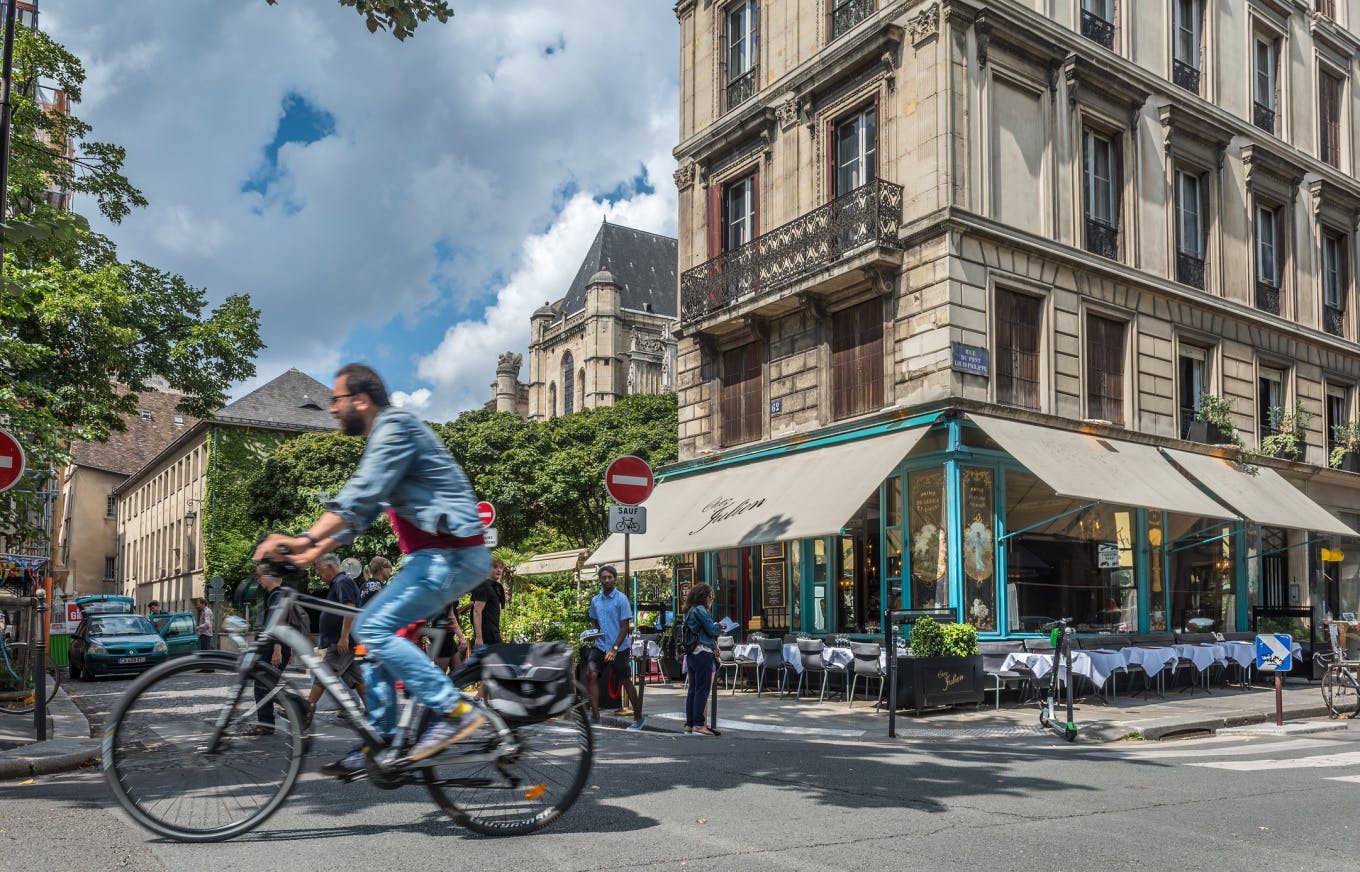
What to do in the Marais?
The Marais is both a museum district (the Picasso Museum, the Carnavalet Museum dedicated to the history of Paris, the Museum of Hunting and Nature) and a lively district, with its contemporary art galleries, its independent creators, its restaurants with exotic flavors (don't miss the rue des Rosiers!) and its nighttime effervescence.
The Marais is also the "Haut Marais", on the 3rd arrondissement side, with what is undoubtedly the most "fashionable" street in Paris: the rue de Bretagne with its trendy cafés (Café Charlot, Le Progrès...) and its famous Marché des Enfants Rouges, the oldest covered market in Paris, where you can sit down to have a bite to eat. Also take a refreshing break at the very pretty Square du Temple.
The Marais can be reached on foot, with no itinerary set in advance. Push open the carriage doors: behind most of them are hidden interior courtyards and unsuspected gardens.
3. Bastille, where history meets contemporary energy
On July 14, 1789, the storming of the Bastille marked the beginning of the French Revolution. The fortress has since disappeared, but the square that bears its name has remained an emblematic place in Paris.
Since the inauguration of the Opéra Bastille in 1989, the district has been profoundly transformed, attracting artisans, creators, restaurants and bars that today make it one of the most dynamic corners of the Right Bank.
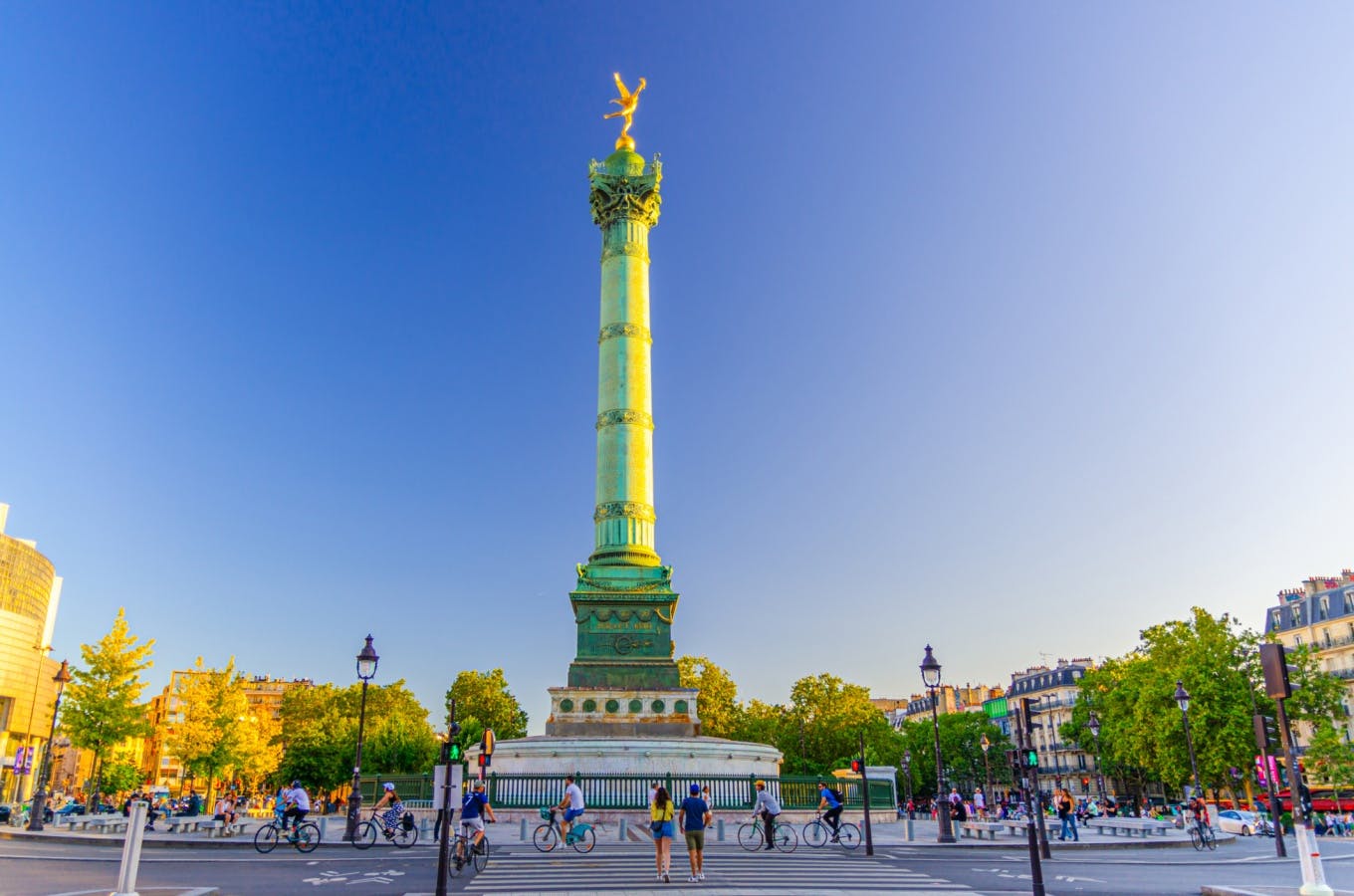
What can we find around the Bastille?
The district radiates in all directions. To the north, it's the Canal Saint-Martin and its arty banks - where you can swim in the summer. To the east, we head towards the Roquette district and its lively streets and towards the Faubourg Saint-Antoine, historically dedicated to cabinetmaking. A few minutes' walk away, you will discover the Marché d'Aligre, one of the most authentic and affordable in Paris, surrounded by cute cafes.
How to get to the Bastille?
Place de la Bastille, 75004-75011-75012 Paris
- Metro lines 1, 5 and 8: Bastille station, direct access to the square
- Metro line 8: Ledru-Rollin station + 5 min walk to reach the Marché d'Aligre
4. The Latin Quarter, in the footsteps of philosophers and students
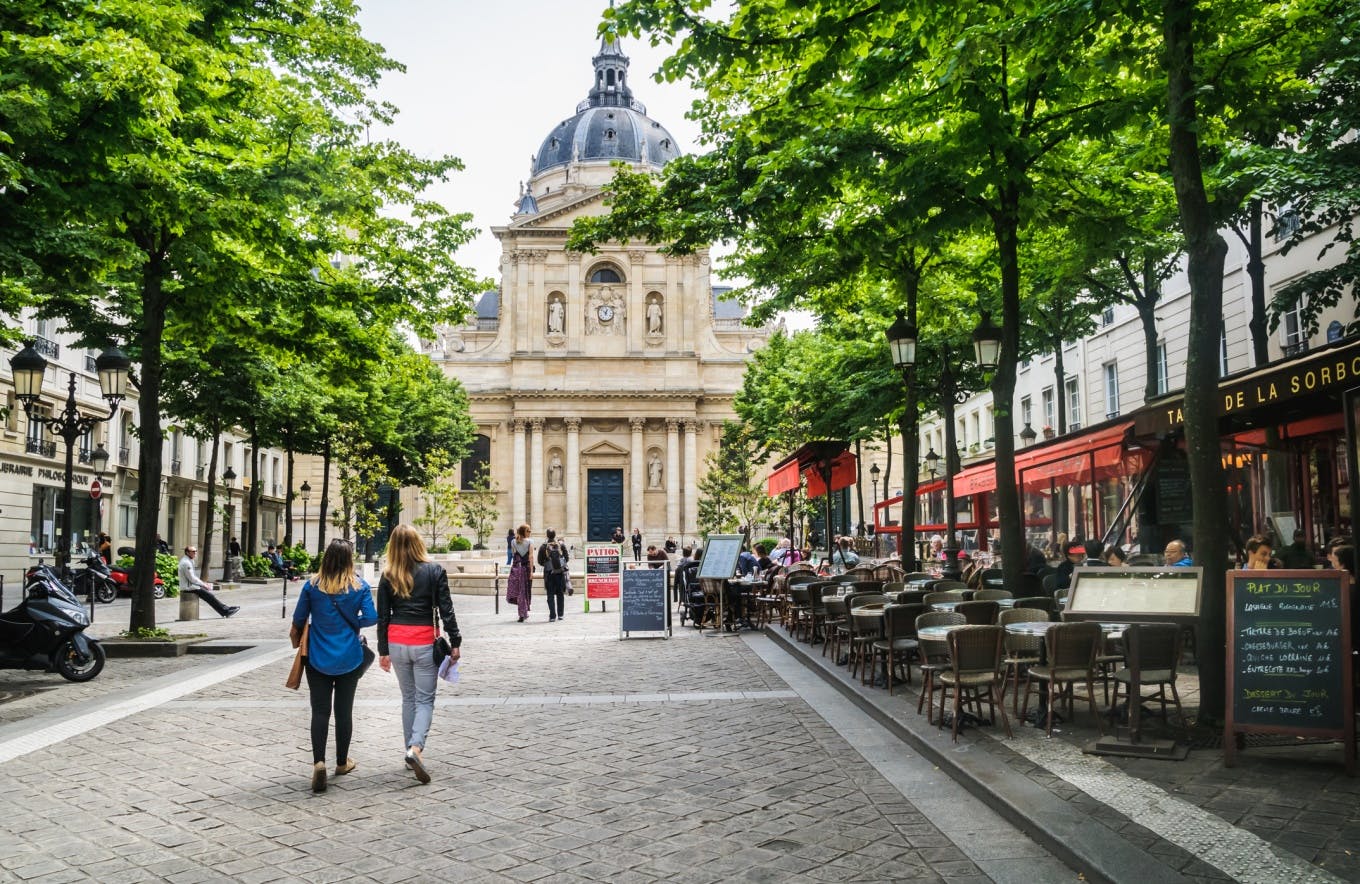
Ever since the students of the Sorbonne, a university founded in 1257, debated in Latin in the streets, the Latin Quarter has never ceased to attract curious minds. Even today, independent bookstores, literary cafés and cutting-edge cinemas compete for every square meter of this district steeped in history.
On the left bank of the Seine, between the Notre-Dame de Paris cathedral and the Pantheon, it is one of the few places in the capital where you still feel both in the heart of the city and out of time.
What to see and do in the Latin Quarter?
The Pantheon has dominated the district since 1790 and houses the tombs of 80 great French figures, from Victor Hugo to Marie Curie. Below, the Sorbonne, the Collège de France and the major faculties give the district its studious and international atmosphere.
On the banks of the Seine, the second-hand booksellers, present since the sixteenth century, offer old books, prints and postcards in their characteristic green boxes. Rue Mouffetard, one of the oldest in Paris, descends from the adorable Place de la Contrescarpe to a succession of markets, cheese shops and lively terraces.
How to get to the Latin Quarter?
Quartier Latin, 75005 Paris
- RER B and C : Saint-Michel-Notre-Dame station, in the heart of the district, a stone's throw from the banks of the Seine
- Metro line 7 : Censier-Daubenton station to reach Place de la Contrescarpe, Rue Mouffetard and its markets
- Metro line 10: Cluny-La Sorbonne station + direct access to the Cluny Museum and the Sorbonne
5. Belleville, the living mosaic of Paris
A working-class district that has become one of the most creative in Paris, Belleville concentrates in a few streets the most lively and diverse aspects of the capital.
Chinese, North African and African communities have coexisted for decades with long-standing Parisian artists and families, giving rise to a unique neighborhood culture.
What makes Belleville unique?
Belleville is above all a way of life: grocery stores from all over the world, restaurants from four continents, no-frills neighborhood tables and monumental street art on every available façade.
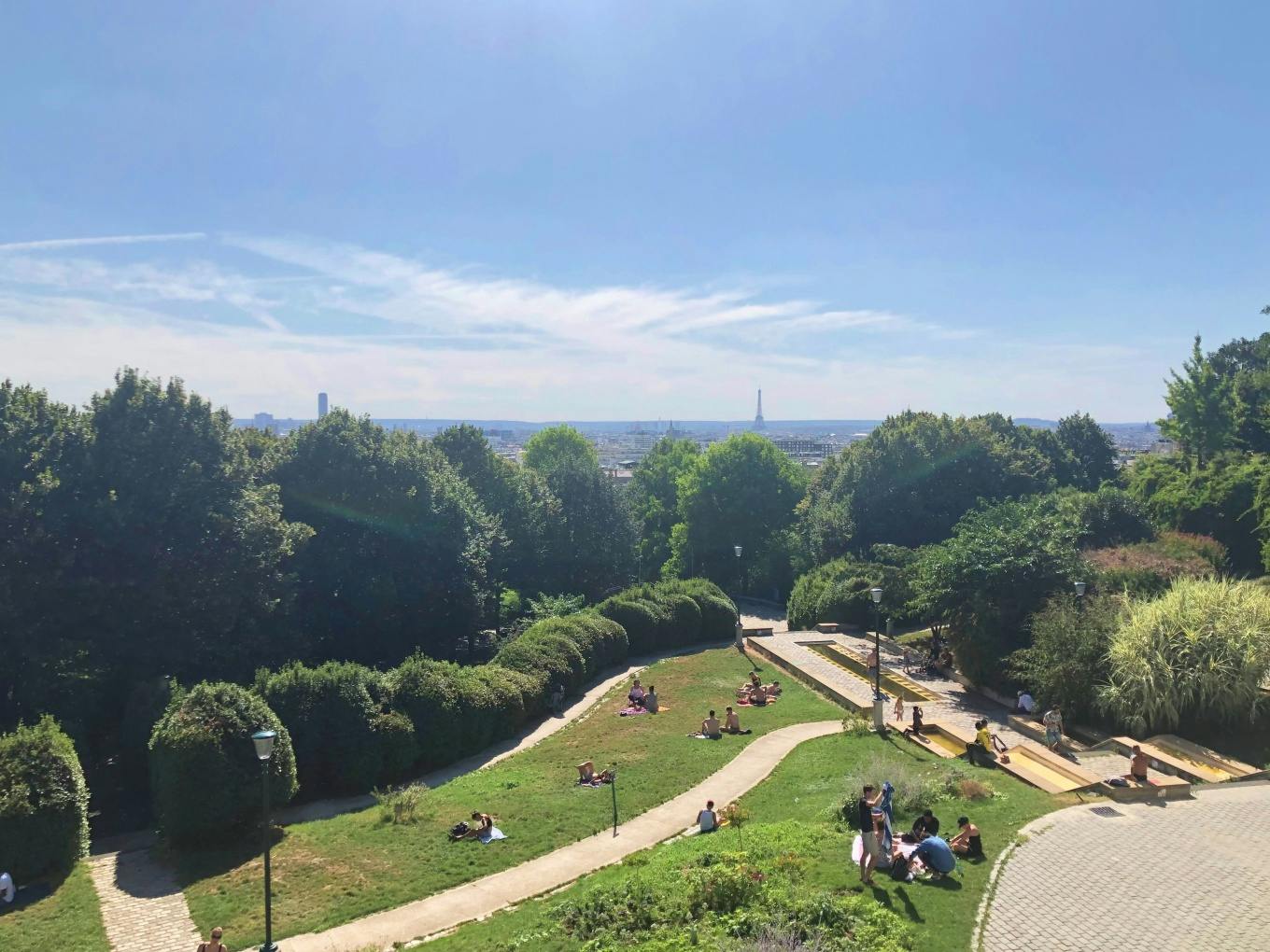
But Belleville is also greenery. The Parc de Belleville, located on the heights of the district at an altitude of 108 meters, offers from its terraces one of the most unobstructed views of Paris, without waiting, without tickets, and without elevator. Below, the Jardins des Couronnes and the green corridor of the Petite Ceinture extend the escapade.
How do I get to Belleville?
Quartier de Belleville, 75019-75020 Paris
- Metro lines 2 and 11: Belleville station, main entrance to the district
- Metro line 2: Couronnes station, in the heart of the district
- Metro line 11: Pyrenees station, then a 5-minute walk to reach the Parc de Belleville from the heights
6. Canal Saint-Martin: Cafes and Swimming, the Living Heart of Paris
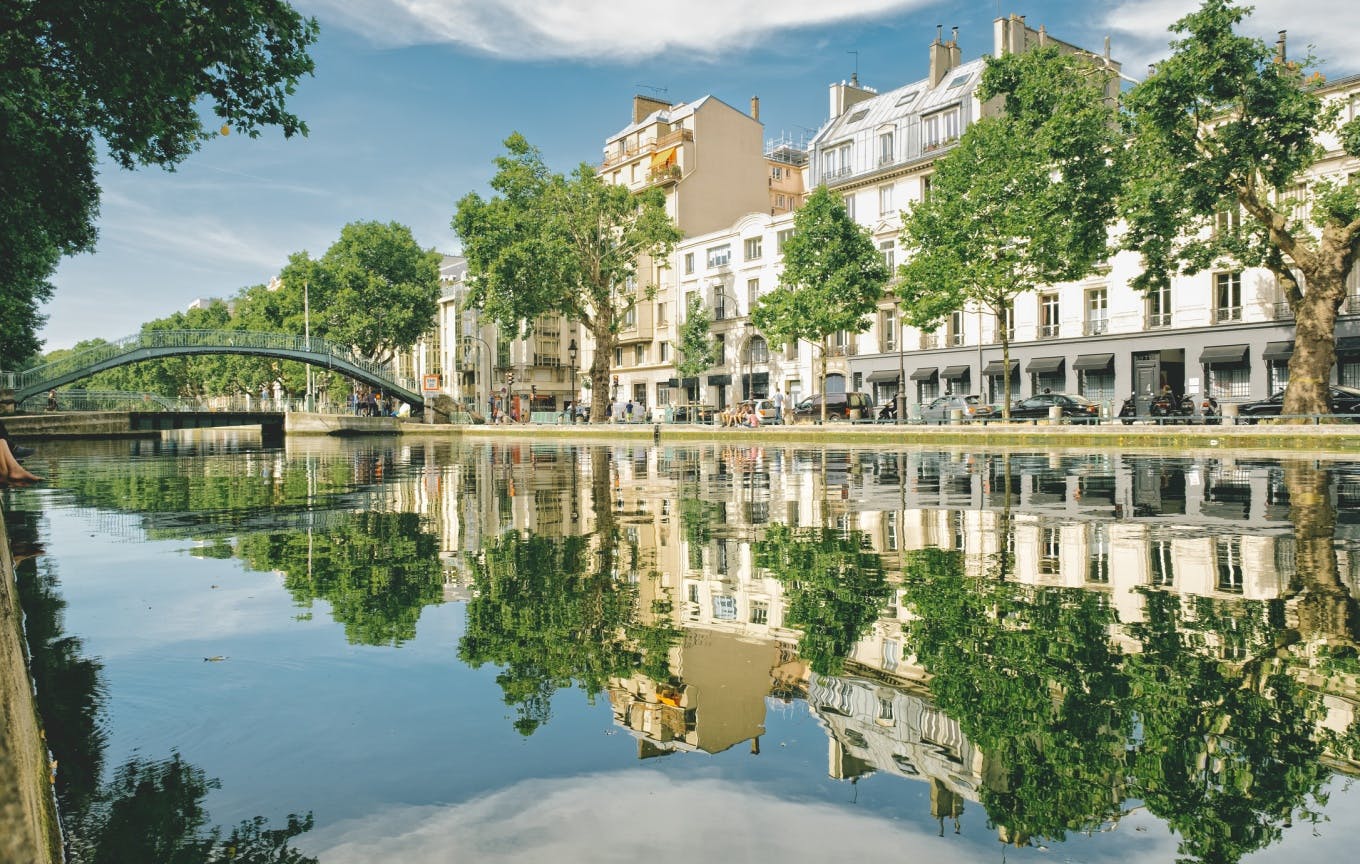
Imagine, just behind the bubbling Place de la République, you come across a bucolic canal, lined with trees, restaurants and cafes. During the hot days of summer, Parisians bathe or read in the shade. There you are. Welcome to the Canal Saint-Martin.
Why does the Canal Saint-Martin tell the story of the Parisian soul?
A small piece of the 10th arrondissement of Paris that has become a must for anyone who wants to understand the real Paris of Parisians (and Ile-de-France residents, for that matter). So be careful, it's not a quiet area: it's bubbling up, it's laughing, bikes, scooters and pedestrians are intermingled. In the pretty Jardin Villemin, the populations mix. In the evening, the terraces fill up and the banks of the canal are the perfect place for an improvised aperitif with your feet in the water.
How to get to the Canal Saint-Martin?
Quartier du Canal Saint-Martin, 75010 Paris
- Metro 3, 5, 8, 9 and 11 - République (+ 5 min walk via rue Beaurepaire)
- Metro 4, 5, 7 and RER E - Gare de l'Est (+ 5 min walk via the Jardin Villemin)
- Metro 2 - Colonel Fabien (+ 10 min walk along the very nice rue de la Grande aux Belles)
- Metro 7 and 7bis - Louis Blanc (+ 5 min walk via rue Louis Blanc)
- Metro 2, 5 and 7bis - Jaurès (the opportunity to also enjoy the superb Bassin de la Villette, with its rotunda and its summer swimming area)
Ready to explore Paris in a different way? Île-de-France has dozens of districts, including outside the capital, each with its own identity and secrets.