Charlotte Quint, Bus Competition Project Manager at Île-de-France Mobilités
Published on
She actively participates in the competition of buses in Île-de-France: Charlotte Quint tells us about her complex and exciting job, tells us why she loves it, the importance of diplomacy in her daily life and how she facilitates dialogue between public authorities and private operators.
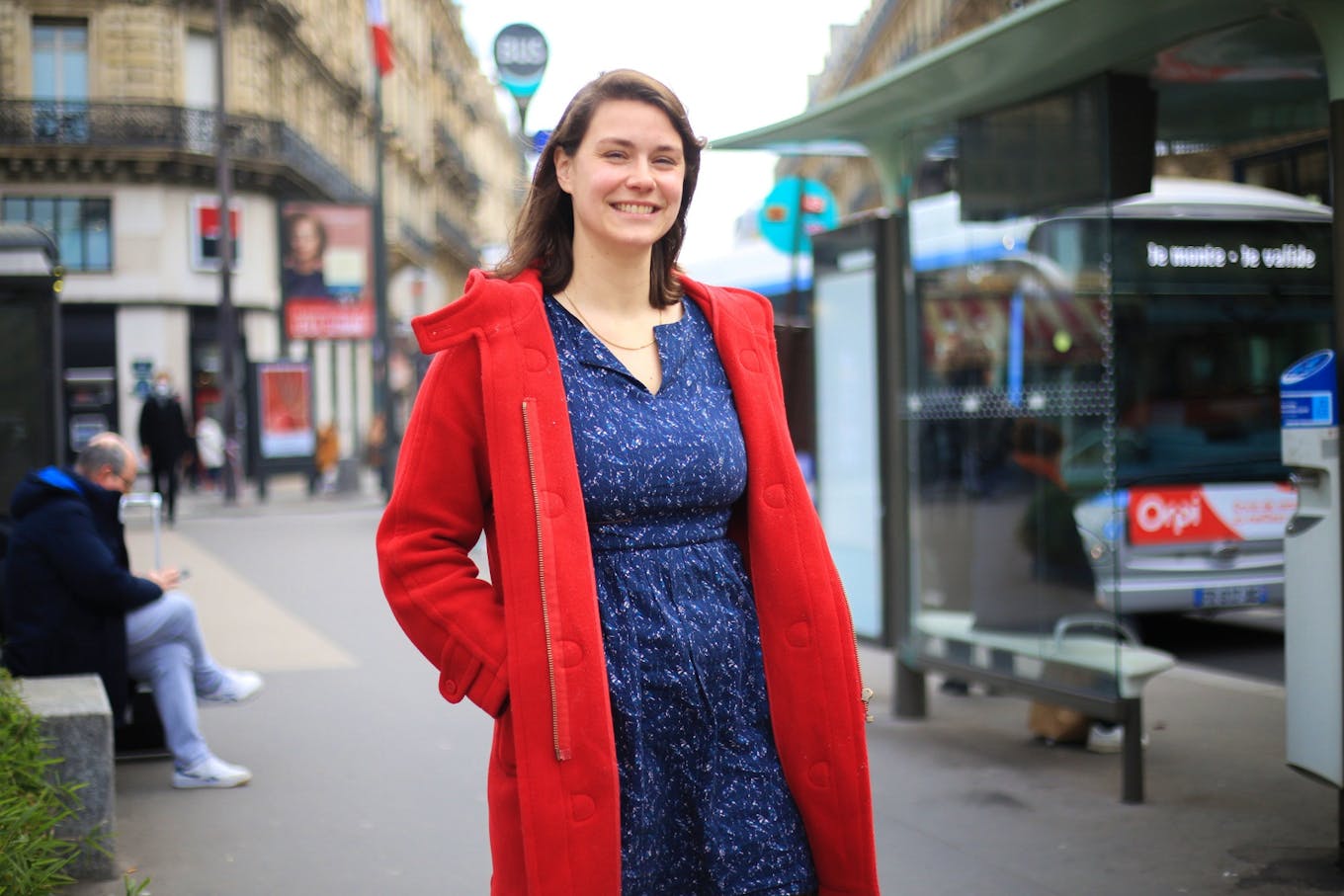
My job: Bus competition project manager
Within the Competitive Bidding Department (15 people), I am in charge of the competitive bidding of bus lines in Paris and the inner suburbs.
I first focused on buses in the outer suburbs, the 1200 bus lines entrusted to historical private operators grouped together in the OPTILE association (Organisation Professionnelle des Transports d'Île-de-France), now we are launching the competition of bus lines in Paris and the inner suburbs. A network of 311 bus lines, which is however much larger in terms of kilometers or number of passengers.
What is competitive bidding?
Until recently, bus lines in Île-de-France were operated as a monopoly. This means that a company, always the same, was the holder of an operating contract that was constantly renewed. But now European and national laws impose on us the date of January 1, 2025 for the commissioning of contracts for buses after a competitive bidding procedure - as it did for water...
It is a process of competition with public service delegation that started with buses but will continue with trains, trams, RER and ultimately the metro.
In concrete terms, this means that following a call for tenders, an operator, whetherFrench or foreign, will be able to operate the bus lines in Paris and the inner suburbs.
This competition is new in the Île-de-France region, but it is already a long-standing reality in many cities such as Lyon and Lille. There, the operation of the lines is put out to competition every 5 to 10 years and the operators are used to it.
For us, at Île-de-France Mobilités, this competitive bidding process is of course a response to the need to comply with national and European law, but it is also a way, as the organising authority for mobility in the Île-de-France region, to encourage operators to offer us the best operating projects to improve the quality of service for the benefit of Ile-de-France residents.
Skills and qualities
The 3 key skills to succeed in my job
- Know how to prioritize: don't let yourself be overwhelmed by stress or by the high density of subjects
- The ability to work and interact with a multitude of interlocutors, internal and external, with all different corporate cultures
- Project management, of course, my job is that of an orchestra conductor
The qualities that serve me on a daily basis
- Be diplomatic
- Empathy
- Resistance to stress
- And always positivity, good humor
What is my daily life at work?
- Monitor the progress of the different projects, make sure that each team is making good progress on its deliverables
- Developing and enriching management tools
- To be a conductor, to centralize all the questions on the subject
- Lead monthly meetings with cross-functional teams to maintain a good level of information for all stakeholders
My background
My background is very focused on public contracts, in the broad sense and interactions between the public and private sectors.
I studied law, before a master's degree in Public/Private Partnership Engineering at SciencesPo Lyon. This training, which no longer exists, allowed me to learn how to organize a dialogue between a private actor and a public authority that formulates a need, a public service to be delegated for example.
After my studies, I joined a consulting firm dedicated to the public sector, with a position focused on financial issues. That's where I worked on my first public service delegations, with the analysis of offers, the awarding of contracts, etc.
And that's how I applied to Île-de-France Mobilités 5 and a half years ago.
Why do I love my job?
The interesting thing about being a project manager is that I'm not a business expert, but I work with a variety of specialists – lawyers, financial experts and engineers. I'm not a specialist but I understand.
And then this job offers me a very varied daily life, a multitude of subjects, in the very codified framework of a competition with the Public Service Delegation procedure. We don't do the same thing from one month to the next, it's not repetitive. At the moment, for example, I am immersed in heritage issues. And then it allows me to work with a lot of people, very different.