Five parks to get out of Paris, without leaving Paris
Published on
Lawns for picnics, tropical greenhouses, an old railway line transformed into a garden, a hidden vineyard at an altitude of 100 meters: Parisian parks are not alike, and each one invites you to escape in their own way. Here are five green spaces to choose according to the mood of the moment.
On the program? Jardin des Plantes • Parc de la Villette • Bois de Boulogne • Coulée Verte René-Dumont • Butte Bergeyre
1. The Jardin des Plantes, the oldest scientific garden in France (and one of the most beautiful)
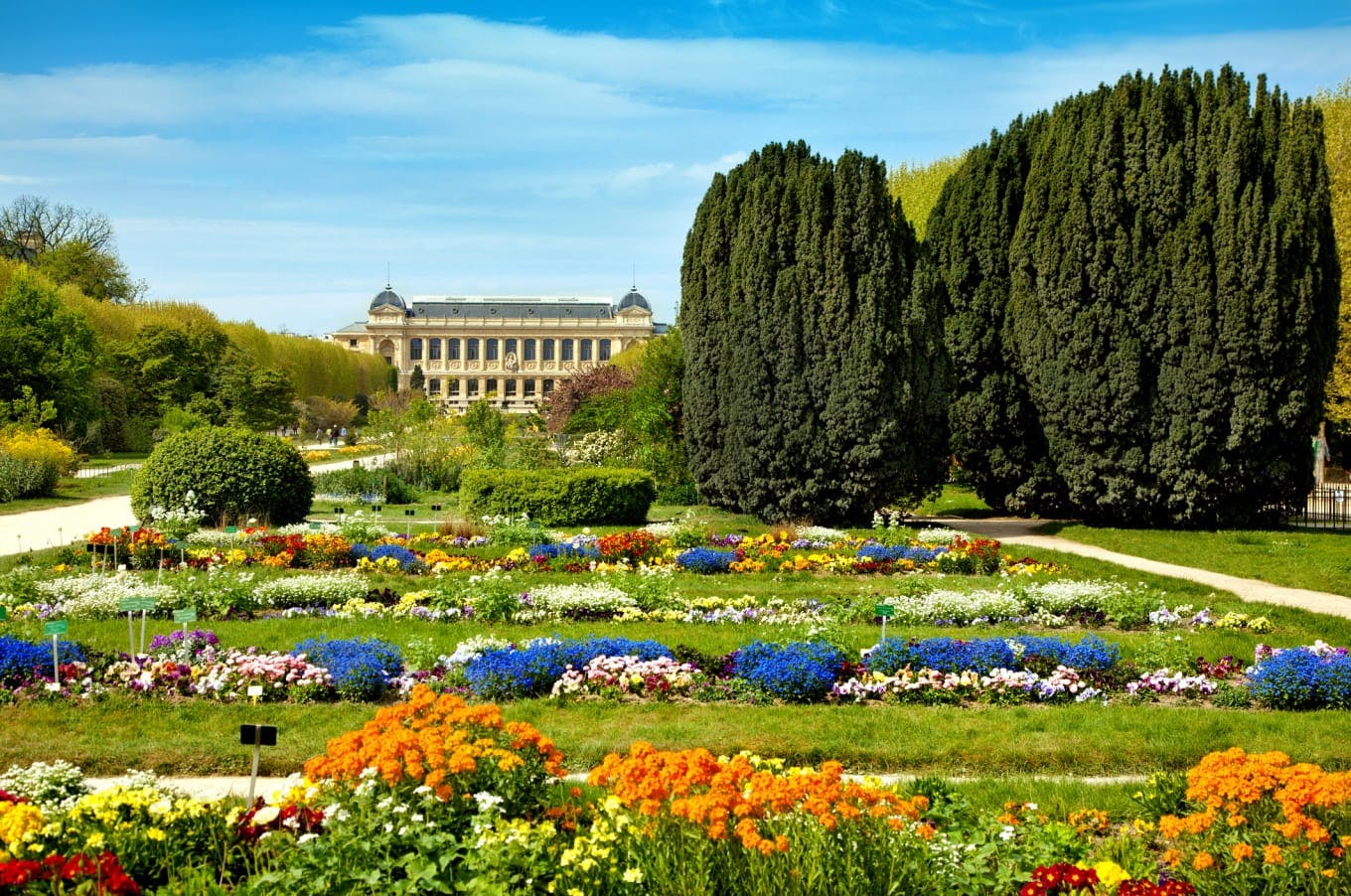
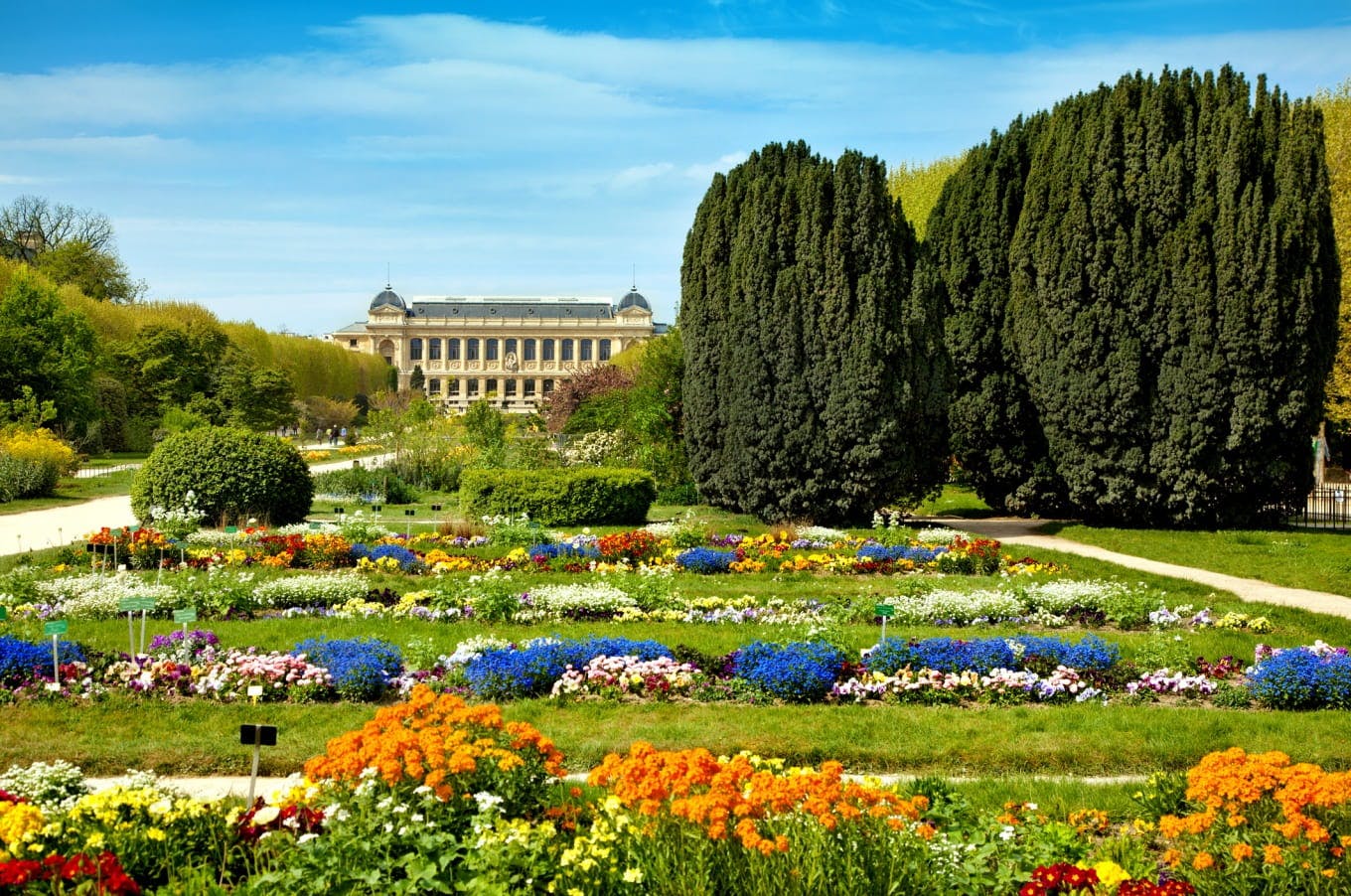
Created in 1626 as the medicinal garden of King Louis XIII, the Jardin des Plantes celebrates its 400th anniversary in 2026. On 23 hectares in the heart of the 5th arrondissement, it brings together a botanical garden, a menagerie, tropical greenhouses, a labyrinth and all the galleries of the National Museum of Natural History.
What to see in the Jardin des Plantes?
- The Great Tropical Greenhouses : four glass and metal pavilions, built in 1836 and classified as historical monuments, housing equatorial plants, arid ecosystems and a paleobotany gallery
- The Labyrinth : perched on a hill, it offers a panoramic belvedere over the gardens and is home to a cedar of Lebanon planted in 1734, the oldest tree in Paris
- The Galerie de l'Evolution : one of the most beautiful museographic displays in France, with hundreds of stuffed animals on four levels
- The Menagerie : the second oldest zoo in the world (1794), specializing in endangered species
- The Rose Garden and the thematic gardens : aromatic plants, alpine garden, irises and peonies in season
Please note : access to the botanical garden and the labyrinth is free all year round. Only the galleries of the Museum, the Menagerie and the Grandes Serres are charged.
Our advice
Climb the labyrinth perched on the hill: the bird's-eye view of the gardens is little known, even to regulars. In April-May, the rose garden and peony gardens are in full bloom: a rare and free sight in the heart of Paris.
How to get there by public transport?
36 rue Geoffroy-Saint-Hilaire, 75005 Paris
- Metro 7: Censier-Daubenton station + 7 min walk via Rue Daubenton, direct access to the National Museum of Natural History
- Metro 7 and 10: Jussieu station + 3 min walk via rue Linné. Fast-track access to the Jardin des Plantes maze
- RER C and metros 5 and 10: Gare d'Austerlitz + 2 min walk via Place Valhubert. To see along the way: the Pont d'Austerlitz and its views of the Seine, the main entrance to the Garden
2. The Parc de la Villette, the largest cultural park in Paris, between concerts, science and gardens
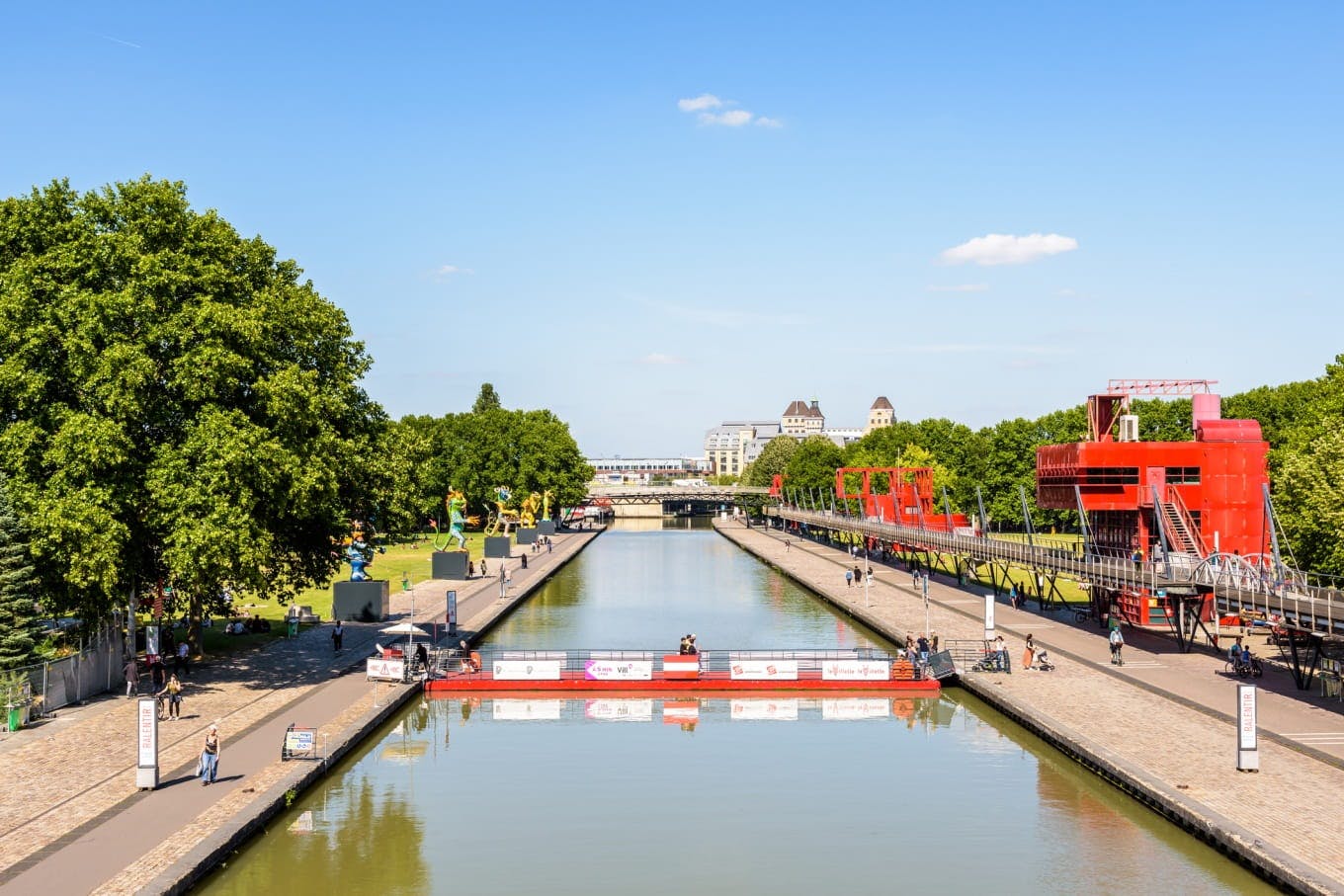
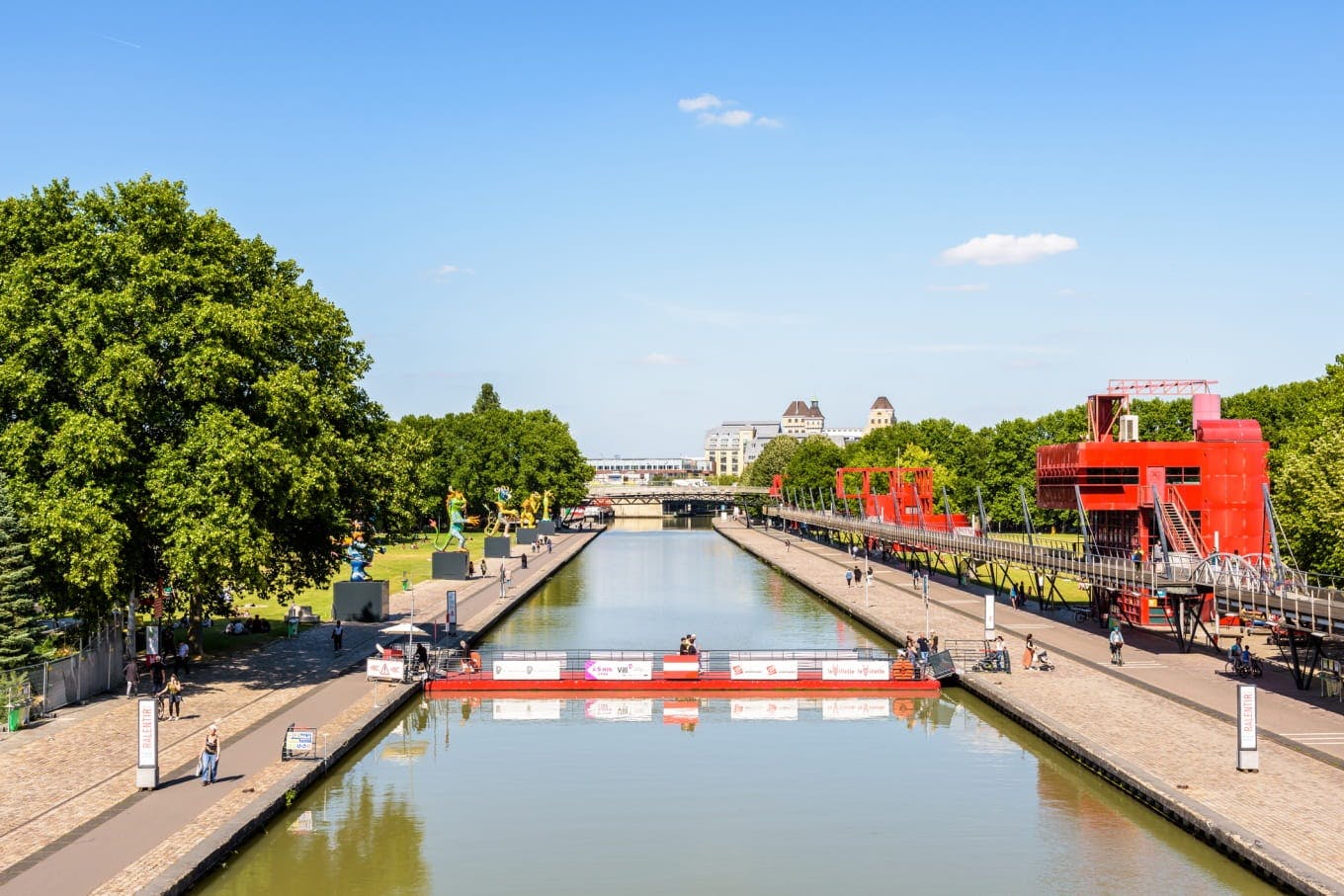
It is the largest urban park in Europe! 55 hectares between the 19th arrondissement of Paris and the city of Pantin, in Seine-Saint-Denis (go for a walk, along the Canal de l'Ourcq!). The Parc de la Villette is not only a green space: it is a cultural district in its own right, designed by the architect Bernard Tschumi in 1982 on the site of the former slaughterhouses of Paris. Around the Bassin de la Villette and the Canal de l'Ourcq, it brings together the Cité des Sciences, the Grande Halle, the Philharmonie de Paris and three other concert halls (Le Zénith, Le Trabendo and Le Cabaret Sauvage) as well as about twenty themed gardens.
What not to miss
- The Cité des Sciences et de l'Industrie : the largest science museum in Europe, with the Géode (hemispherical IMAX cinema) and the Argonaute submarine moored outside
- The Philharmonie de Paris (built in 2015, under the signature of the French "starchitect" Jean Nouvel): one of the largest concert halls in Europe, with a music museum and free exhibitions on the large esplanade
- The Grande Halle de la Villette : former oxen hall from 1867, converted into a hall for shows, festivals and exhibitions
- Thematic gardens : Jardin des Dunes, Jardin des Vents, Jardin des Voltiges, Jardin des Fruitiers: each has its own landscape identity
- The Canal de l'Ourcq and the Bassin de la Villette : accessible on foot from the park to extend the walk to the 10th arrondissement or Pantin
- In summer: the Open-Air Cinema (July-August) screens films on a large lawn. Free admission, bring your plaid.
Our advice
Arrive at the Porte de Pantin station (line 5) to walk along the Philharmonie and the Grande Halle from the south, going up the main alley to the Géode. Combine your visit with a walk on the Canal de l'Ourcq: from the park, the towpath runs along the canal to Pantin and its General Stores (street art, terraces, bars).
How to get there by public transport?
211 avenue Jean Jaurès, 75019 Paris
- Metro 5 and tram T3b: Porte de Pantin station, directly at La Villette. This is the most spectacular entrance: it opens in front of Jean Nouvel's Philharmonie de Paris
- Metro 7 and tram T3b: Porte de la Villette station. This entrance gives access to the Cité des Sciences and the Géode
3. The Bois de Boulogne, the green lung of western Paris, with its lakes, museums and racecourses
846 hectares of forest, lawns, lakes and gardens on the edge of the 16th arrondissement. A former royal hunting estate offered to Parisians by Napoleon III in 1852, the Bois de Boulogne is one of the two great green lungs of the capital along with the Bois de Vincennes. Every year, millions of walkers, runners, cyclists and families meet there to take a breather.
What to do in the Bois de Boulogne?
- Walk or run: dozens of kilometres of marked trails, accessible on foot, by bike or on horseback
- Boating on the Lower Lake : on-site rental, one of Parisians' favorite weekend activities
- Visit the Fondation Louis Vuitton (Frank Gehry, 2014), recognizable by its glass sails, which hosts exhibitions of modern and contemporary art
- Discover the Jardin d'Acclimatation : a family-friendly amusement park open since 1860, with admission included in the Fondation Louis Vuitton ticket
- Go to the Longchamp or Auteuil racecourses : the races take place from April to November, in a chic atmosphere and accessible by transport
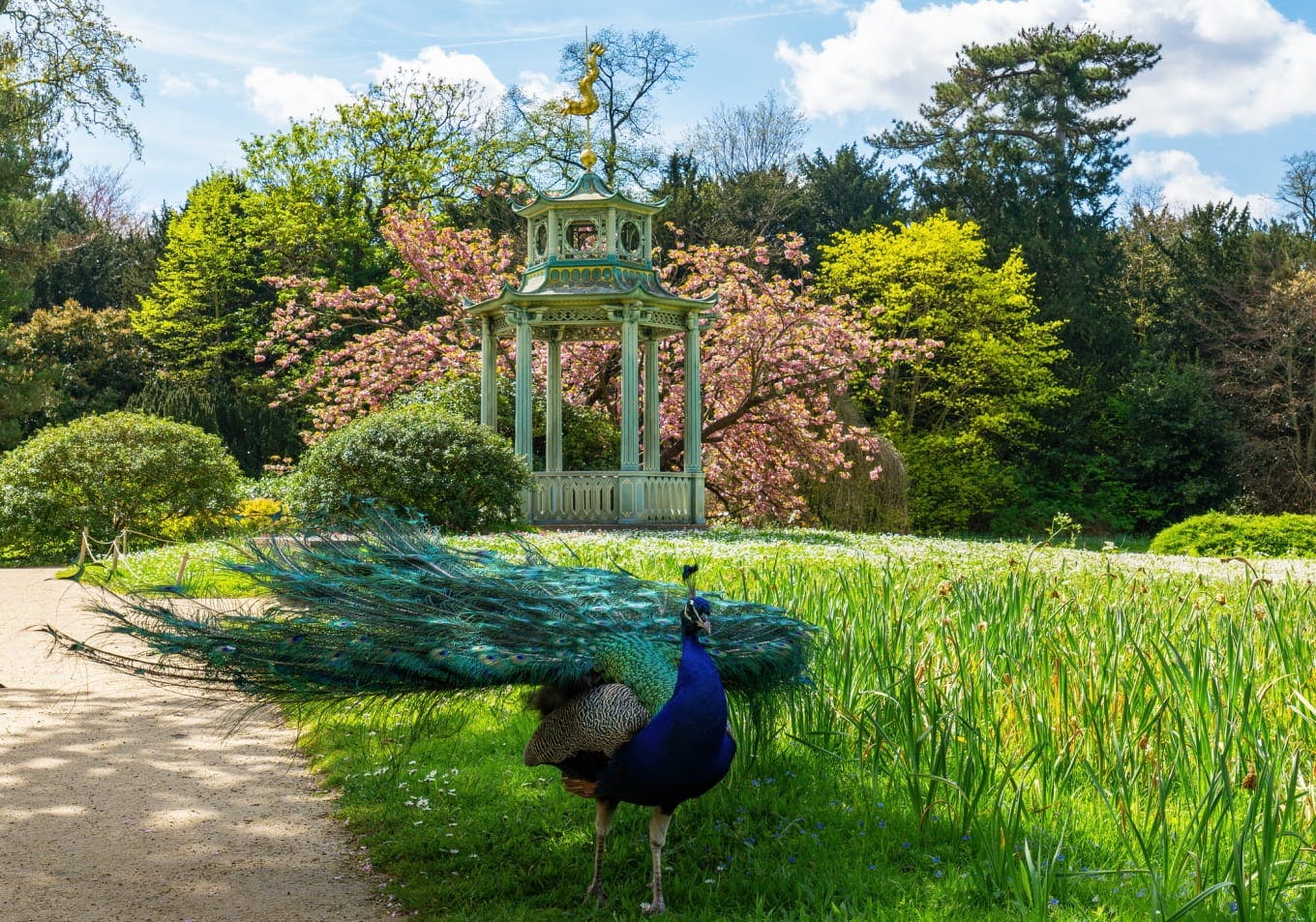
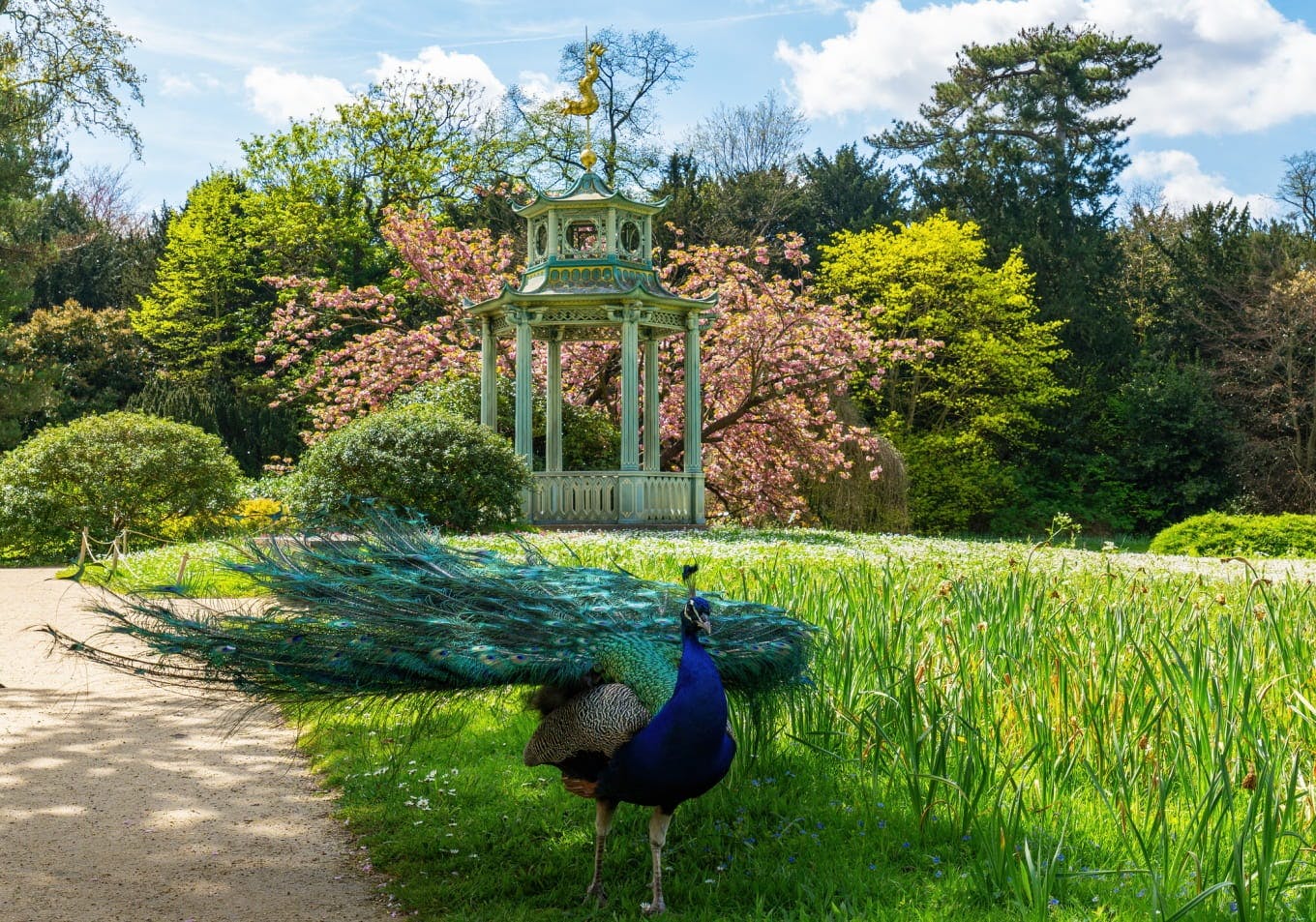
- Picnic at the Pré Catelan or in the Bagatelle park : the Bagatelle rose garden reaches its peak of bloom in June and it is also an opportunity to admire the magnificent peacocks that live there in freedom (be careful the entrance to Bagatelle is paid, 2.80 € per person, but it's really worth it/cost)
Our advice
For a complete walk, reach the Bois de Boulogne from the Ranelagh metro station (line 9), walk to the Lower Lake, cross the Bois to the Louis Vuitton Foundation, enjoy the Jardin d'Acclimatation and end your walk in Neuilly sur Seine, Les Sablons metro station (line 1).
How to get there by public transport?
Several entries depending on the sector
- Metro 1: Les Sablons station + 4 min walk. It is the ideal access to the Jardin d'Acclimatation and the Louis Vuitton Foundation. What to see on the way from the resort: the perspective that runs from the Grande Arche de La Défense to the Arc de Triomphe
- Metro 2: Porte Dauphine station + 5 min walk, easy access to the Lower Lake. Worth seeing: the Porte Dauphine station itself, which retains one of Hector Guimard's rare Art Nouveau canopies in original condition
- Metro 9: Ranelagh station, 15-minute walk to the Upper and Lower lakes and the Auteuil racecourse
- Metro 10: Porte d'Auteuil station, access to the southern tip of the wood on the Roland-Garros stadium and Auteuil racecourse. To see: by walking a little, the very pretty Edmond de Rothschild park, with its castle and Japanese garden
- RER C: Avenue Henri-Martin + 10 min walk. Easy access to the lawn of La Muette and the Fête à Neuneu, when it takes place
4. The Coulée Verte René-Dumont, the former suspended railroad that inspired New York's High Line
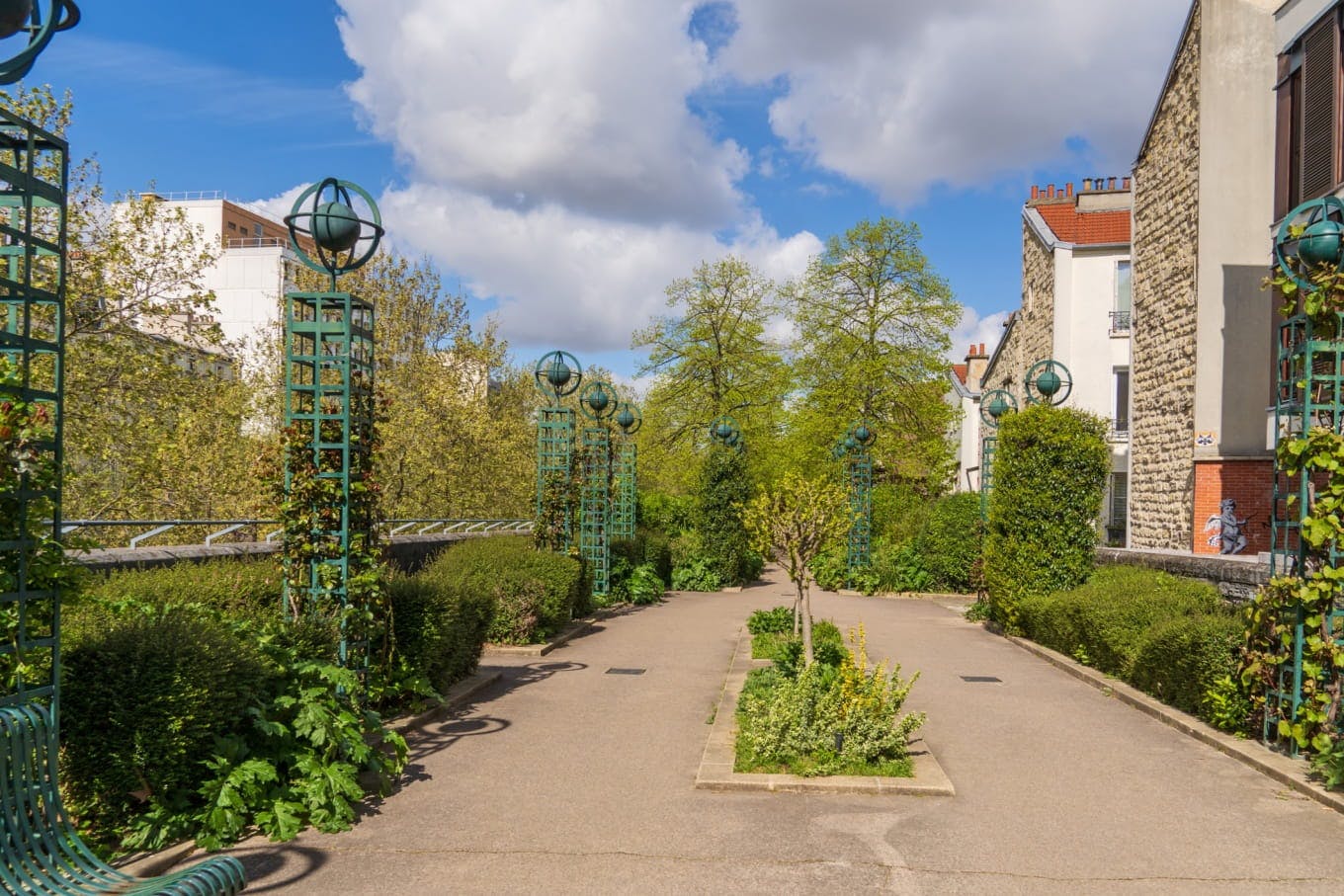
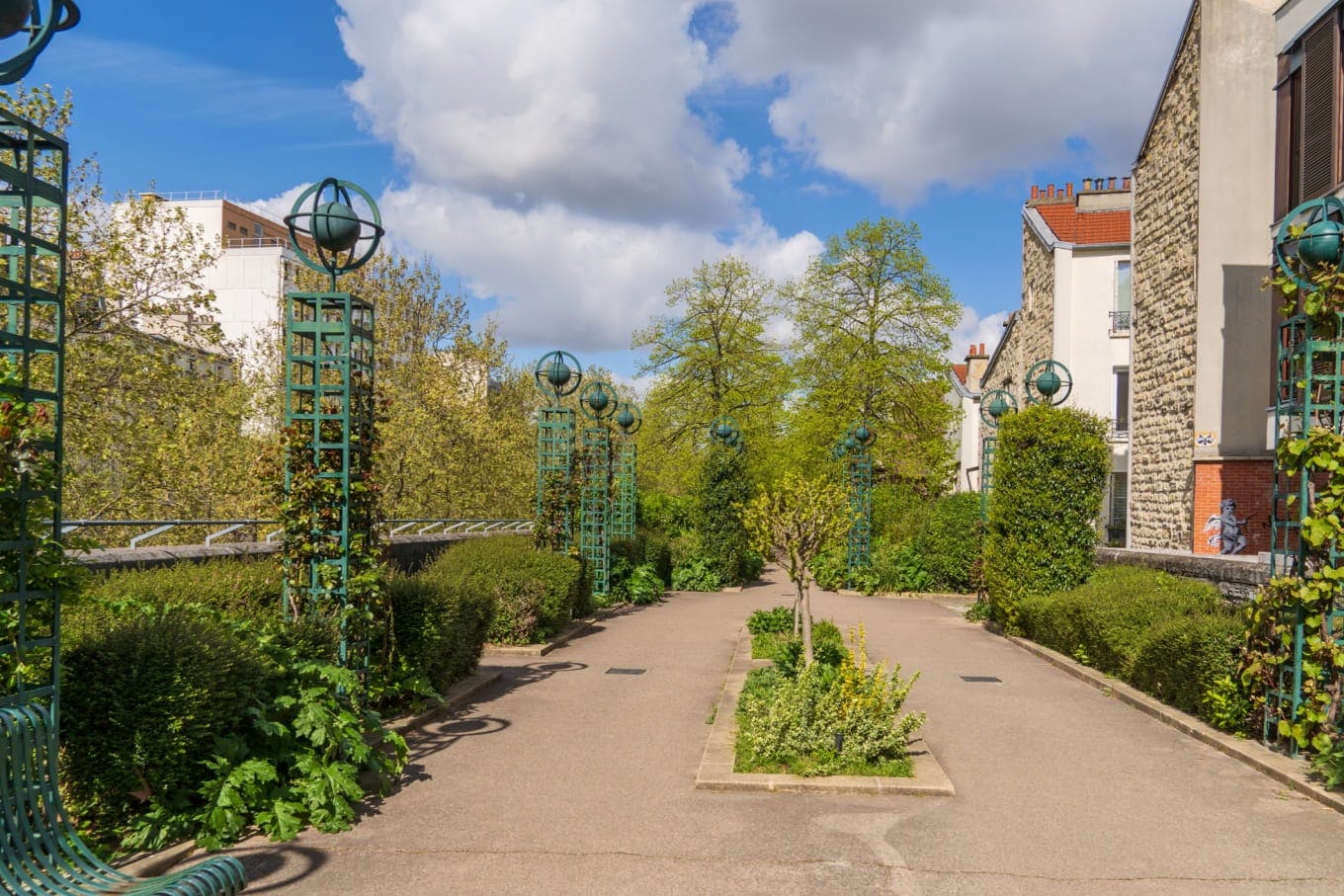
4.5 kilometres of linear garden on the route of an old railway line, in the 12th arrondissement. The Coulée Verte René-Dumont (formerly the Promenade Plantée) is the world's first hanging garden on a viaduct, inaugurated in 1988. It was a direct inspiration for Manhattan's High Line: its creators came to study it there in the 1990s.
A career that changes face
The walk begins behind the Opéra Bastille, 9 meters above Avenue Daumesnil and ends in Saint-Mandé, at the gates of the Bois de Vincennes. On the Viaduc des Arts, it runs along the roofs and rear facades of Haussmannian buildings, offering angles of view not found from the street. Halfway through, it crosses the Reuilly garden by a suspended footbridge before descending to street level, then plunging into a trench and tunnel to the ring road, sometimes high, sometimes underground.
The Viaduct of the Arts
Under the promenade, the 71 arcades of the viaduct were rehabilitated in 1990 to accommodate the workshops of Parisian craftsmen: furniture restorers, luthiers, fashion designers, gilders, upholsterers. The windows open to the workshops allow you to observe the work live, while walking.
Please note : the upper part (viaduct) is reserved for pedestrians. The lower part, from the Reuilly garden, is accessible to bicycles. The promenade is open from 8 a.m. to 9:30 p.m. in summer and from 8 a.m. to 5:30 p.m. in winter.
Our advice
Start from Bastille and walk east to get the sun at your back in the morning. Halfway through, go down to the Reuilly garden to discover the free sparkling water fountain (one of the few in Paris). Come back and see the Viaduc des Arts from the bottom, Avenue Daumesnil: the artisan shops installed in the arcades are worth a second visit on foot of the street.
How to get there by public transport?
Departure: avenue Daumesnil, opposite 1 coulée verte René-Dumont, 75012 Paris
- Metro 1, 5 and 8: Bastille station + 5 min walk. Climb the stairs on the Avenue Daumesnil side to access the upper part of the viaduct. What to see from the starting point: the July Column and the Opéra Bastille
- Metro 1 and 14, RER A and D, train line R: Gare de Lyon station + 5 min walk to the viaduct via Boulevard Diderot. To see along the way: the façade of the Gare de Lyon and its belfry
- Metro 6: Dugommier station + 5 min walk via rue Dugommier
- Metro 6 and 8: Daumesnil station + 3 min walk, access to the André-Léo footbridge and the Reuilly garden (free sparkling water fountain just below)
- Metro 6: Bel-Air station + 5 min walk, for the lower part of the promenade accessible to bicycles
- T3a: Montempoivre station + 3 min walk, to start the walk from the end of the Coulée Verte René-Dumont
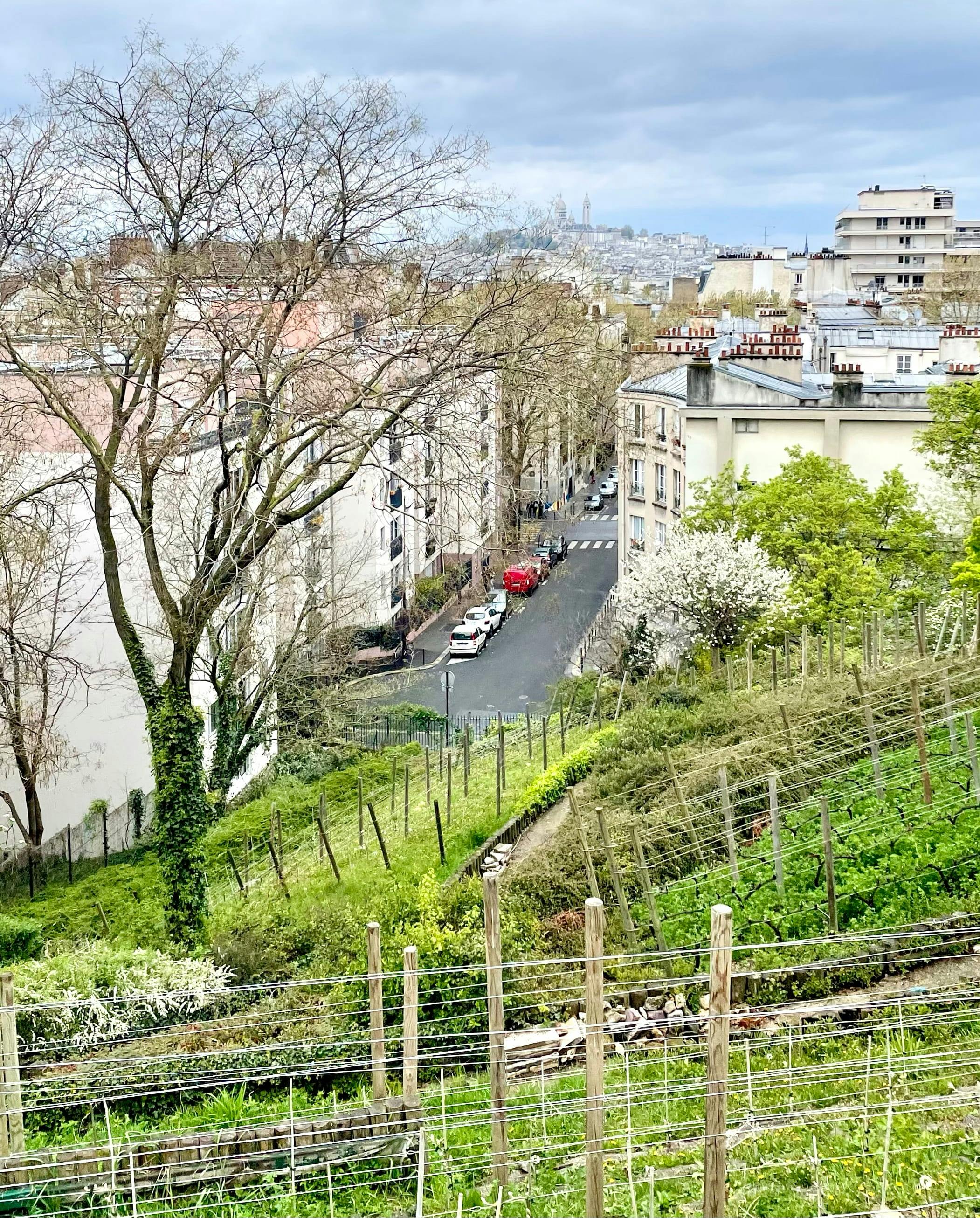
5. The Butte Bergeyre, Paris' best-kept secret, with its vineyard and views of Montmartre
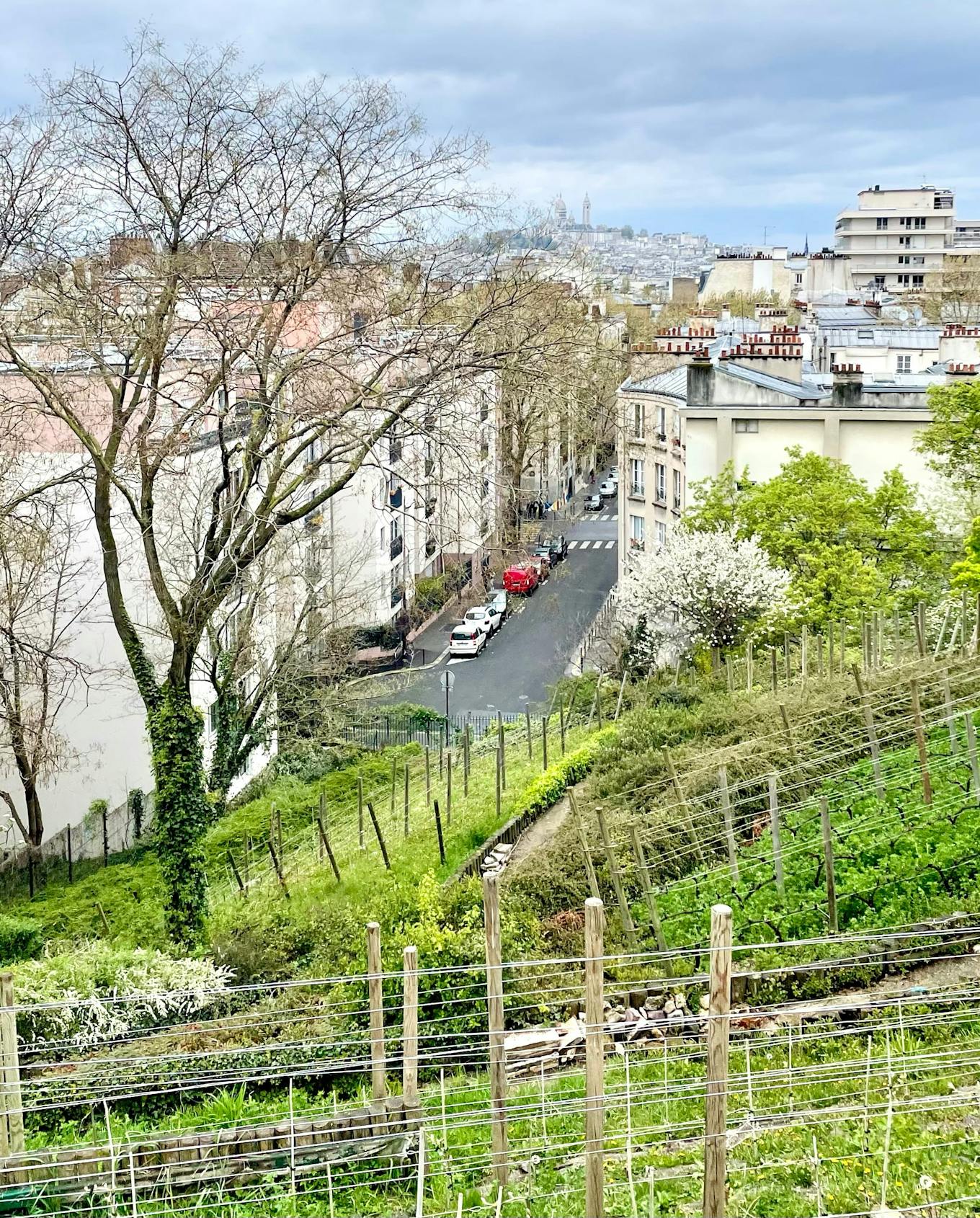
Perched at an altitude of 100 meters in the 19th arrondissement, the Butte Bergeyre is one of the most unknown and endearing micro-neighborhoods in Paris. Six cobbled streets, private houses with heterogeneous architecture (1930s concrete, half-timbered houses, modernist villas), a shared garden, a Pinot Noir vineyard and an almost unreal silence five minutes from the metro.
A sporting and Olympic history
The mound takes its name from the Robert Bergeyre stadium, inaugurated in 1918 on the former gypsum quarries, named after a rugby player from the local club who fell at the front in August 1914. This stadium hosted the football events of the Paris 1924 Olympic Games before being demolished in 1926, making way for the houses and villas that can be seen today. The hill had previously housed an amusement park, the Folles Buttes, between 1909 and 1926.
The vineyard and the shared garden
At the top, the Clos des Chaufourniers produces about 100 liters of Pinot Noir per year, maintained by the locals. The shared garden that surrounds it is also home to beehives, aromatic plants and fruit trees. The intersection of Rue Georges-Lardennois and Rue Rémy-de-Gourmont, which overlooks the vineyards, offers one of the most beautiful panoramas in Paris of the Montmartre hill and the Sacré-Coeur.
How to access it?
The Butte Bergeyre is accessible by three pedestrian entrances: the stairs of 54 avenue Simon-Bolivar (75 steps, immortalized in 1950 by the photographer Willy Ronis), the stairs of rue Michel-Tagrine (85 steps on the west side), and rue Georges-Lardennois from rue Manin. Few cars passing through, no shops except for the associative grocery store l'Utopicerie, almost no tourists.
Our advice
Come at sunset: the view of the Sacré-Coeur from the belvedere of the rue Rémy-de-Gourmont is one of the most beautiful in Paris, and it is completely free. Combine with the Parc des Buttes-Chaumont (access by the stairs on the rue Manin side): this is one of the most spectacular parks in Paris, with its cliffs, caves and Temple of the Sibyl.
How to get there by public transport?
Main access: stairs at 54 avenue Simon-Bolivar, 75019 Paris
- Metro 2: Colonel Fabien station + 10 min walk up Avenue Mathurin Moreau to the north. To see on the way: the Place du Colonel Fabien and the headquarters of the PCF. Designed by Oscar Niemeyer, 1971, classified as a historical monument, it is one of the rare works of the Brazilian architect in France (along with the Volcano, in Le Havre)
- Metro 2, 5 and 7bis: Jaurès station + 12 min walk up the pretty Secrétan and Simon Bolivar avenues
- Metro 7bis: Bolivar station + 8 min walk, the most direct option. On your way out, go up Avenue Simon-Bolivar to number 54: Willy Ronis' stairs are on the right. To be seen from the staircase on the way up: the gradual view of the rooftops of the nineteenth arrondissement
Ready to get off the beaten track?
These five parks can be reached without a car, often in less than 20 minutes from the center of Paris.