5 must-visit museums when you come to Paris
Published on
Île-de-France is full of museums of all kinds. Whether you're in Paris or on holiday, it's sometimes difficult to make your choice. To make it easier for you, here are our top five must-see museums in the capital and the itineraries to get there easily by public transport.
On the program?
- The Louvre
- The Musée de l'Orangerie
- The Musée d'Orsay
- The Natural History Museum
- The Quai Branly Museum
#1. The Louvre, the museum that a lifetime would not be enough to explore
No need to pretend to ignore it, the Louvre has been THE Parisian museum par excellence since the end of the 18th century.
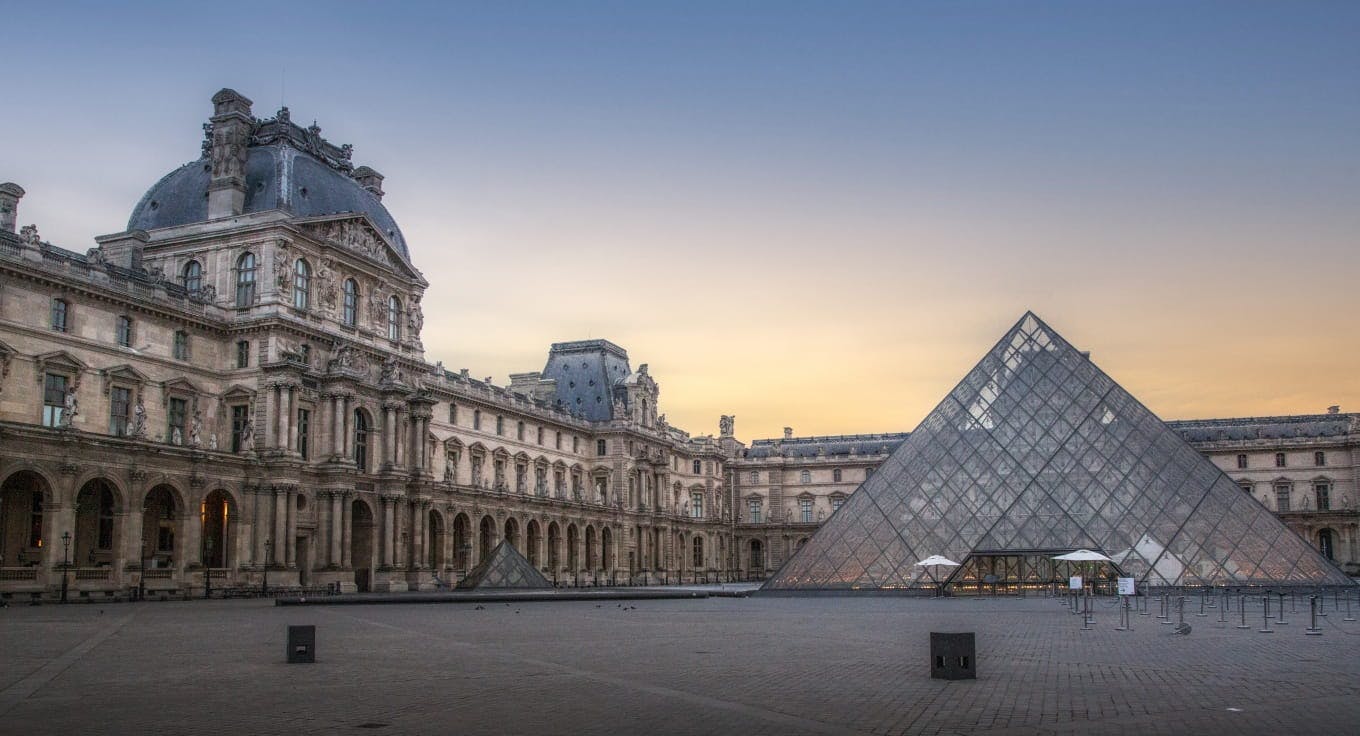
Former residence and fortress of the kings of France, the building has a total of 73,000 square meters and 35,000 works on display.
Masters' masterpieces, but not only
The Louvre Museum is known for its Renaissance masterpieces, Flemish and French paintings and the mystery of the Mona Lisa's smile.
But the museum also exhibits antiquities, art from the Middle East, Africa, Asia, Oceania, the Americas, Egypt and Islam, jewellery, furniture and objects of all kinds, precious witnesses of their eras.
Before entering, linger outside for a while
The Louvre is located in the historic center of the capital, take the opportunity to see : the Tuileries Garden, the banks of the Seine, the obelisk of the Place de la Concorde and, of course, the monumental facades of the museum from the Cour Carrée.
First time at the Louvre?
Consult the guide of the first visit to find your way around.
How to get to the Louvre?
rue de Rivoli, 75001 Paris
- Metro 1 and 7 : Palais Royal – Musée du Louvre station, for direct access via the underground gallery
- Metro 1 : Louvre-Rivoli station + 2 min walk through the Cour Carrée and observe the glass pyramid by architect Ieoh Ming Pei
#2. The Musée de l'Orangerie: Claude Monet and the painters of Paris in the 1900s
The Musée de l'Orangerie is located in the Jardin des Tuileries, a few minutes from the banks of the Seine.
Perched on a terrace, it has been observing the Place de la Concorde and its obelisk since 1853 and offers visitors a cutting-edge program and a permanent collection that attracts crowds.
Monet and the Water Lilies
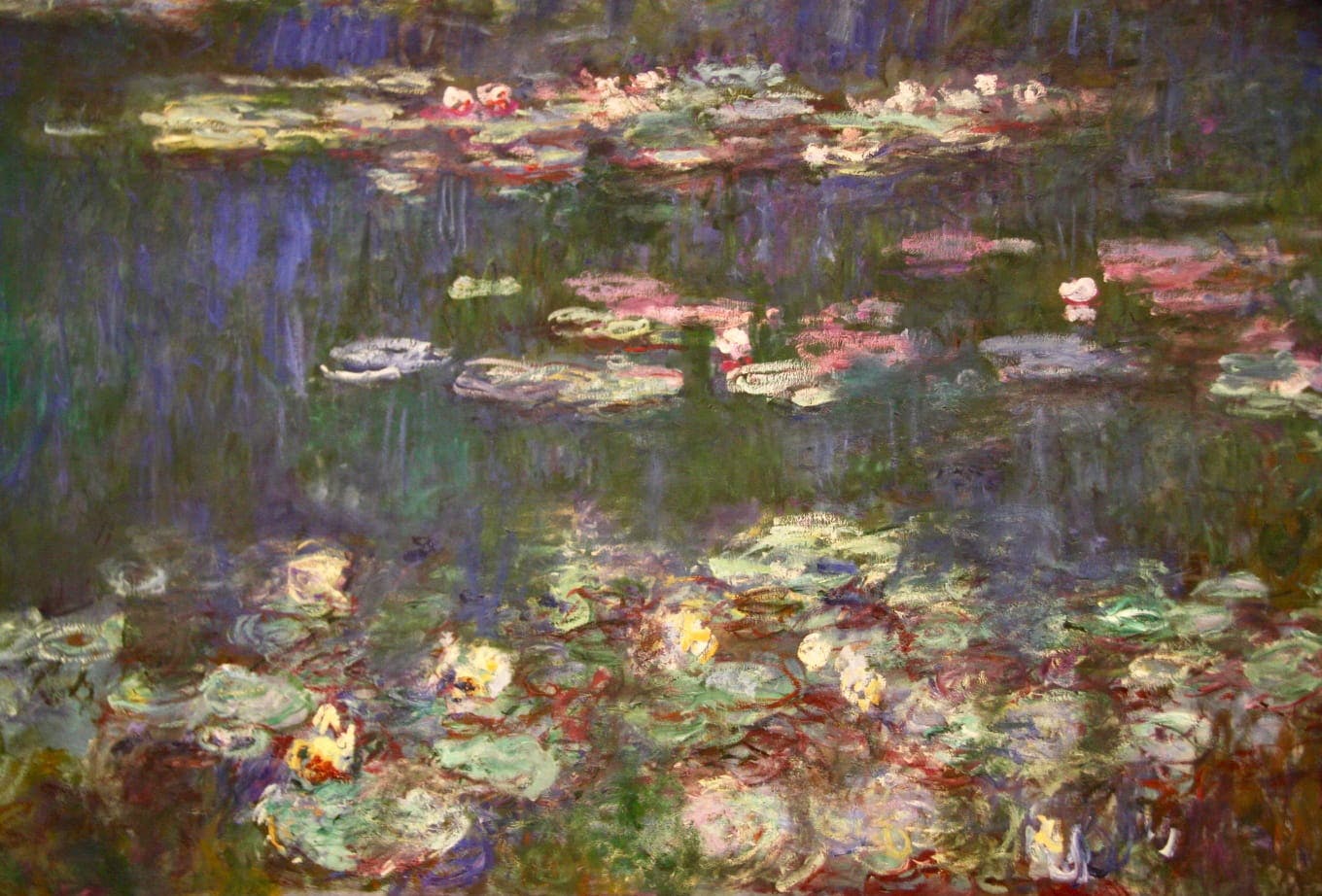
It is in his basement, in two immaculate rooms, that his jewel is hidden: Claude Monet's Water Lilies.
What are Water Lilies? The masterpiece of the master of Impressionism: a set of eight panels (91 metres long in total) representing the water lilies in bloom in the pond of his property (which can be visited) in Giverny.
Impressionism but not only: the Orangerie exhibits the School of Paris
The 6300 m2 of the museum hides other surprises: a collection of paintings by great painters grouped under the name of the School of Paris, an artistic movement that brings together the painters who settled in Paris at the beginning of the 20th century.
There are fathers of modern art such as: Renoir, Matisse, Henri Rousseau, Soutine, Derain, Cézanne, Picasso and Modigliani.
Tip for Monet lovers
If you have a passion for Monet and Impressionism, you should definitely visit the Musée Marmottan Monet (30 minutes from the Musée de l'Orangerie by RER C to Musée d'Orsay station) or the one we are talking about just below, the Musée d'Orsay (9 minutes walk from each other by crossing the Seine).
How to get to the Musée de l'Orangerie?
Jardin des Tuileries, 75001 Paris
- Metros 1, 8 or 12 : Concorde station + 4 min walk
- Metro 1 : Tuileries station + 10 minutes walk to walk in the garden before starting your visit
#3. The Musée d'Orsay, the largest Impressionist and Post-Impressionist collection in the world
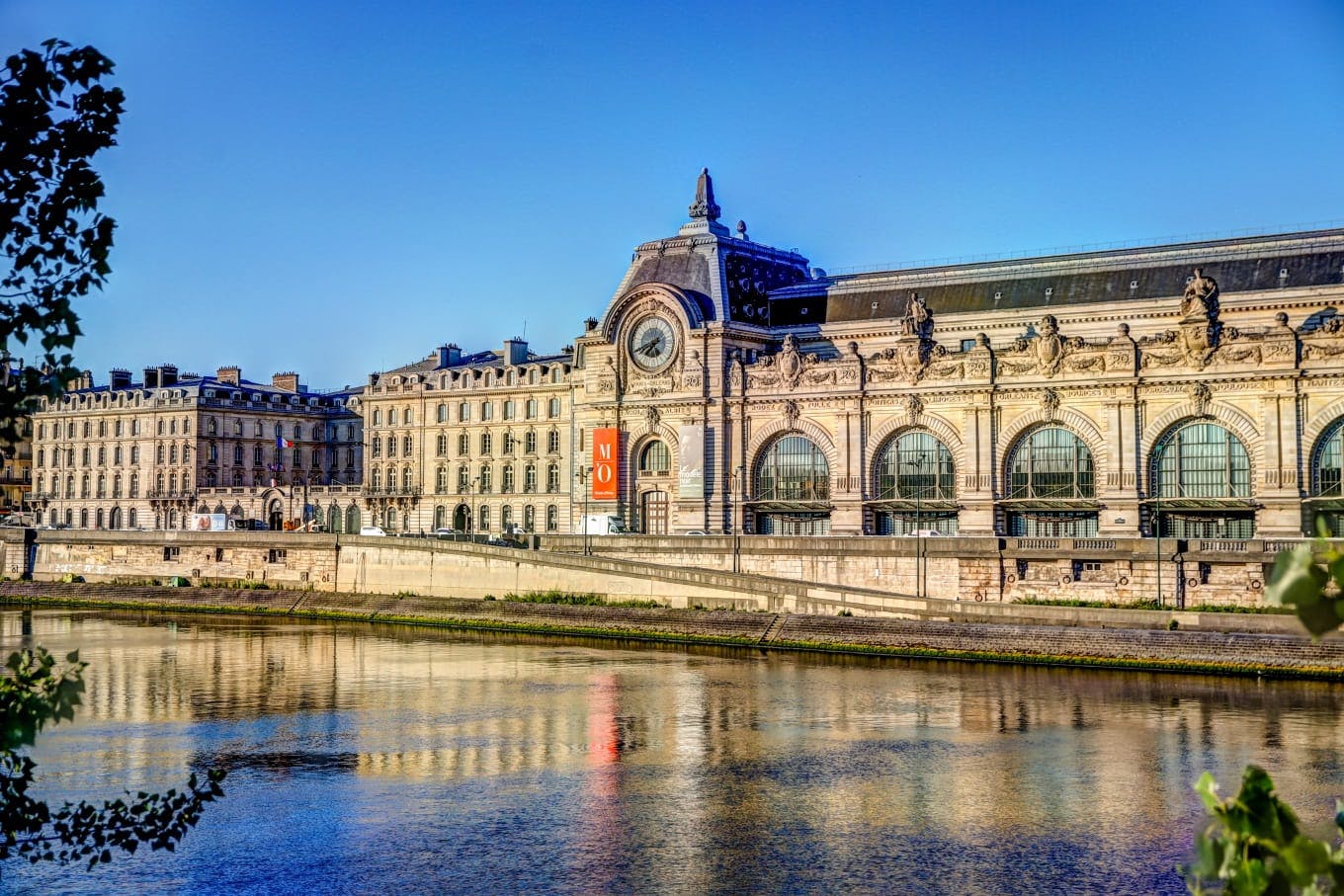
A former train station built for the 1900 Universal Exhibition on the left bank of the Seine, the Musée d'Orsay is a majestic building made of 12,000 tons of metal and 35,000 tons of glass and glass roofs.
Under its monumental nave, rays of light bathe the largest Impressionist and Post-Impressionist collection in the world. A privilege that has attracted 3.5 million visitors in 2025 alone.
What works to admire at the Musée d'Orsay?
The museum honors Western artistic creation from 1848 to 1914.
Millet, Courbet, Degas, Monet, Manet, Gauguin, Van Gogh, Carpeaux, Rodin, Nadar, Vallotton, Vuillard : the collection of + 97,000 works includes painting, architecture, sculpture, decorative arts and photography.
How to get to the Musée d'Orsay?
1 rue de la Légion d'Honneur, 75007 Paris
- RER C : Musée d'Orsay station + 2 min walk
- Metro 12 : Solférino station + 3 min walk
#4. The Muséum ational d'Histoire naturelle, meeting the living
What to see at the National Museum of Natural History?
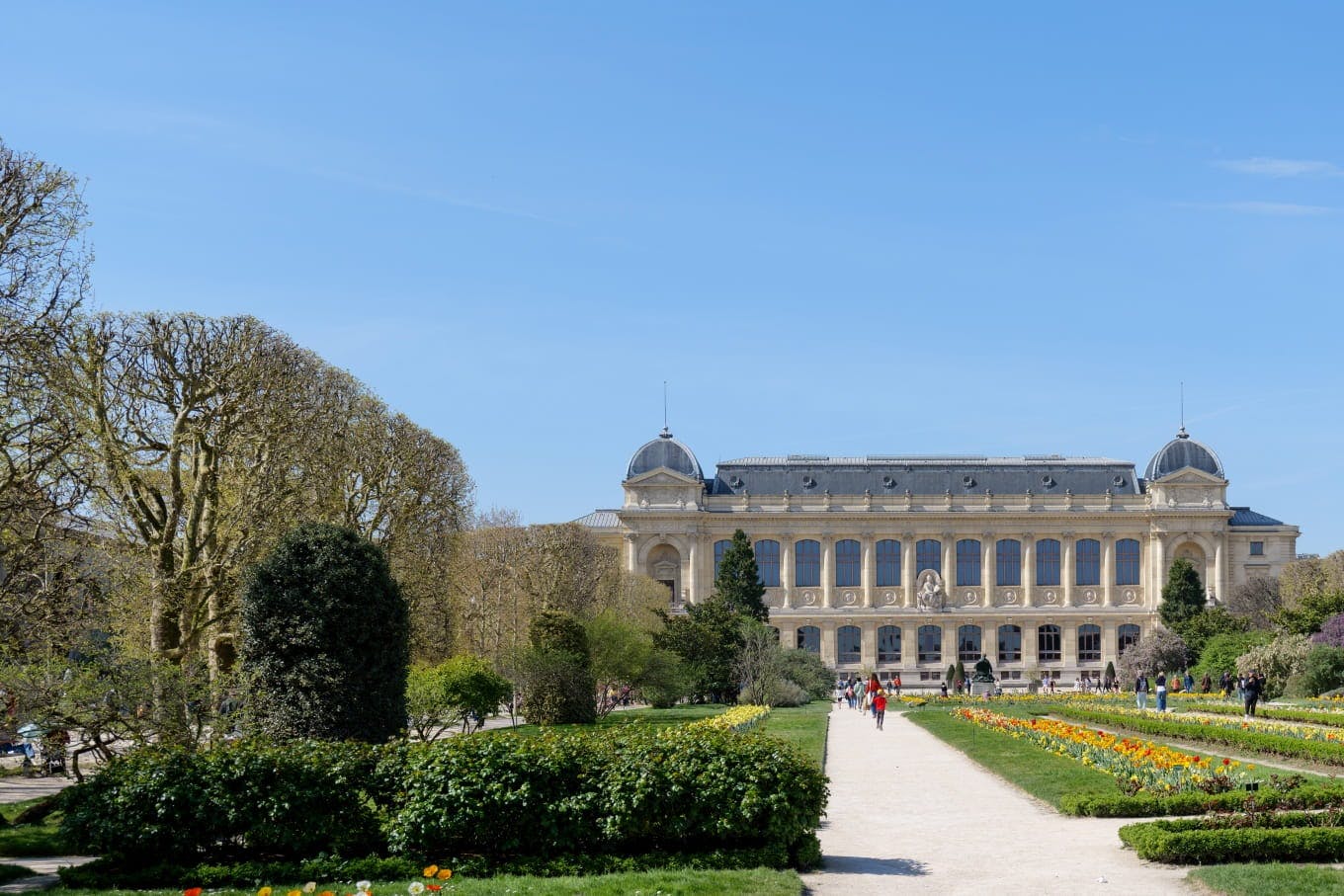
The Museum is spread over twelve sites (conversation, research, museum) throughout France, many of which are located within the walls of the Jardin des Plantes in Paris:
- The Paleontology and Comparative Anatomy Gallery : Dinosaur Skeletons That Make Older Ones Feel Small
- The Geology and Mineralogy Gallery : Stunning Crystals and Meteorites
- The Grande Galerie de l'Evolution : a collection of animals (terrestrial and marine) from all over the world, stuffed as well as skeleton prints, such as that of the great blue whale
- La Ménagerie: the zoo of the Jardin des Plantes with its animals from all over the world, from great apes, tarantulas to the giant tortoise of the Seychelles
- The Jardin des Plantes : a four-hundred-year-old garden, full of species from the four corners of the globe. Japanese cherry tree, flourishing rose garden, medicinal plants and other plant wonders to discover while walking there
- The Grandes Serres of the Jardin des Plantes: with tropical plants from all over the world
In addition to the permanent galleries, the Muséum national d'Histoire naturelle offers temporary exhibitions : take a look at the programme before you go.
How to get to the National Museum of Natural History?
57 rue Cuvier, 75005 Paris
- RER C, Metro 5 : Gare d'Austerlitz + 2 min via the Place Valhubert entrance
- Metro 7 : Censier-Daubenton station + 12 min walk passing in front of the Great Mosque of Paris (to be visited), entrance rue Geoffroy-Saint-Hilaire
- Metro 10 : Jussieu station + 6 min via the rue Cuvier entrance
#5. The Musée du quai Branly – Jacques Chirac
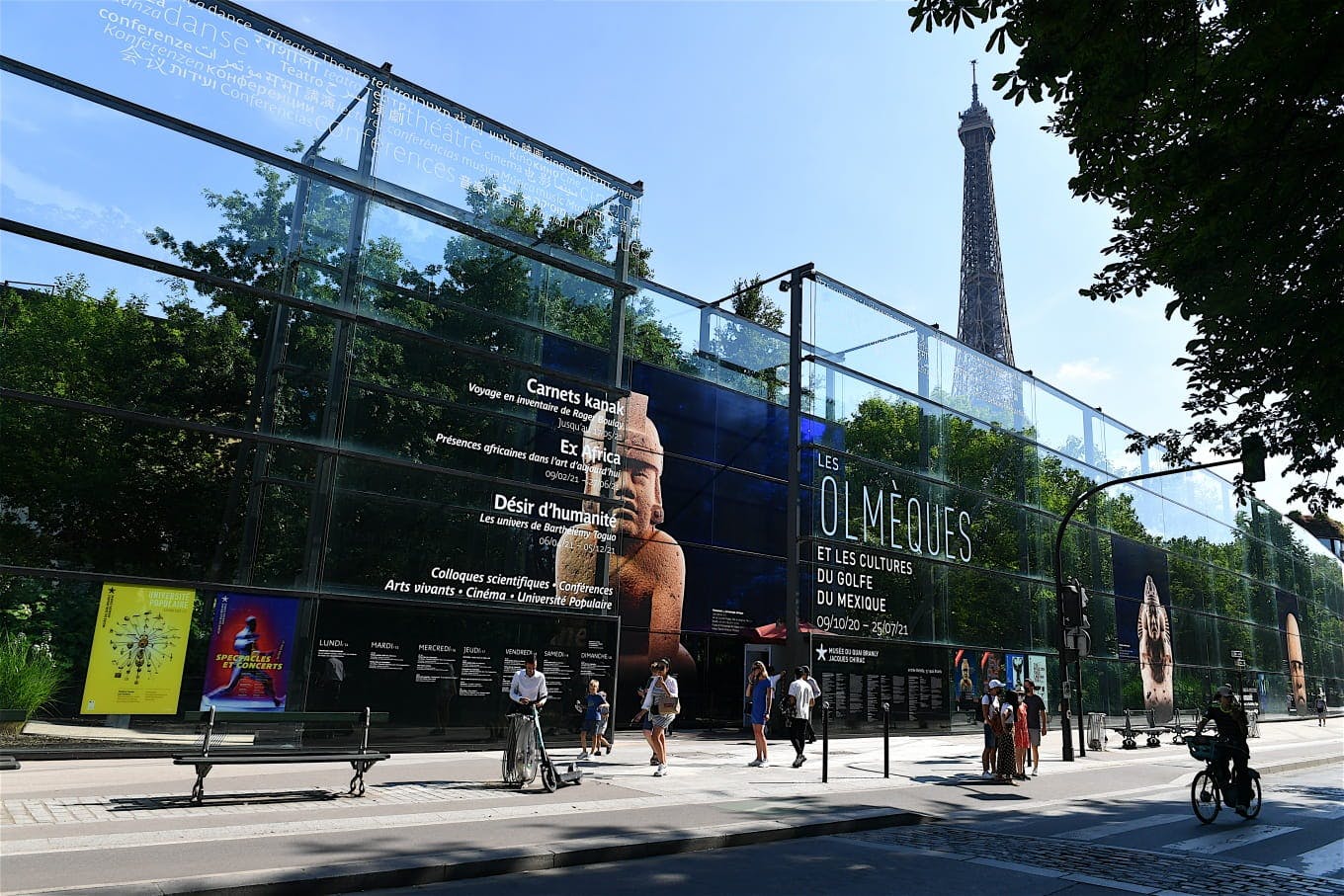
In 2006, the Musée du quai Branly - Jacques Chirac opened on the banks of the Seine. It was indeed the former President of the French Republic (from 1995 to 2007), passionate about the subject, who decided to create it.
The goal? To restore non-Western arts and civilizations to their rightful place in national museums.
What to see at the Musée du quai Branly?
In 2025, 1,350 million visitors came each year to discover the 300,000 works and objects from Africa, Asia, Oceania and the Americas presented at the Musée du quai Branly.
Among them? Costumes, ceremonial masks, paintings, witness objects and photography.
More than a museum, a cultural space in its own right with...
- A 24-metre glass tower where 10,000 musical instruments are kept
- A cinema room
- A media library and a reading room
- The Lévi-Strauss Theatre
- An 18,000 square meter garden with free access
- And a restaurant, Les Ombres, with a rooftop terrace with views of the Eiffel Tower
A building designed by Jean Nouvel
The Musée du quai Branly is also an architectural work designed by the French architect Jean Nouvel. On the banks of the Seine, to the right of the Eiffel Tower: the building sits proudly, perched on its stilts.
All in curves, it stretches over five levels with a façade that we do not forget: a huge green wall.
How to get to the Musée du quai Branly - Jacques Chirac?
37 quai Branly, 75007 Paris
- RER C : Champs de Mars Eiffel Tower station + 4 min walk
- Metro 9 : Alma Marceau station + 8 min walk along the Seine
- Metro 6 : Bir Hakeim + 15 min walk
- Metro 8 : École Militaire + 16 min walk