Top 5 forest walks in Île-de-France
Published on
Paris is magnificent, we agree. But sometimes, what you need is to put your feet in the foam, hear something other than the noise of the subway, and take a deep breath. Good news: in Île-de-France, five forests and wooded areas deserve to put down the phone, put on the sneakers, and get lost - well, not entirely. And precisely, we guide you.
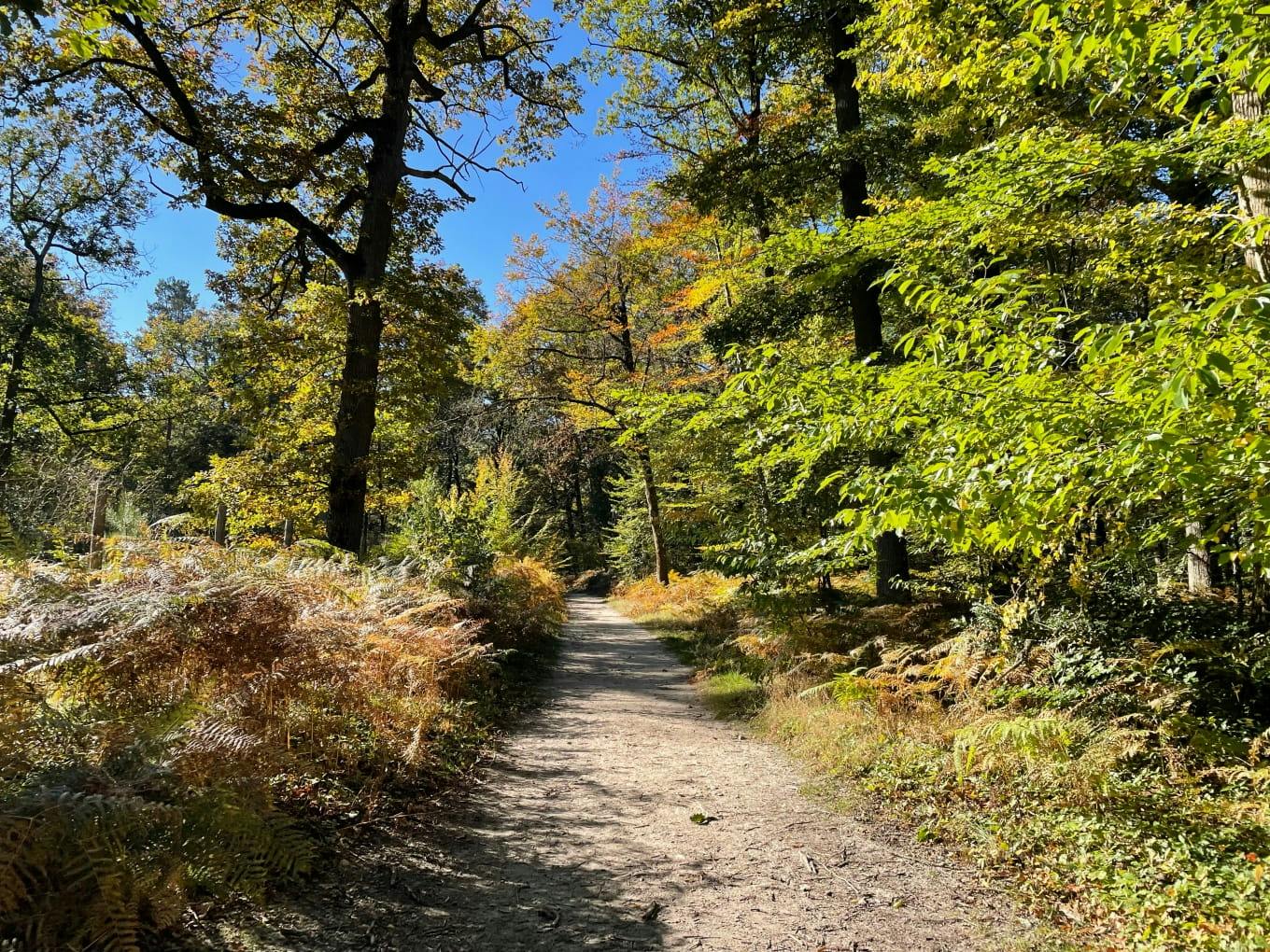
On the program?
- Fontainebleau
- Rambouillet
- Saint-Germain-en-Laye
- Vincennes
- The Vallée-aux-Loups
#1. Fontainebleau Forest: magical forest, playground for climbers and painters
With its 25,000 hectares, the forest of Fontainebleau is one of the largest in France, classified as a biosphere reserve by UNESCO. It owes its world fame to its sandstone rocks - a sedimentary rock that forms rounded blocks, sculpted by erosion - which have made it the world capital of bouldering (climbing on large rocks without a rope, at a low height). Climbers from all over the world have been training there since the 1950s.
But before being the playground of sportsmen, Fontainebleau inspired a whole generation of painters. In the nineteenth century, Millet, Corot, Monet and Renoir came to set up their easels in the light of the undergrowth: this is what is called the Barbizon school, from the name of the very pretty village nestled on the edge of the forest.
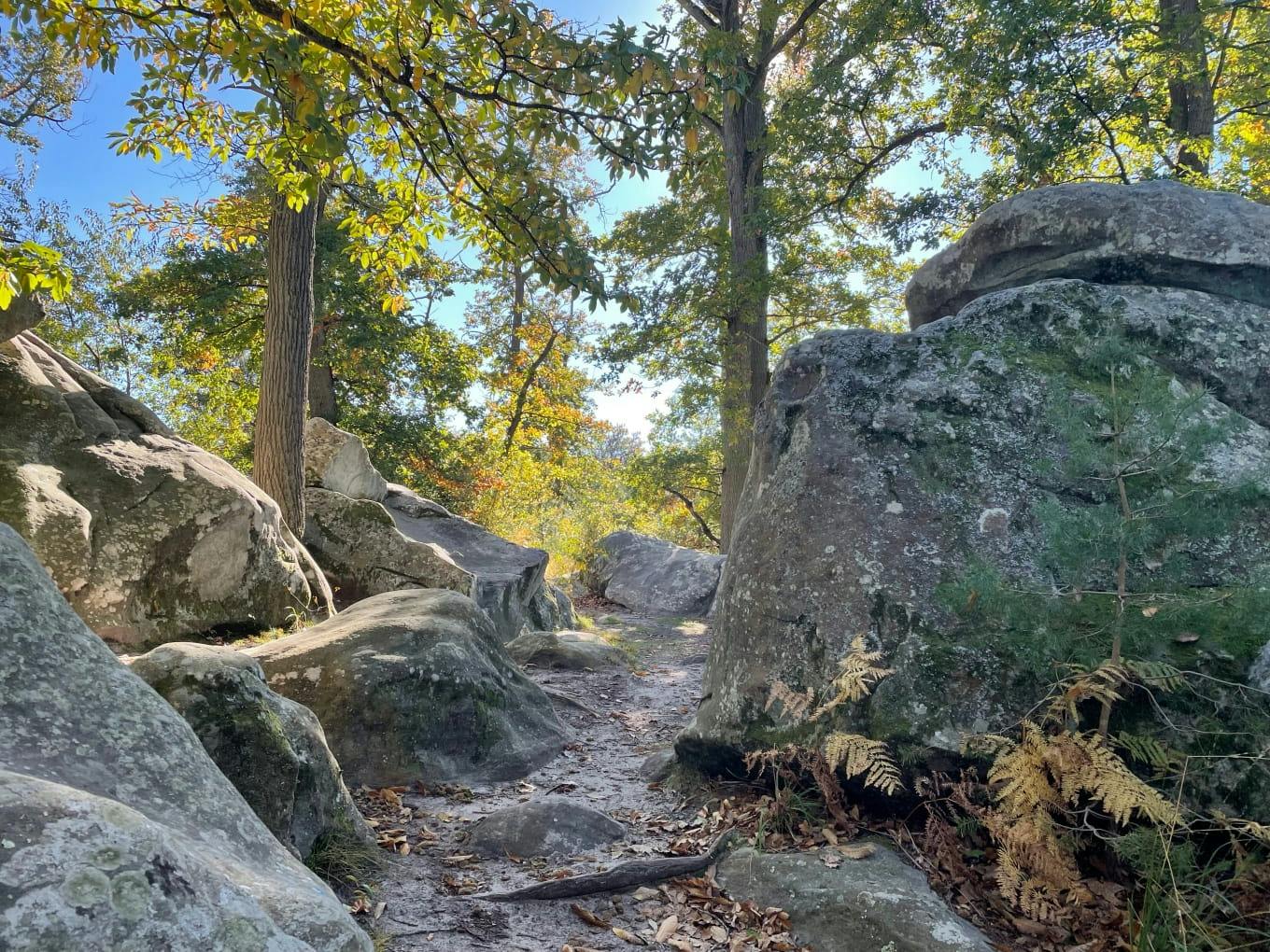
Must do:
- The Gorges d'Apremont : a circuit marked in blue (~2h), with panoramic views of the rocks and pines.
- The village of Barbizon : 20 minutes walk from the gorges, with the Auberge Ganne - now a museum - where the painters stayed.
- Bouldering in Franchard: sectors accessible to beginners, no need to be an experienced sportsman.
- The eastern crossing of the forest, station to station, from Bois-le-Roi to Vulaines-sur-Seine, via Samois-sur-Seine and its incredible houses on the banks of the Seine. A walk of about ten kilometers, between magical forest, charming village, opulent nineteenth-century houses and banks of the Seine that we cannot recommend enough (many traced hikes exist or can be combined)
The Île-de-France Mobilités tip
Avoid weekends of good weather in April and May: the forest is taken by storm. Prefer an outing during the week or in autumn, when the red leaves transform the undergrowth into an impressionist painting.
How to get there by public transport?
› For Fontainebleau-Avon : train line R from Gare de Lyon: 40 minutes to Fontainebleau-Avon station, then bus Line 1 drops you off in 10 minutes at the edge of the forest, or 25 minutes on foot from the station.
› To Bois-le-Roi: train line R from Gare de Lyon: 35 minutes to Bois-le-Roi station. The entrance to the forest is about 2 km from the train station through Bois-le-Roi lined with its pretty houses
› By bike from Fontainebleau-Avon station : rental available in the city, cycle paths run along the forest for several kilometres.
#2. Rambouillet Forest: raw nature and secret ponds
50 km southwest of Paris, the forest of Rambouillet extends over 20,000 hectares of oaks and pines. It is a forest of character: less frequented than Fontainebleau, wilder, with wetlands in which the water stagnates naturally and the fauna proliferates, which give it a separate, almost northern atmosphere.
It is also a presidential forest: the Château de Rambouillet, the official residence of the President of the Republic until 2009, sits in the heart of the city. The surrounding woods have long been the preserve (in the literal sense) of the kings of France.
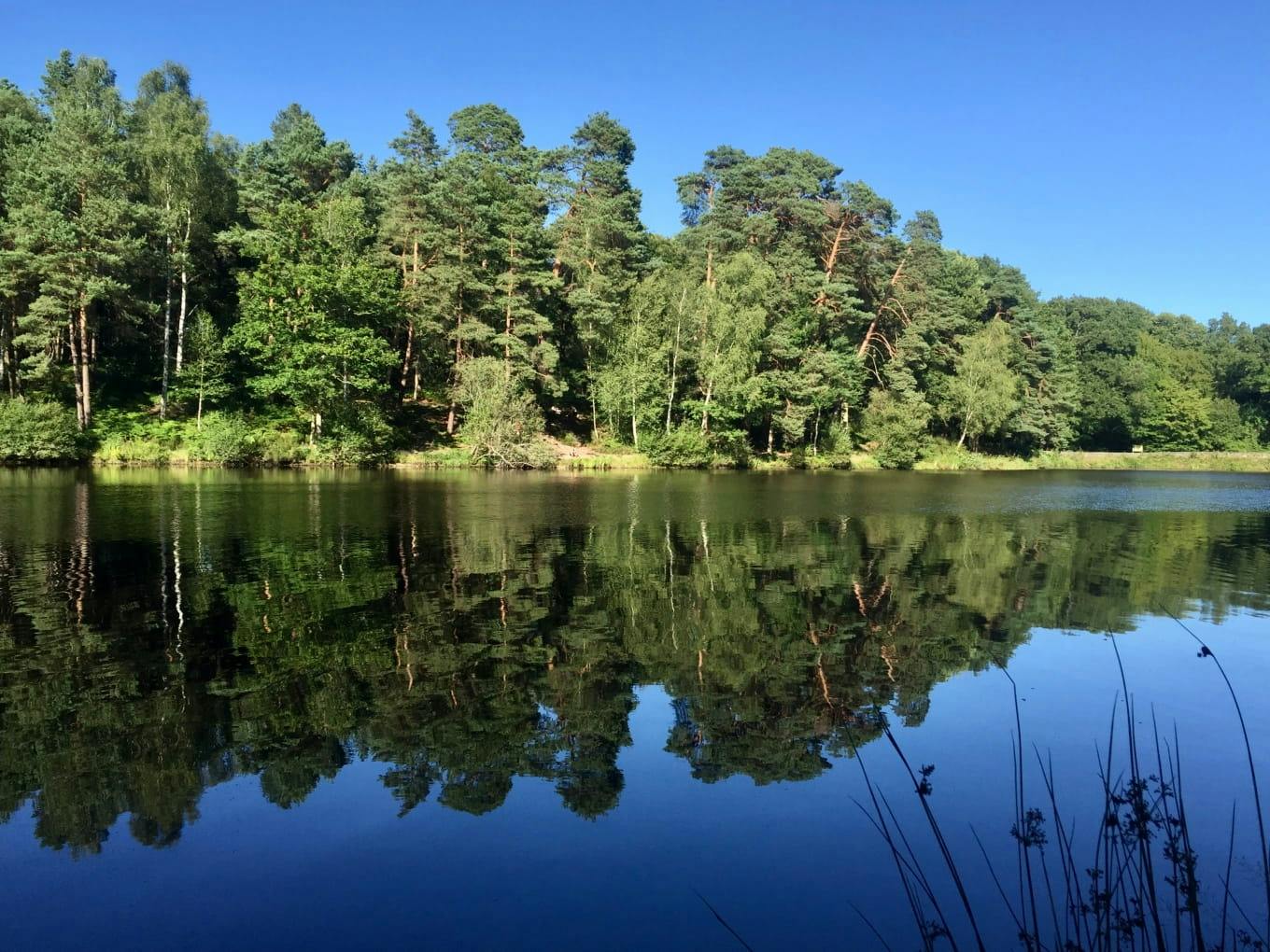
Must do:
- The Étangs de Hollande : a network of small lakes connected by canals, built in the seventeenth century to supply Versailles with water. The walk around the ponds (~2h) is one of the most peaceful in the region.
- La Bergerie Nationale : founded by Louis XVI, it still breeds merinos (a breed of sheep with very fine wool). A possible visit, and frankly unexpected.
The Île-de-France Mobilités tip
In autumn, Rambouillet is one of the few places in Île-de-France where you can hear the bellowing of the deer - the loud cry of male deer during the rutting period, in September-October. Early in the morning, at the edge of the ponds, the spectacle is striking.
How to get there by public transport?
› Train line N from Paris Montparnasse: 45 minutes to 1 hour to Rambouillet station, the forest begins 15 minutes walk from the station.
› The Bergerie Nationale is a 20-minute walk from the train station, along the castle park.
#3. Forest of Saint-Germain-en-Laye: the royal forest at the end of the RER A
This forest, you can get lost in just 35 minutes from the heart of Paris. The forest of Saint-Germain-en-Laye (3,500 hectares) is a former royal forest planted since François I. It is crossed by long bridleways - wide, straight paths originally laid out for royal horsemen - which give it the appearance of an unusual park.
The highlight of the show is the Grande Terrasse, a junction between the park of the (royal) castle of Saint-Germain and the forest : a 2.4 km straight alley carved into the hillside by André Le Nôtre (the same landscape architect who designed the gardens of Versailles), with a panoramic view of the Seine valley. On a clear day, you can see Paris.
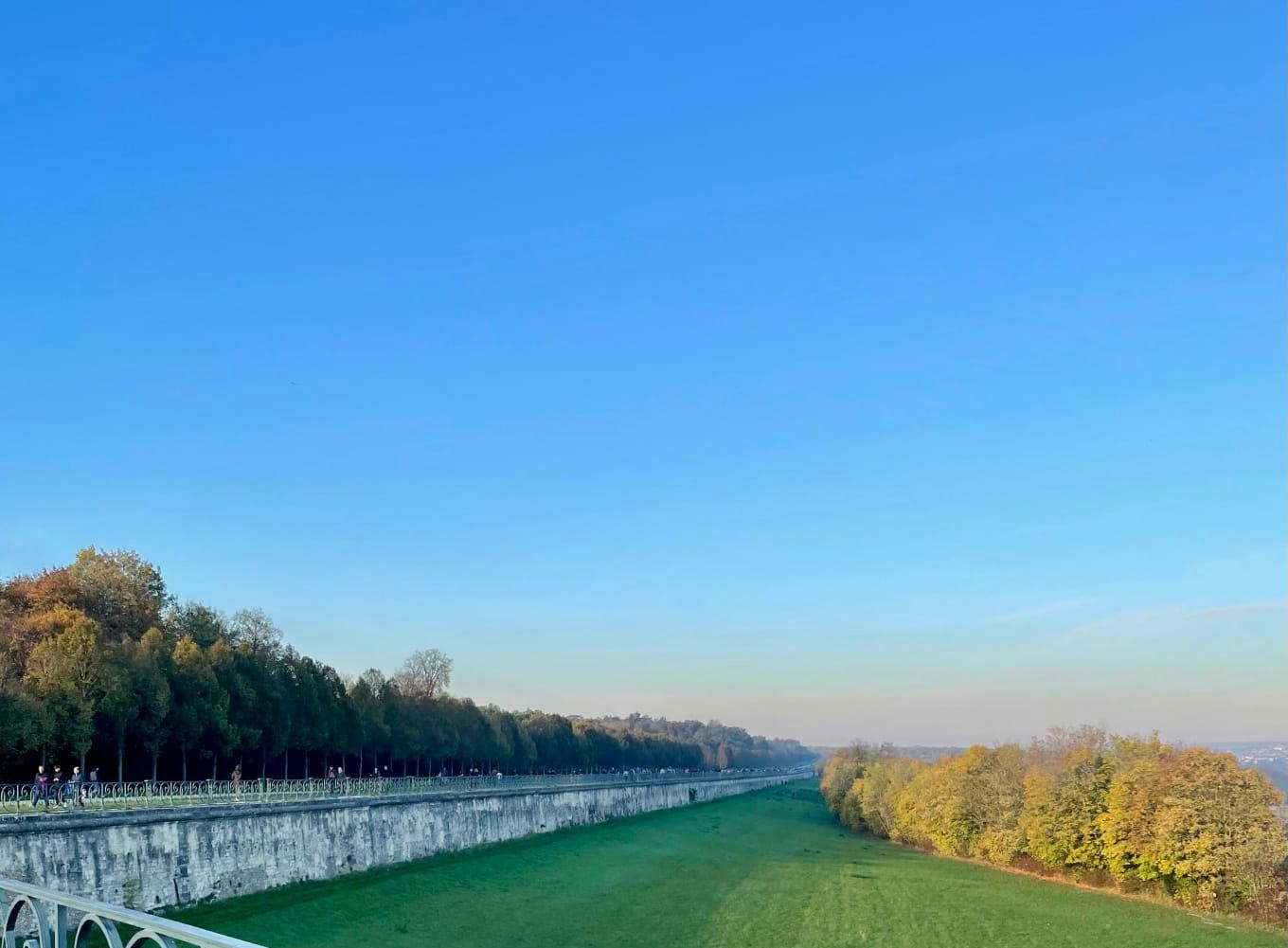
Must do:
- La Grande Terrasse : a majestic promenade of nearly 2 km, with a constant panoramic view of the Île-de-France (and Paris), in the distance. The sunset from the terrace is of a rare elegance (enjoy the deckchairs of the small bar at the edge of the terrace).
- Bridleways in the forest: from the terrace, dive into the forest for an hour of silent walking, far from the crowds.
- The castle of Saint-Germain-en-Laye : today the Museum of National Archaeology, its medieval and Renaissance architecture deserves a break at the end of the terrace.
The Île-de-France Mobilités tip
Take the RER A to the Saint-Germain-en-Laye terminus, exit, turn left towards the castle: in 10 minutes you are on the Grande Terrasse with its breathtaking panoramic view. It's probably the best travel/landscape ratio in the whole region (and if ever, in season, a small café deploys its deckchairs and parasols on the edge of the terrace - we'd stay there for hours)
How to get there by public transport?
› RER A to Saint-Germain-en-Laye: 30 minutes from Châtelet - Les Halles, direct exit to the castle and the forest.
#4. Bois de Vincennes: the forest at the end of the metro
Technically, it's a wood, not a forest. But with its 995 hectares, it is the largest green space in Paris, and it has all the makings of an urban forest. A former royal hunting ground, the Bois de Vincennes was opened to the public by Napoleon III in the 19th century to offer a "green lung" to Parisians.
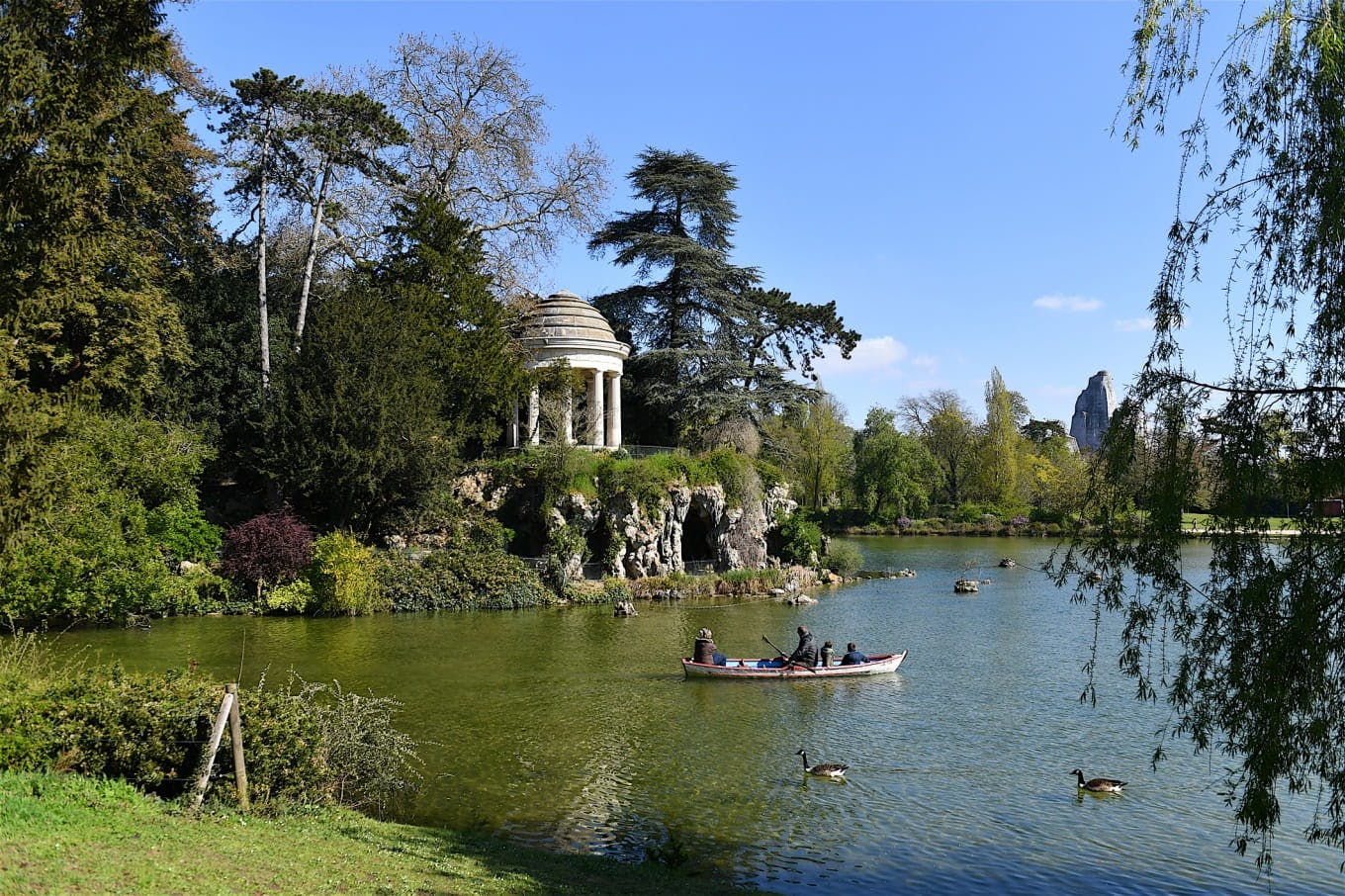
It is home to three lakes, a medieval castle with the keep of Vincennes (the highest medieval keep in Europe, 52 meters), a zoo, a flower park, an arboretum, a farm, a hippodrome and a Tibetan Buddhist pagoda. This probably makes it the most heterogeneous wood in France.
Must do:
- Tour of Lake Daumesnil on foot or by bike (~4 km): the lake with its island and its rotunda temple is the emblematic image of the wood.
- La Ferme de Paris (Fontenay-sous-Bois side): a real free educational farm with cows, sheep and vegetable gardens in the heart of Paris.
- The dungeon of Vincennes : visit possible, breathtaking view of Paris from the top.
The Île-de-France Mobilités tip
Enter the wood by the Château de Vincennes station (on metro line 1), walk along the castle, and reach Lake Daumesnil in 20 minutes on foot: it is the most beautiful entrance, with the castle as a monumental door. Boats for rent on the lake.
How to get there by public transport?
› Metro 1 - Château de Vincennes: direct access, 5 min walk to enter the woods.
› Metro 8 - Charenton-École: the wood is literally at the end of the street and the Grande Pagode 10 minutes away
› RER A - Vincennes: 10 minutes walk from the train station to Lake Daumesnil along the moat of the castle. Direct access to different parts of the Bois de Vincennes from the resorts of Fontenay-sous-Bois, Nogent-sur-Marne and Joinville-le-Pont.
› Buses 46 and 86 : stops in the heart of the woods, convenient for direct access to the Parc Floral or the Lac des Minimes.
#5. Domaine de la Vallée-aux-Loups: Chateaubriand's secret garden
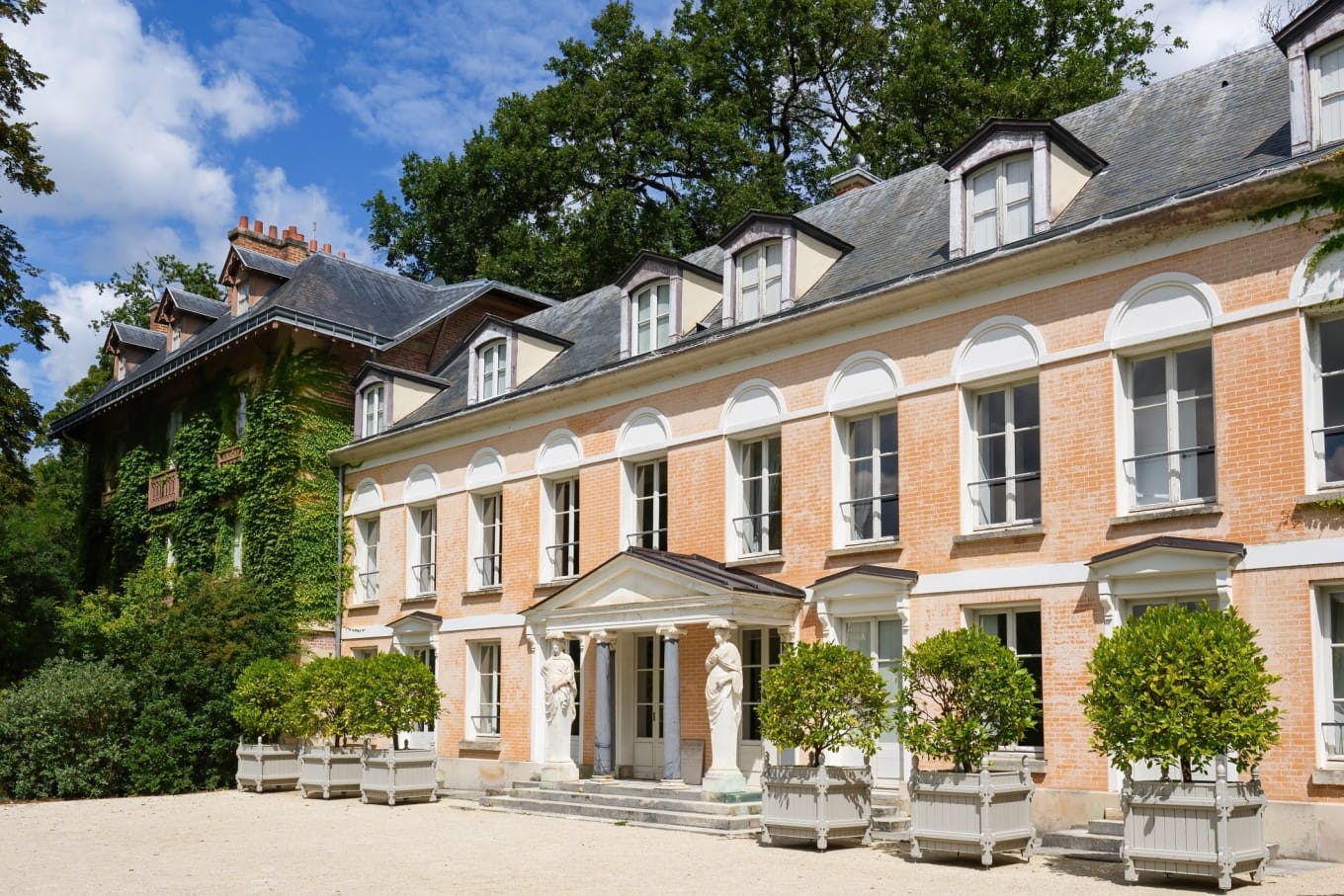
Here is the least known of the five, and probably the most intimate. The Domaine de la Vallée-aux-Loups, in Châtenay-Malabry (Hauts-de-Seine), is the former property of François-René de Chateaubriand - writer, diplomat and major figure of nineteenth-century French Romanticism. He spent the most fertile years of his life there and wrote a large part of his Memoirs from Beyond the Grave there.
On his 14 hectares, he planted trees brought back from his travels around the world: a sequoia from California, a ginkgo from China, a tulip tree from Virginia... What is now an arboretum (a collection of rare trees from the four corners of the world) with exceptional species, some of which are now two hundred years old.
Must do:
- Chateaubriand's House: visit of the writer's home and study, preserved in their original state. Poetic and silent.
- The arboretum walk : spot the sequoia planted in 1823, it now exceeds 30 meters.
- The romantic park : benches hidden under the foliage, winding paths, ponds... the antithesis of the French garden. Ideal for reading, thinking, or doing nothing.
The Île-de-France Mobilités tip
The estate is closed on Mondays. Come on a Tuesday or Wednesday morning during the week to enjoy the park in virtual solitude. In May-June, the flowering of rare trees is spectacular.
How to get there by public transport?
› RER B — Robinson (20 min from Paris): then bus 192 towards Châtenay-Malabry, Maison de Chateaubriand stop (~10 min by bus). It takes 30 minutes from Paris in total.
› On foot from Robinson : 25 minutes through the district along the Parc de Sceaux, which offers a beautiful taste of greenery before arriving at the estate.
Extend the ride
These five wooded areas offer very different experiences: from the wild forest to the poetic garden, from the sporty walk to the contemplative walk. All of them can be reached without a car, in less than an hour from Paris.
- Discover all the regional natural areas on the Île-de-France Nature website
- Plan your route on the Île-de-France Mobilités app
- See all our ideas for walks in Île-de-France