The 15 must-see places to visit in Paris
Published on
First time in Paris or regulars of the capital? On this page, you will find the places not to be missed and our tips for getting there by public transport.
Tips & practical information: explore the capital like a local
On this page, you will find:
- Ultra-precise transport information : lines to take and stations to get off
- Tips to save time
- The little + : the lesser-known site to visit nearby or the local tip
Whether you are a lover of art or walks, whether you are travelling with family, friends or solo: navigate freely in the capital, we will take you.
Our must-sees: what to do during your visit to Paris?
#1. Arc de Triomphe and Champs-Élysées: the winning duo
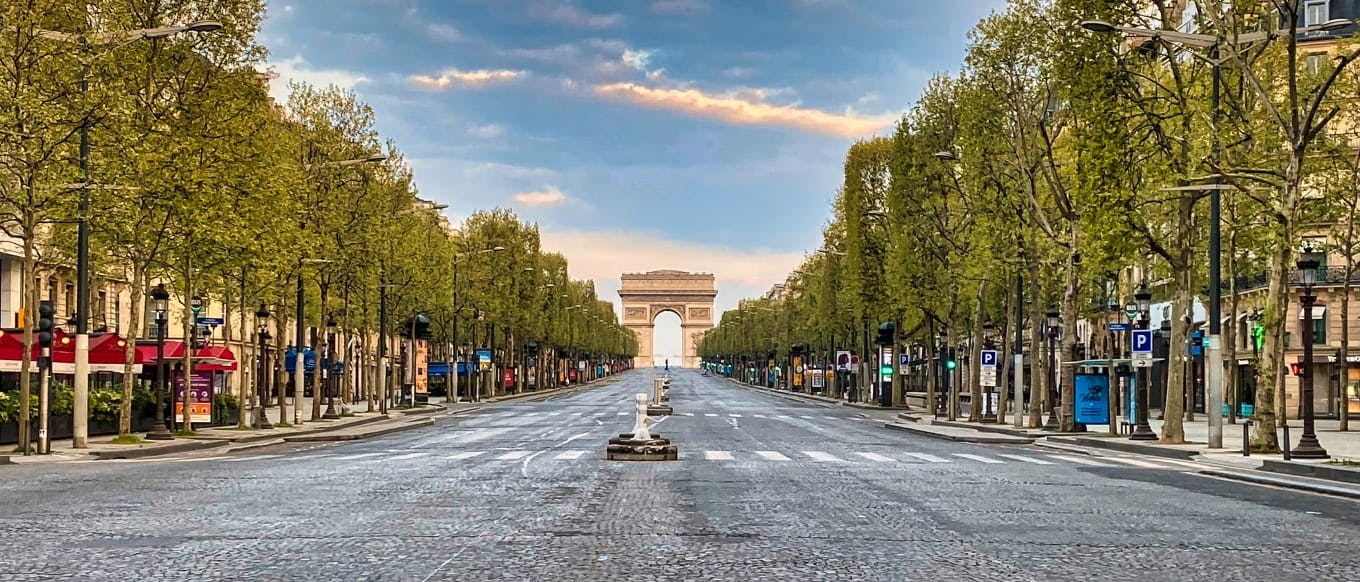
A majestic alley designed in the seventeenth century by André Le Nôtre, the emblematic gardener of King Louis XIV, the Champs-Élysées became, two centuries later, the place for the Parisian bourgeoisie to walk.
Aujourd’hui, 100 millions de visiteurs se rendent sur les Champs-Élysées chaque année
Today, there are no more horse-drawn carriages and ladies in their Sunday best, but luxury brands that rub shoulders with multiplex cinemas and restaurants where you can show off.
At one end of "the most beautiful avenue in the world" is the Arc de Triomphe : a monumental stone arch commissioned by Napoleon Bonaparte. It has been enthroned in the centre of the "Place de l'Étoile" (whose real name is now Place Charles-de-Gaulle) since 1806.
The terrace at the top of the Arc offers one of the most beautiful views of Paris, with the descent from the "Champs" to the Place de la Concorde and its obelisk.
How to reach the Arc de Triomphe and the Champs-Élysées by public transport?
Place Charles-de-Gaulle, 75008 Paris
- Metros 1, 2, 6 and RER A : Charles de Gaulle – Étoile station for direct access to the Arc de Triomphe
- Metros 1 and 13 : Champs-Élysées - Clemenceau station To visit the Champs Elysées Gardens and the Concorde Obelisk, you will have to walk up the avenue to get to the Arc de Triomphe
- Metro 9 : Franklin D. Roosevelt station. The station is located in the middle of the avenue, equidistant from the obelisk and the Arc de Triomphe
Our practical advice
The best time to go : late afternoon to enjoy the sunset from the terrace and see the flame of the Tomb of the Unknown Soldier rekindled, every evening at 6:30 pm.
#2. Eiffel Tower, the Parisian emblem
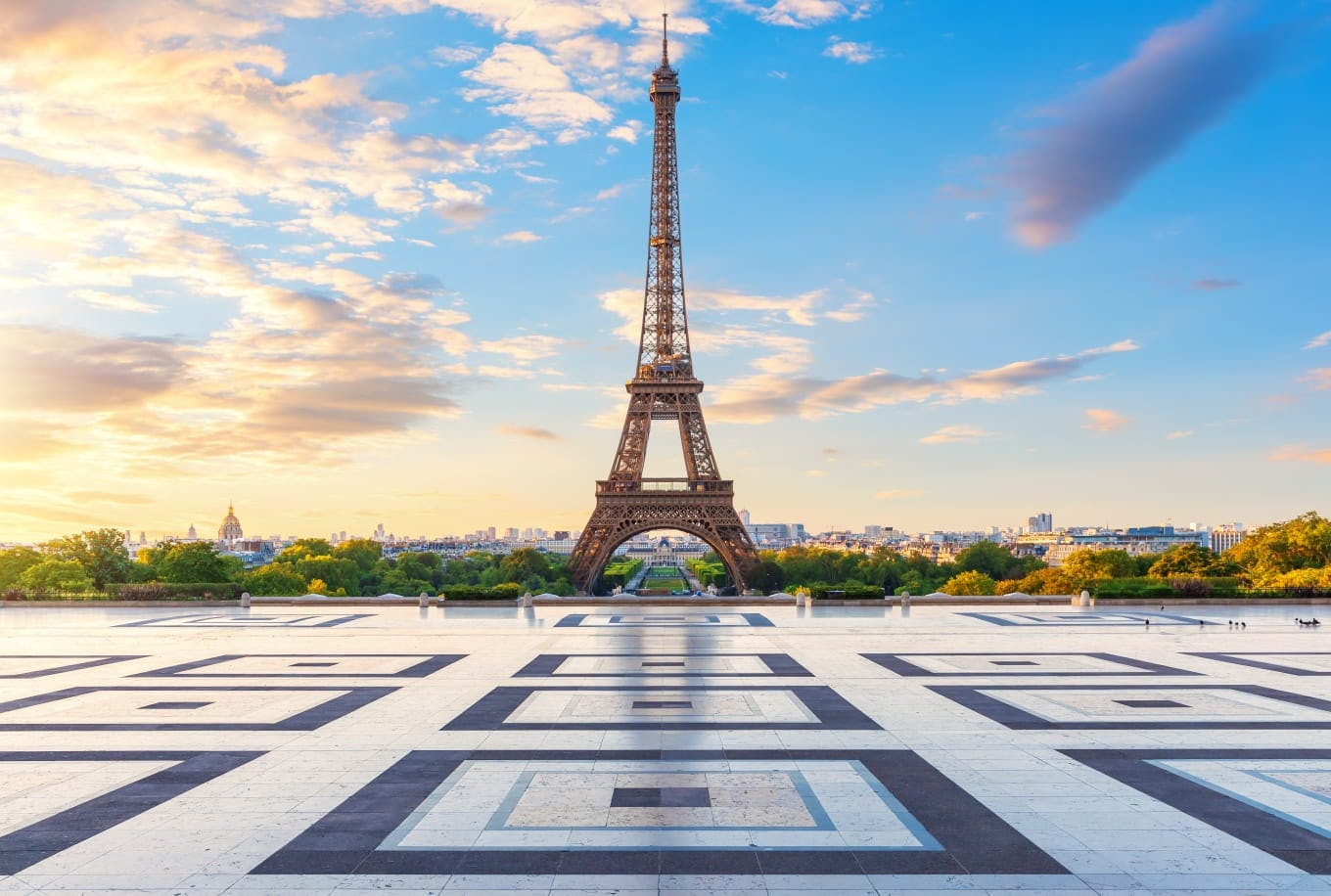
Built in 1889 for the World's Fair under the direction of engineer Gustave Eiffel, the Eiffel Tower attracts nearly 7 million visitors each year.
The roof of Paris with its 330 meters high, it offers a 360° panoramic view of the entire city and its inner suburbs. For those who are not tempted by the ascent (by elevator) of the "Iron Lady", you can observe it from dry land on the lawns of the Champ-de-Mars or the esplanade of the Trocadero.
How to get to the Eiffel Tower by public transport?
Avenue Gustave Eiffel, 75007 Paris
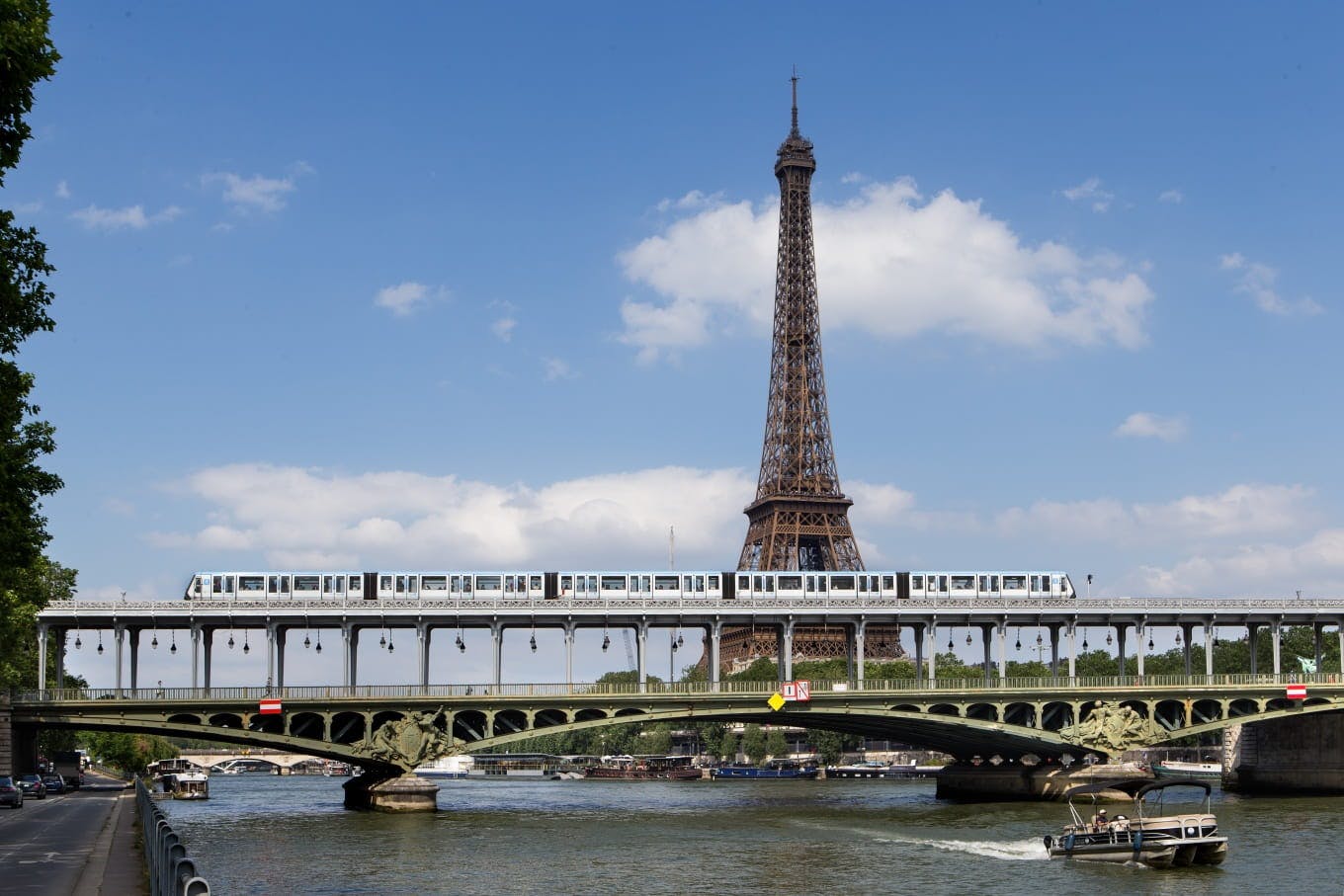
- Metro 6 : Bir-Hakeim station + a few minutes walk. Following the Seine, you will pass in front of the Maison de la culture du Japon before reaching the Eiffel Tower Garden and the imposing feet of the Iron Lady.
- Metro 9 : Trocadéro station. Observe the Eiffel Tower from the Trocadero esplanade when you get out of the metro, then go down through the gardens by crossing the Pont d'Iéna (10 min walk) to reach it.
- RER C : Champ de Mars - Eiffel Tower station + 5 min walk along the Seine.
Our practical advice
- Best time to go : on weekdays before 10am or after 6pm. To avoid queues, remember to book your ticket.
- Come after dark to admire the illuminations (the Eiffel Tower sparkles for the first five minutes of each hour, from dusk until midnight).
#3. Grand Palais, the museum that puts art under glass
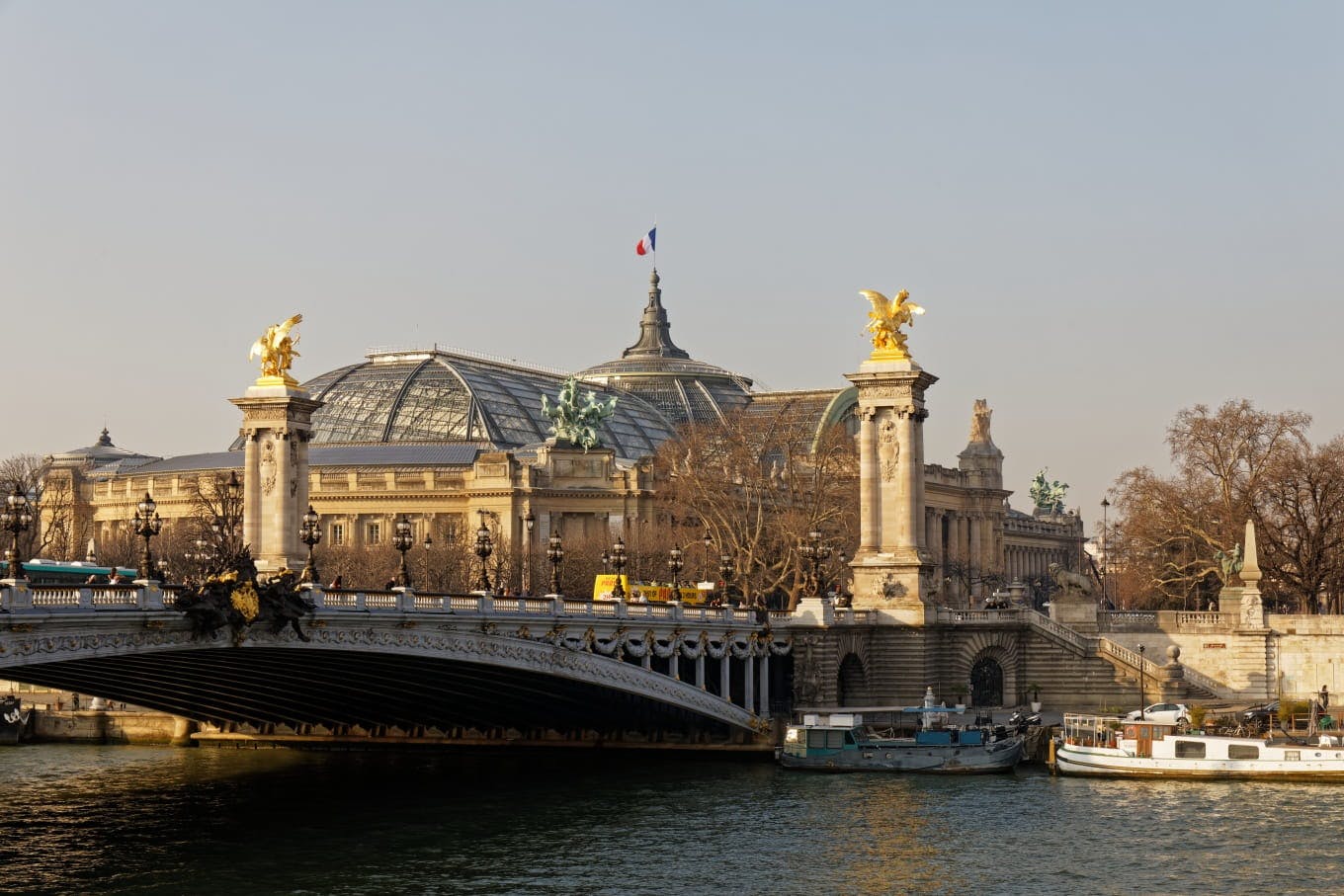
Inaugurated in 1900 on the occasion of the Universal Exhibition, the Grand Palais is a monumental building of 77,000 square meters designed by the architect Charles Girault.
It is to the same visionary that we owe the Petit Palais, now the Musée des Beaux-Arts de la Ville de Paris, located just opposite, on the other side of Avenue Winston-Churchill (Paris 8th).
If not for its architecture or its impressive glass roof - the largest in Europe - a spectacular setting for fencing during the Paris 2024 Olympic and Paralympic Games, the Grand Palais (located a few steps from the banks of the Seine) can be visited for its programme of sporting and cultural events and its first-rate exhibitions.
How to get to the Grand Palais by public transport?
Square Jean Perrin, 17 avenue du Général Eisenhower 75008 Paris
- Metros 1 and 13 : Champs-Élysées Clemenceau station + 3 min walk
- RER C : Invalides station + 5 min walk across the Seine via the Pont Alexandre III
Our practical advice
- When to go : check the calendar of exhibitions and events, the program honors music, sport, art and its great names, such as the international avant-garde.
- Ticket tip: online booking is strongly recommended for temporary exhibitions (ticketing).
#4. Notre-Dame de Paris Cathedral and Saint-Michel district, the historic heart of Paris
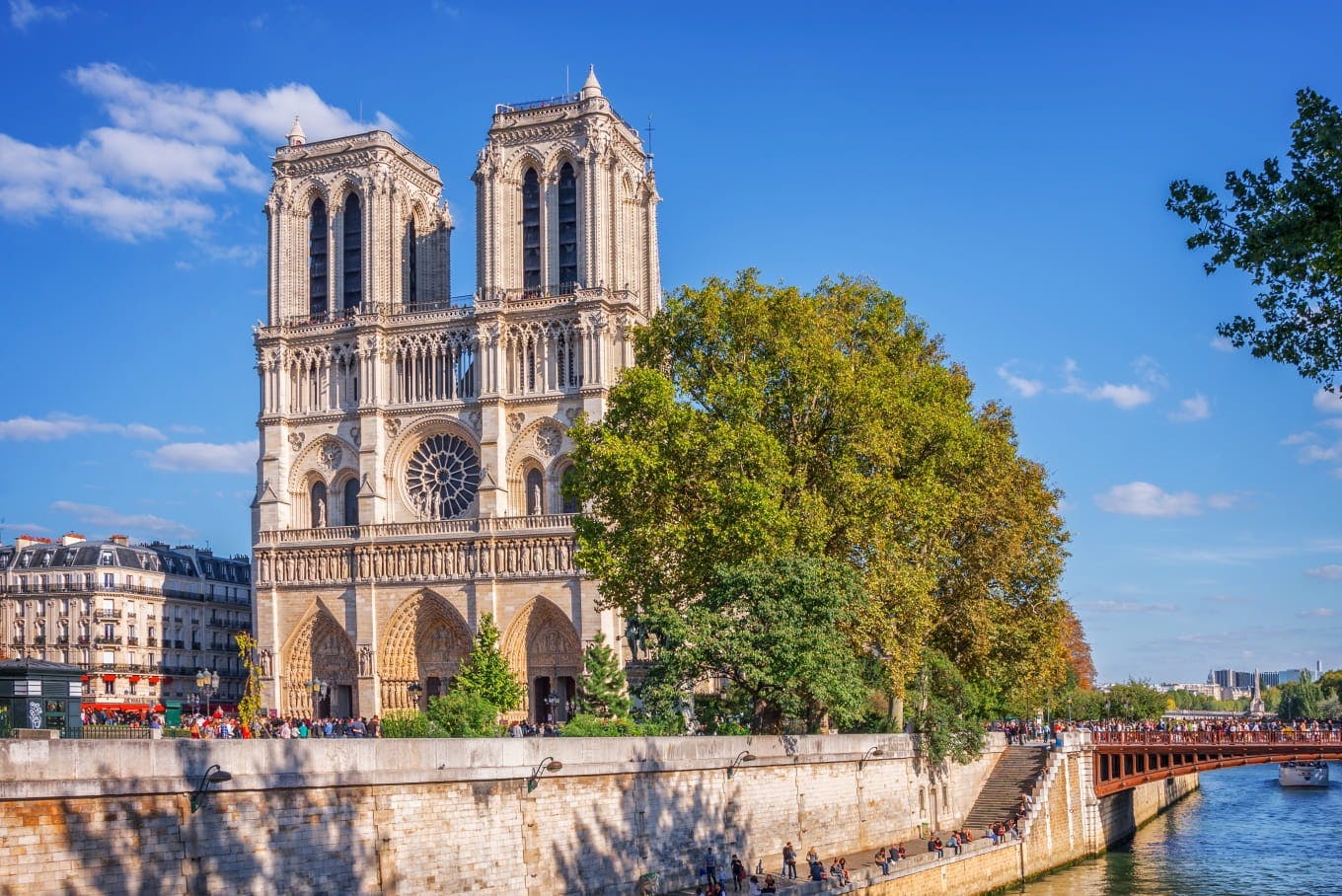
After a dramatic fire in 2019, followed by five years of intensive work, the mythical Cathedral of Notre-Dame de Paris reopened its doors in December 2024.
You can now discover or rediscover its Gothic interior and façade, before setting off to discover the Latin Quarter, which borders it.
You will find :
- Bookshops and second-hand booksellers all along the Seine
- Banks of the Seine bathed in light where you can stroll
- Lively terraces and small cobbled streets around the Place Saint-Michel (and its fountain)
- Must-sees of Parisian heritage such as: the Pantheon, the Sainte-Chapelle or the Île Saint-Louis
How to reach Notre-Dame de Paris and the Saint-Michel district by public transport?
6 parvis Notre-Dame, place Jean-Paul II, 75004 Paris
- Metro 4 : Cité station, you will exit on the Ile de la Cité, a 5-minute walk from the cathedral
- Metro 10 : Cluny - La Sorbonne station + 6 min walk
- RER B and C : Saint-Michel Notre-Dame station + 2 min walk
Our practical advice
- Best time : early in the morning to see the forecourt without the crowds, or in the evening for the student and lively atmosphere of the Saint-Michel district.
- Visit tip : book your visit to the cathedral for free, to save time and avoid the queue (which can be long).
#5. Louvre Museum, the world temple of the Arts
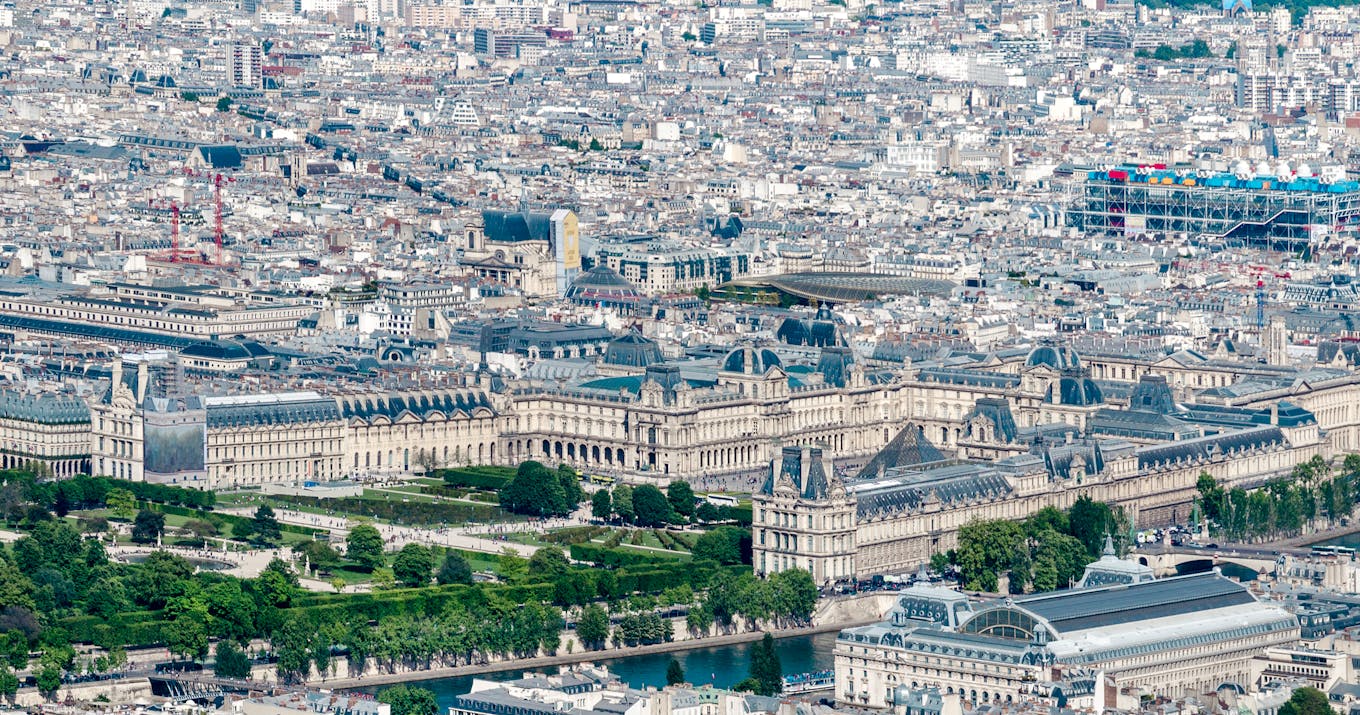
Former palace of the Kings of France converted into a museum, the Louvre brings together an invaluable collection.
You can come across the Mona Lisa of course, but also Egyptian antiquities or the great masters of European painting... So plan time for your visit: with 73,000 m² of exhibition space, it is difficult to see everything at once.
In the Cour Carrée, you can see the mythical glass pyramid by the Chinese-American architect Ieoh Ming Pei, the main entrance to the museum since 1989.
How to get to the Louvre Museum?
Rue de Rivoli, 75001 Paris
- Metros 1 and 7 : Palais Royal – Musée du Louvre station, for direct access via the underground gallery.
- Metro 1 : Louvre-Rivoli station + 2 min walk via the Cour Carrée.
Our practical advice
- Best time to go : the Louvre is open on Wednesdays and Fridays until 9 p.m., ideal for meeting fewer people (sign up for their newsletter to book your night for free on the first Friday of each month).
- Access tip : the entrance through the Lions' Gate is often less crowded than the Pyramid. Visit this page to choose your entrance.
- Combine the visits : a few steps away are the Jardin des Tuileries (the most important and oldest French garden in the capital), the Place de la Concorde and its obelisk.
#6. Jardin des Plantes, a treasure trove of nature and science
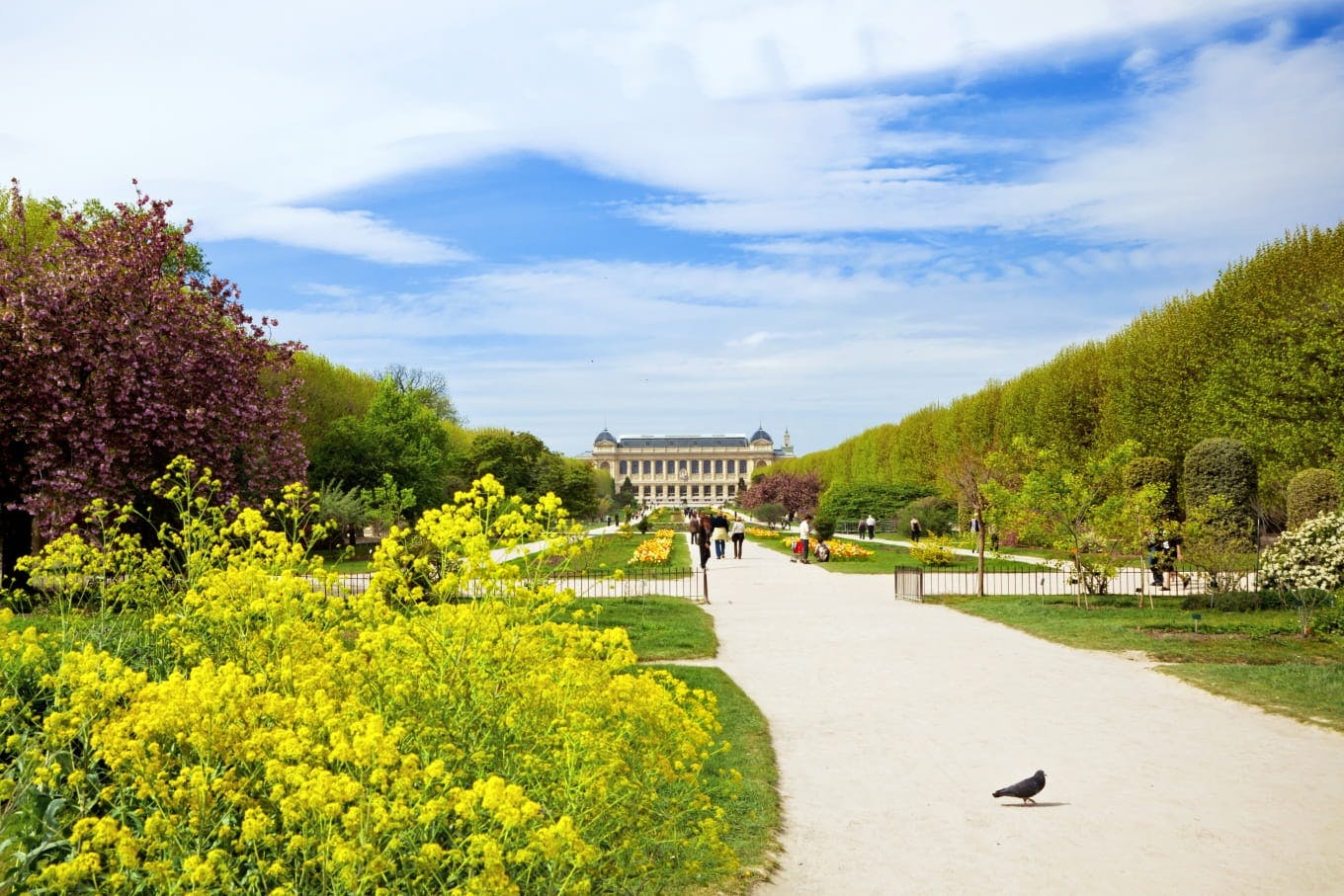
Created in 1626 as the medicinal garden of King Louis XIII, the Jardin des Plantes is one of the oldest scientific gardens in the world.
On 23 hectares, it houses: the National Museum of Natural History (and its galleries of palaeontology, comparative anatomy, geology, mineralogy or the mythical Gallery of Evolution), a menagerie (a mini zoo), tropical greenhouses, a rose garden and thematic gardens.
It is the ideal place for a nature-culture break before continuing your discovery of the 5th arrondissement.
How to reach the Jardin des Plantes by public transport?
There are several entrances to the Garden, but the main entrance is located at:
36 rue Geoffroy-Saint-Hilaire, 75005 Paris
- RER C, Metro 5 : Gare d'Austerlitz, the Jardin des Plantes is literally opposite (entrance from Place Valhubert)
- Metro 5 : Quai de la Rapée station + 12 min walk across the Pont d'Austerlitz, entrance via Place Valhubert
- Metro 7 : Censier-Daubenton station + 12 min walk passing in front of the Great Mosque of Paris (to be visited), entrance rue Geoffroy-Saint-Hilaire
- Metro 10 : Jussieu station + 6 min via the rue Cuvier entrance
Our practical advice
- Combine the visits: the 5th arrondissement is full of places to visit. Not far away are the Arènes de Lutèce, the Great Mosque of Paris or the very charming rue de Mouffetard and if you push a little further, the Pantheon.
- Budget tip : access to the garden is free, only the Museum, the menagerie and the greenhouses are charged.
- The hidden corner : the garden hides a perched labyrinth. Near the menagerie, it offers a panoramic view of the gardens below.
#7. Montmartre, the bohemian soul of the capital
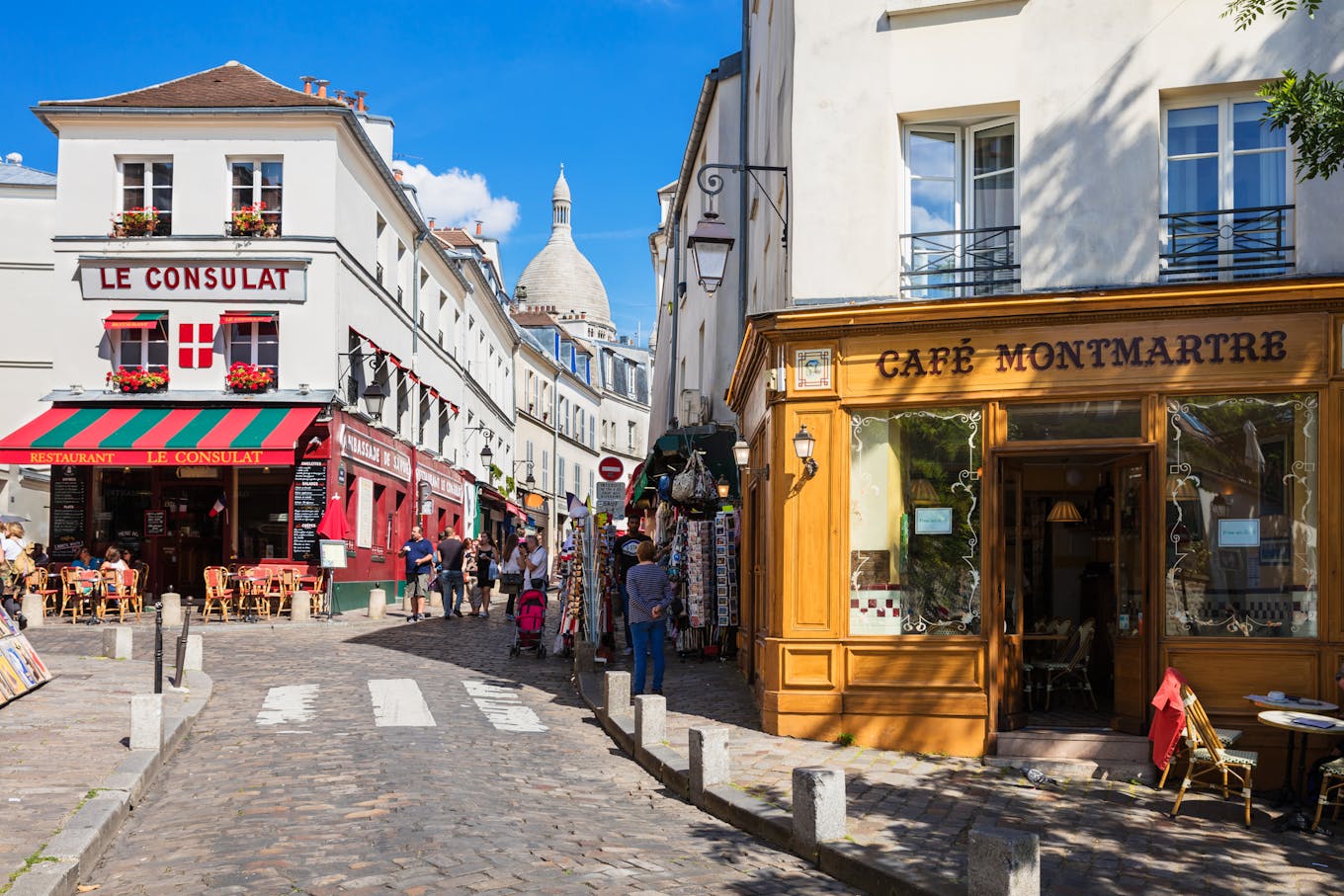
Is it possible to live a village experience in Paris? Welcome to Montmartre, the capital's most famous hill, which has cultivated its bohemian atmosphere for centuries.
At its summit, the famous Basilica of the Sacred Heart has dominated all of Paris since 1875, offering a breathtaking view of the zinc roofs and the city's plethoric historical heritage.
To immerse yourself in the art of living on the Montmartre hill: get lost in the alleys, stop at the Halle Saint-Pierre for an exhibition and take a look at the Place du Tertre, with its famous caricaturists (but be aware that the crowds are there, at all hours).
How to get to Montmartre by metro or funicular?
35 rue du Chevalier de la Barre, 75018 Paris (address of the Basilica of the Sacred Heart)
- Metro 12 : Abbesses station + 8 minutes to reach the square in front of the Basilica via the Wall of I Love You
- Metro 2 : get off at Anvers station + 9 min walk to the forecourt
- Montmartre funicular : it takes you from the bottom of the Butte (4 place Suzanne Valadon, 75018 Paris) to the square in front of the Sacré-Coeur, for the price of a metro ticket. You can reach the funicular by taking metro line 2 to Anvers station (then take Rue de Steinkerque).
Our practical advice
- Best time : sit on the steps of the Sacré-Coeur in the early morning, to see Paris wake up at sunrise.
- Walking tip: use the funicular to go up, then walk down the small streets to discover the district. Pass through the streets of Abbesses and Lepic, and their authentic shops, to immerse yourself in an "Old Paris" atmosphere.
- Alternatively , explore the Montmartre Cemetery at the foot of the Butte, where Dalida, François Truffaut, Michel Berger, France Gall, Jeanne Moreau, Edgar Degas, Hector Berlioz, Émile Zola, and many other artists are buried.
#8. Palais de Tokyo, the HQ of contemporary art in Paris
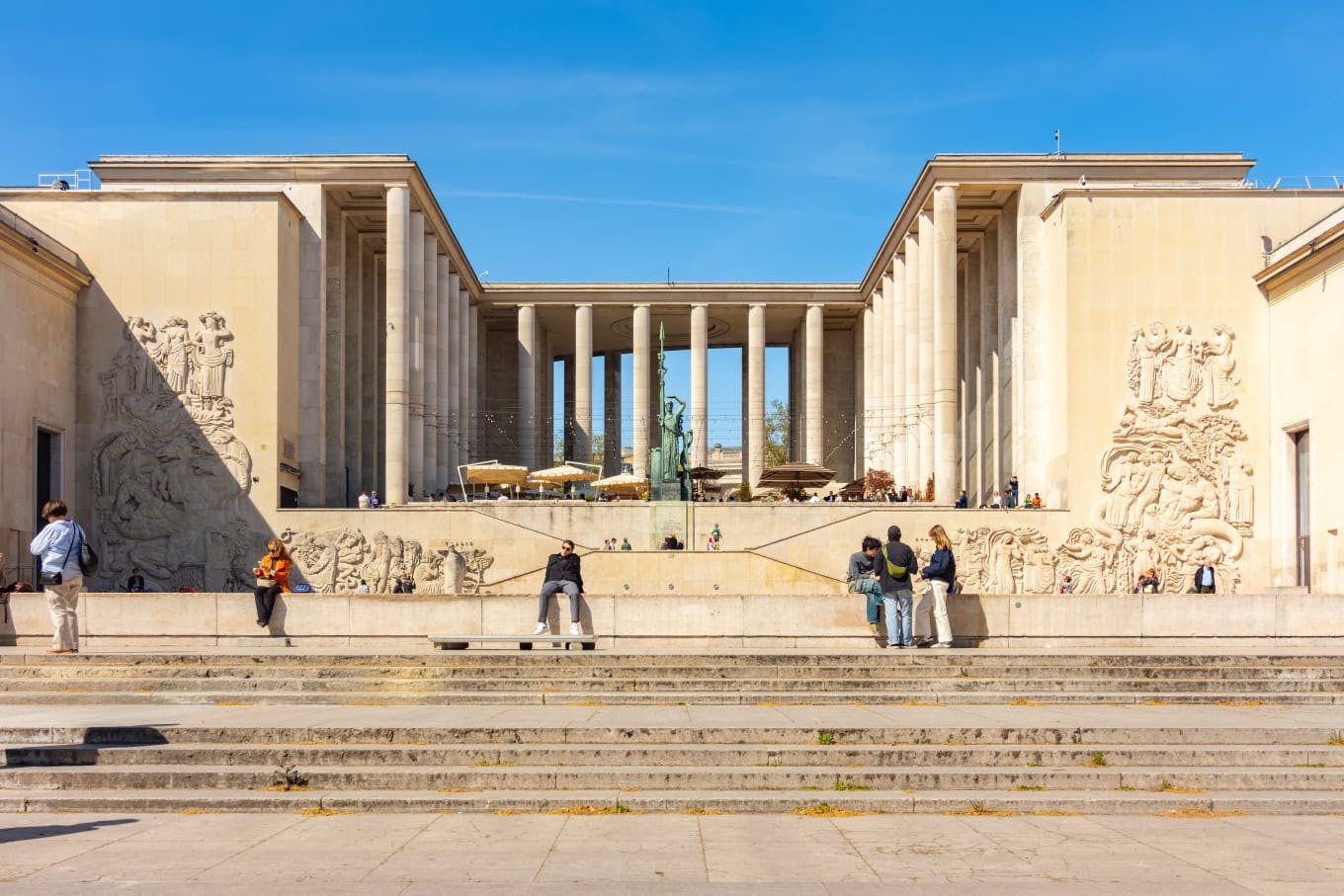
The largest contemporary art center dedicated to contemporary creation in Europe, the Palais de Tokyo occupies a special place in the Parisian cultural landscape. Facing the Seine, with the Eiffel Tower in its sights, this monumental Art Deco building combines raw scenography, urban energy and artistic effervescence.
Between great figures of contemporary art and emerging talents, its audacious programming makes it one of the liveliest and freest places on the European art scene.
How to get to the Palais de Tokyo by public transport?
13, avenue du Président Wilson, 75116 Paris
- Metro 9 : Choose to get off at Iéna or Alma Marceau, the two stations closest to the museum entrance
- RER C : get off at the Pont de l'Alma station, cross the bridge to reach the museum
Our practical advice
- Best time : at night on Thursdays until midnight for an electric and festive atmosphere.
- Ticket tip : the ticket gives access to all the current exhibitions, check the program before your visit.
- The good idea : combine your visit with that of the Musée d'Art Moderne de la Ville de Paris in the other wing of the building.
#9. Bois de Boulogne, the green lung of western Paris
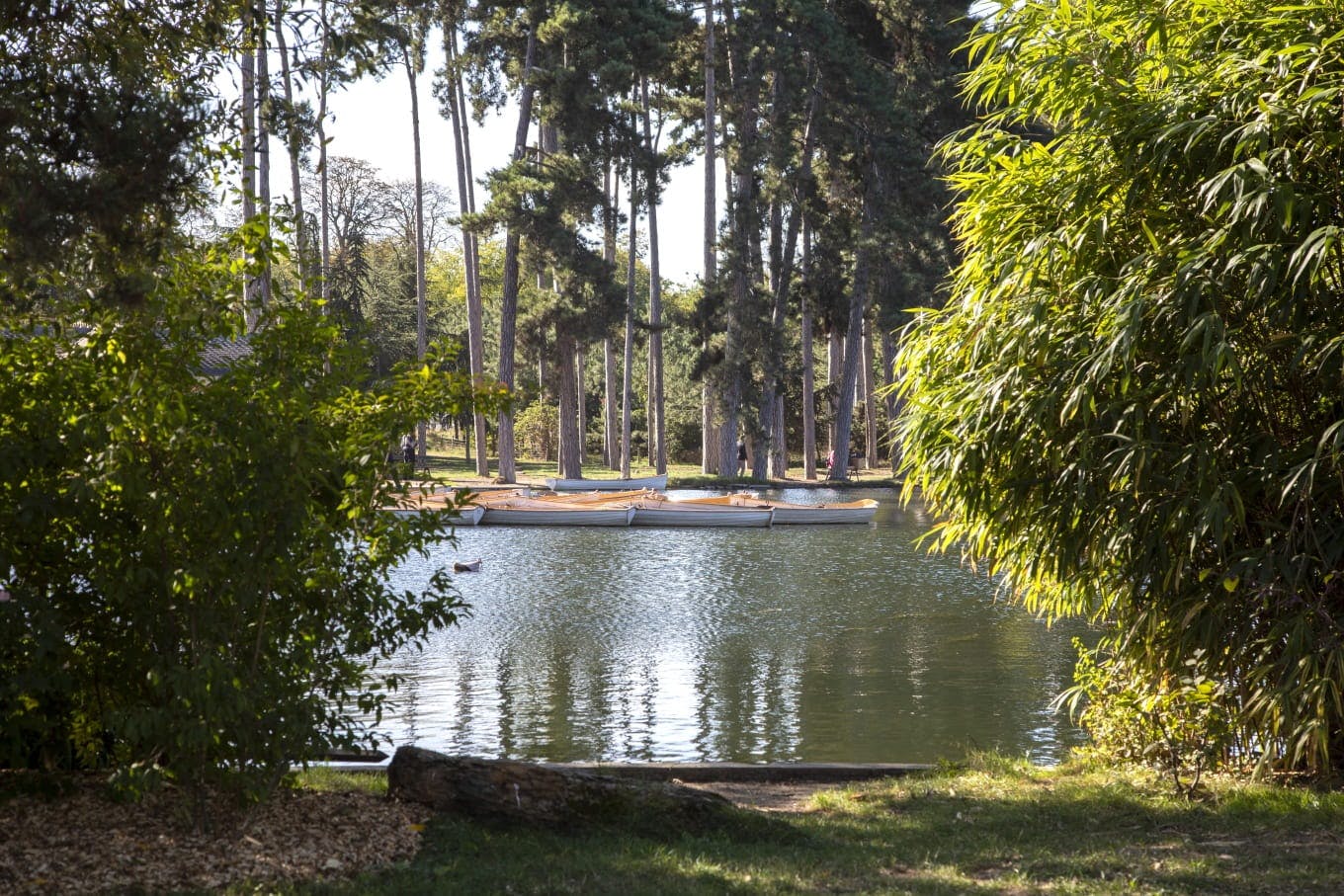
With 846 hectares of nature, the Bois de Boulogne is the heart of western Paris.
A former royal hunting ground turned public park, you can: walk , bike or horseback ride, go to the museum (at the Louis Vuitton Foundation), see a horse race, drink a coffee and have a picnic or go boating on one of its three lakes (the Lower Lake, known as the "Great Lake").
How to reach the Bois de Boulogne by metro and RER?
Each of the stops leads, in less than ten minutes on foot, to one of the entrances to the woods:
- Metro 9 : the Jasmin or Ranelagh stations take you to the south-east of the Bois
- Metro 1 : Les Sablons or Porte Maillot stations take you north of the Bois, towards the Jardin d'Acclimatation
- Metro 2 : Porte Dauphine station gives you access to the eastern entrance of the Bois
- Metro 10 : Porte d'Auteuil station for an entrance at the southern tip of the Bois, towards the Roland Garros stadium and the Auteuil racecourse
Our practical advice
- Family tip : head to the Jardin d'Acclimatation, a children's paradise with its attractions (we'll tell you about it below).
- The 3-in-1 exit : a stone's throw from the Bois, you will find the Impressionist Marmottan Monet Museum (at the foot of the very romantic Ranelagh Garden) and the Le Corbusier Foundation. This allows you to add up the visits.
#10. Fondation Louis Vuitton, art on the edge of the wood
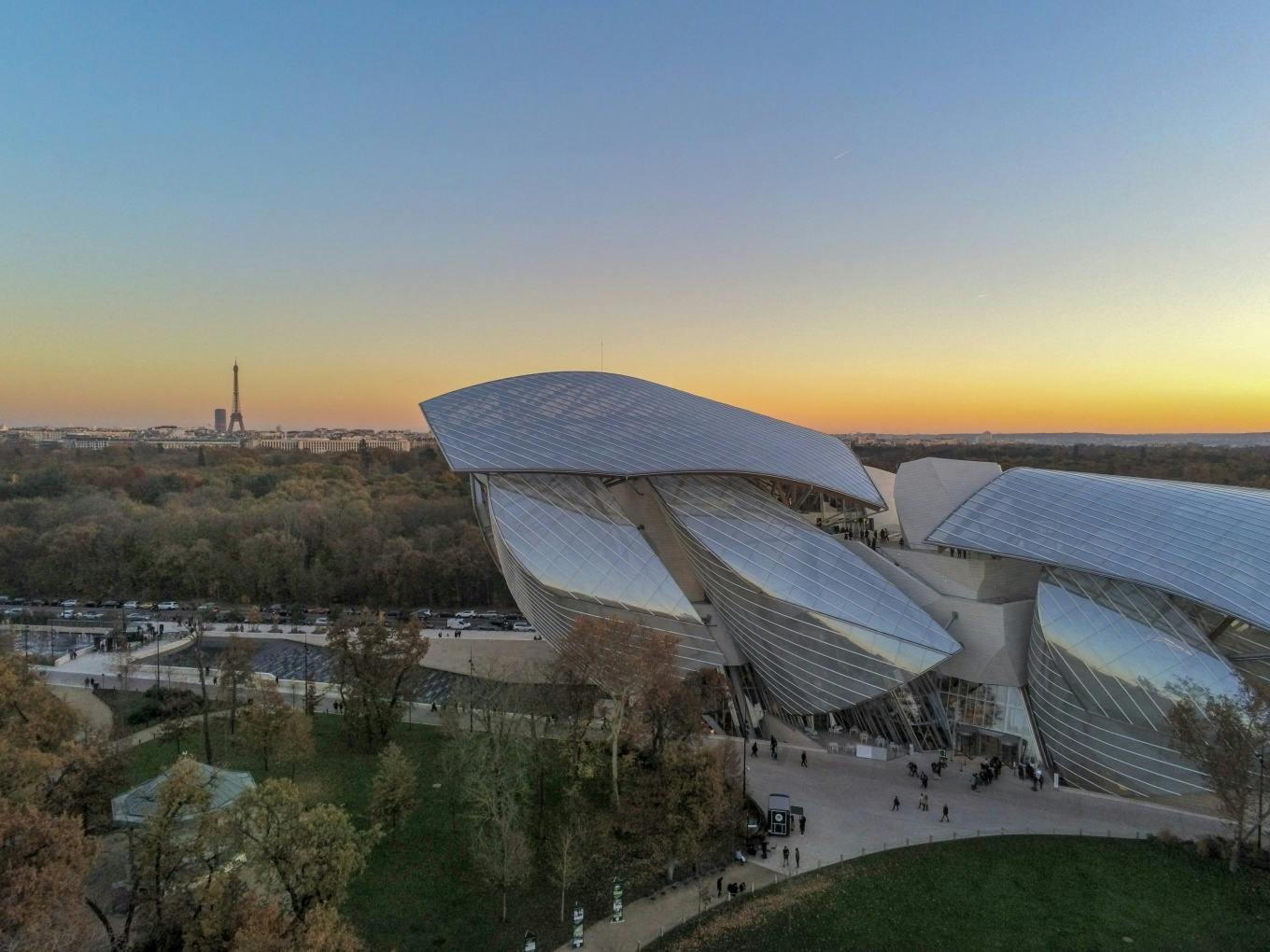
A vessel of glass and steel designed by the "starchitect" Frank Gehry, the Louis Vuitton Foundation is located in the very north of the Bois de Boulogne.
Inaugurated in 2014, it houses a permanent collection of modern art and temporary exhibitions that always make the event.
Beyond the works presented, the only visit to the building is worth the detour: go out on the terraces between two paintings, you will enjoy a panorama of Paris and the towers of the business district of La Défense.
How to get to the Fondation Louis Vuitton?
8 avenue du Mahatma Gandhi, Bois de Boulogne, 75116 Paris
- Metro 1 : Les Sablons station + 15 min walk or bus 244 towards Fondation Louis Vuitton (Fondation Louis Vuitton stop).
- Metro 1 and 2 and RER A : Charles-de-Gaulle - Étoile station, take exit 2 and take the Fondation shuttle ( free with an entrance ticket to the museum). It comes every 20 minutes at 44 avenue de Friedland 75008 Paris.
Our practical advice
Alternative walk : combine your visit to the Foundation with a walk in the Jardin d'Acclimatation, admission is included in your ticket.
#11. Jardin d'Acclimatation, the amusement park for young and old
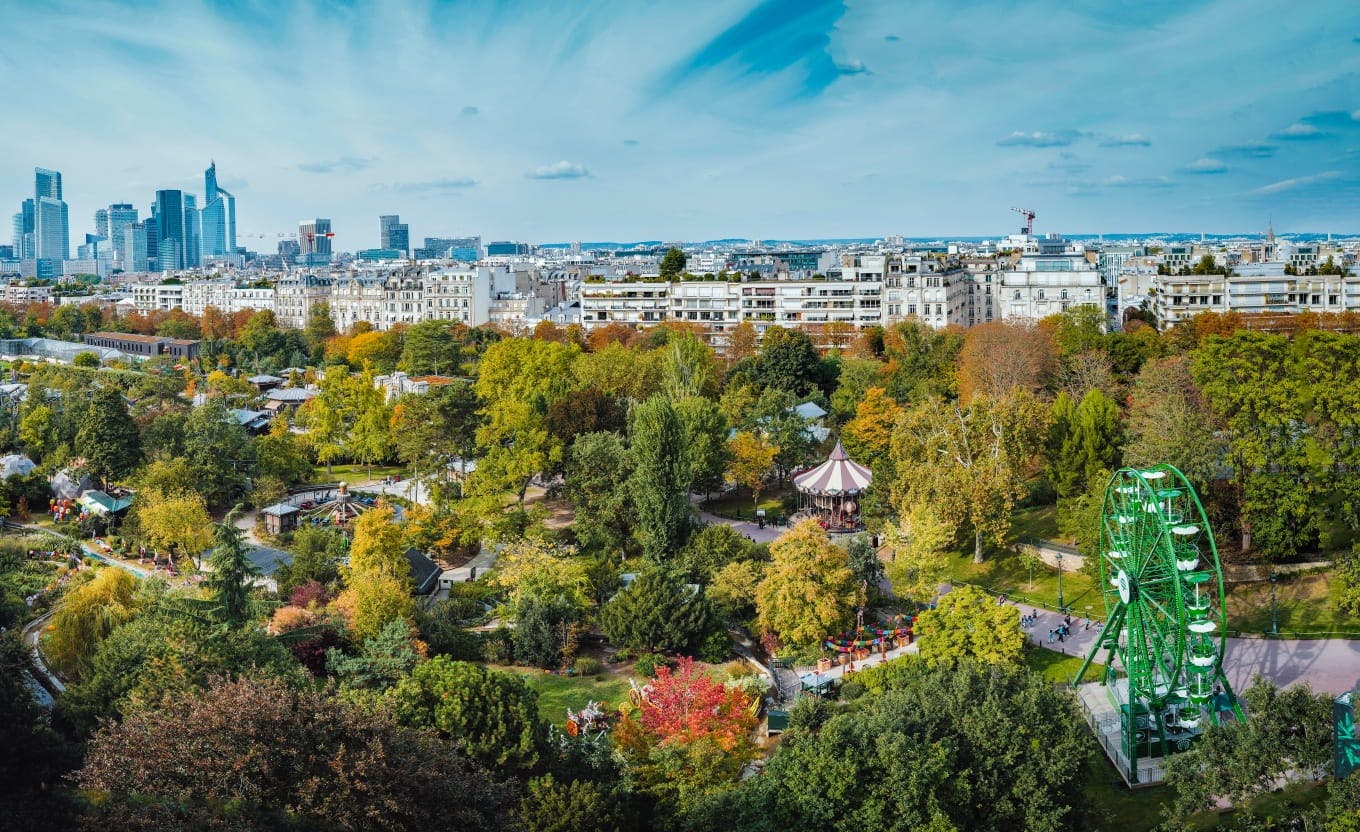
Rides, water, playgrounds, restaurants and animals? This is the program that awaits you at the Jardin d'Acclimatation, an amusement park and former science garden located in the heart of the Bois de Boulogne since 1860.
Why this name? It was in this garden, in the nineteenth century, that exotic animals were acclimatized when they arrived in France. Today, you will mainly meet small farm animals and birds in their aviary.
How to get to the Jardin d'Acclimatation by public transport?
- Metro 1 : Les Sablons stop + 7 min walk
Our practical advice
- Best time : if you want to go on Wednesdays or weekends, choose the morning to enjoy the attractions without too many queues. Remember to book your ticket. To really avoid the crowds, try to go there during the week, outside of school holidays.
- Tip : combine your visit with the Fondation Louis Vuitton right next door, to enjoy free admission.
#12. Petit Palais, the Museum of Fine Arts of the City of Paris
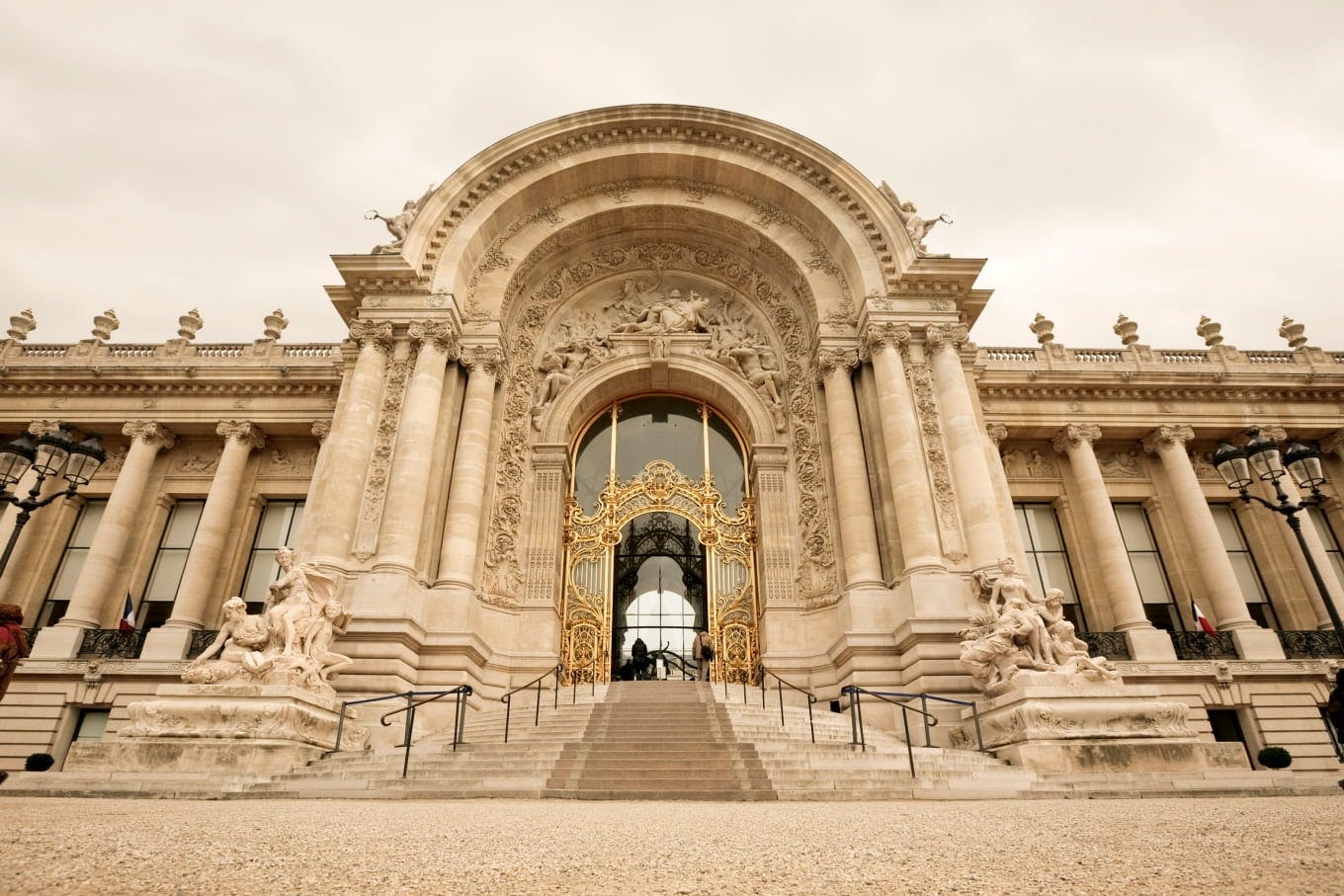
An architectural gem designed for the 1900 Universal Exhibition (like its brother, the Grand Palais, which faces it on Avenue Winston-Churchill), the Petit Palais is one of the must-see places to visit in Paris.
Now the Musée des Beaux-Arts de la ville de Paris, it houses collections ranging from Antiquity to the early twentieth century : paintings, sculptures, objets d'art and decorative works.
How to reach the Petit Palais by metro and RER?
- Metros 1 and 13 : Champs-Élysées Clemenceau station + 2 min walk
- RER C : Invalides station + 10 min walk
Our practical advice
- Access tip : admission is free for the permanent collections, only temporary exhibitions require a paid ticket.
- Gourmet bonus : go to the museum café, in the garden, for a gourmet break in a sublime setting.
- Late-night openings : Fridays and Saturdays until 8 p.m., only for temporary exhibitions.
#13. National Assembly, political plunge on the banks of the Seine
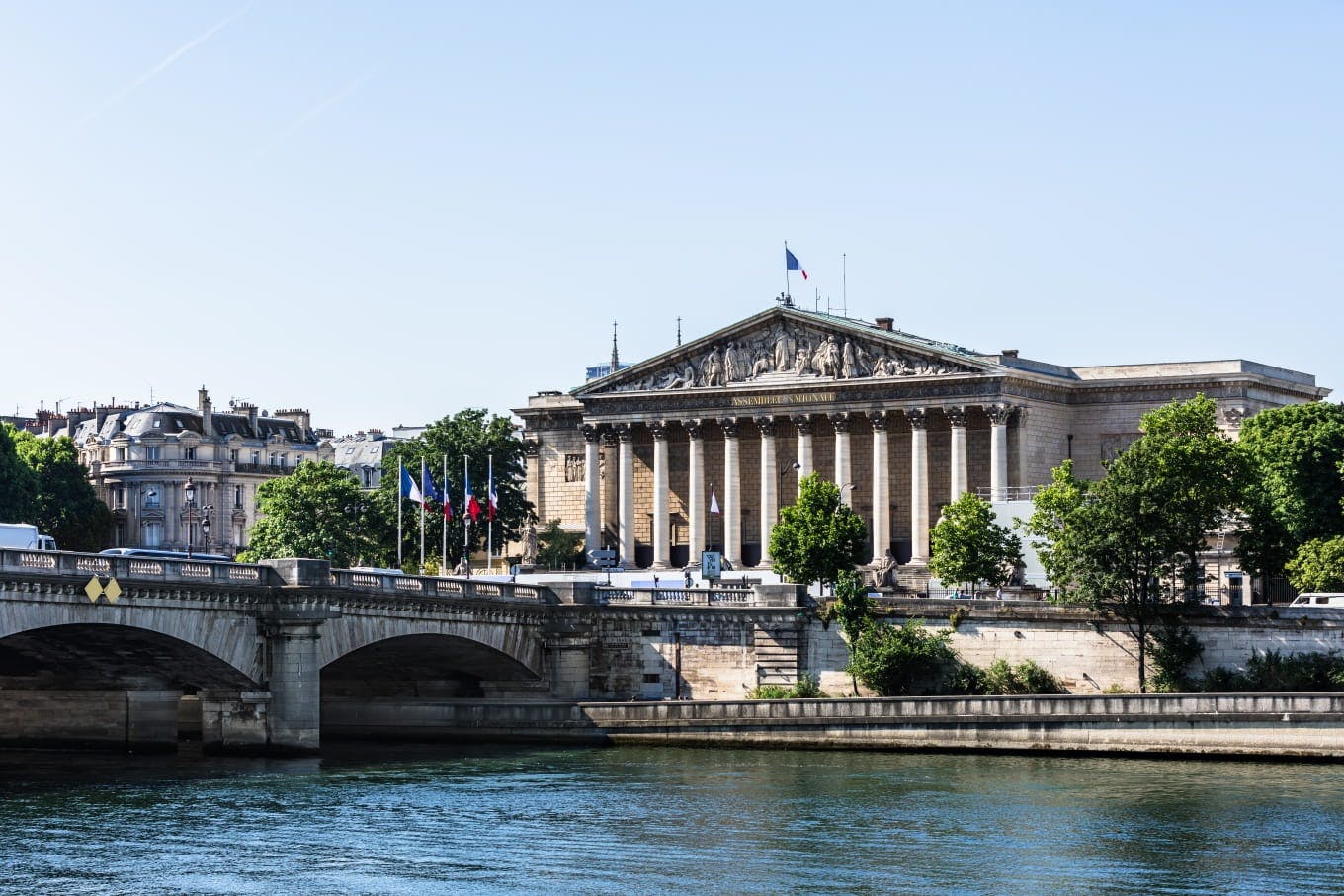
Located in the Palais Bourbon on the left bank of the Seine, just a few steps from the Place de la Concorde, the National Assembly conceals more than one treasure.
Behind its imposing neoclassical façade , major French political decisions are discussed.
And yes, the assembly can be visited
Guided tours allow you to discover the hemicycle, the library and the salons decorated with monumental frescoes. A must-see for fans of history and architecture.
How to get to the National Assembly by transport?
126 rue de l'Université, 75007 Paris
- Metro 12 : Assemblée Nationale station
- RER C: Invalides station + 7 min walk
- Metro 8 : Invalides station + 10 min walk
Our practical advice
- Best time : book your guided tour several weeks in advance on the Assembly's website.
- Accumulate visits : you are in the heart of Paris, a stone's throw away are the Rodin Museum, the Musée d'Orsay or the imposing Hôtel des Invalides.
- Bonus view : the Pont de la Concorde offers a breathtaking view of the Assembly from the other bank of the Seine.
#14. Jardin du Luxembourg, the sunny meeting place for Parisians
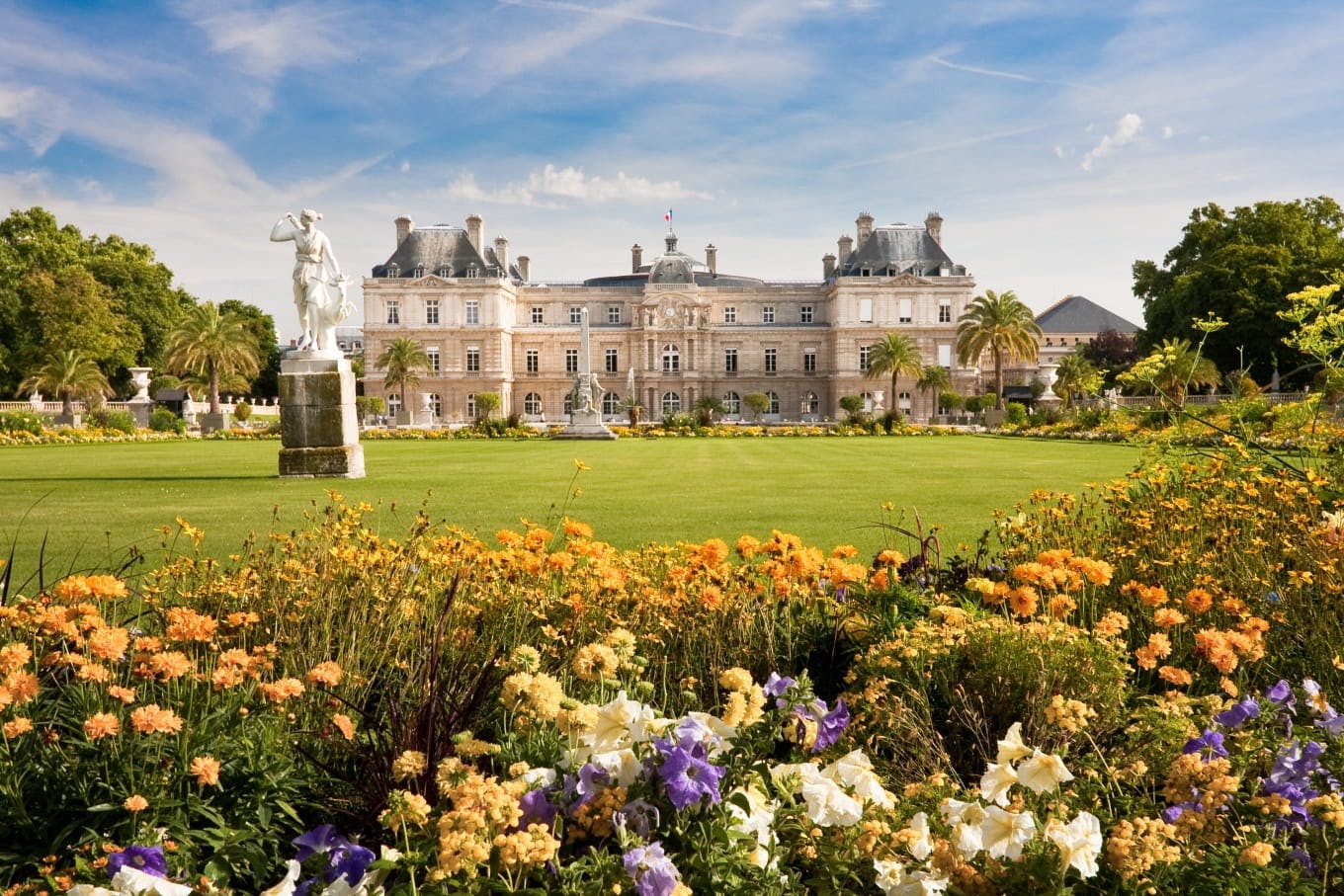
The Jardin du Luxembourg is 23 hectares of French relaxation.
Created in 1612 for Queen Marie de Medici, the garden combines: French flowerbeds, fountains (including the superb Medici Fountain), century-old lawns and trees, a palace and more than 100 statues.
It is THE favorite place for Parisians to read, picnic and meet on the iconic green chairs that are noisily moved to sunbathe or play a game of chess.
How to get to the Jardin du Luxembourg by public transport?
- Metro 4 : Odéon station + 5 min walk (north entrance)
- Metro 4 and 10 : Luxembourg station then immediate access (east entrance)
- RER B : Luxembourg station + 2 min walk (the most convenient)
Our practical advice
With the family: don't miss the puppet theatre for children and the apiary-school (a training place where beginner beekeepers learn how to raise and manage bee colonies).
#15. The Palace of Versailles, if you had to visit only one
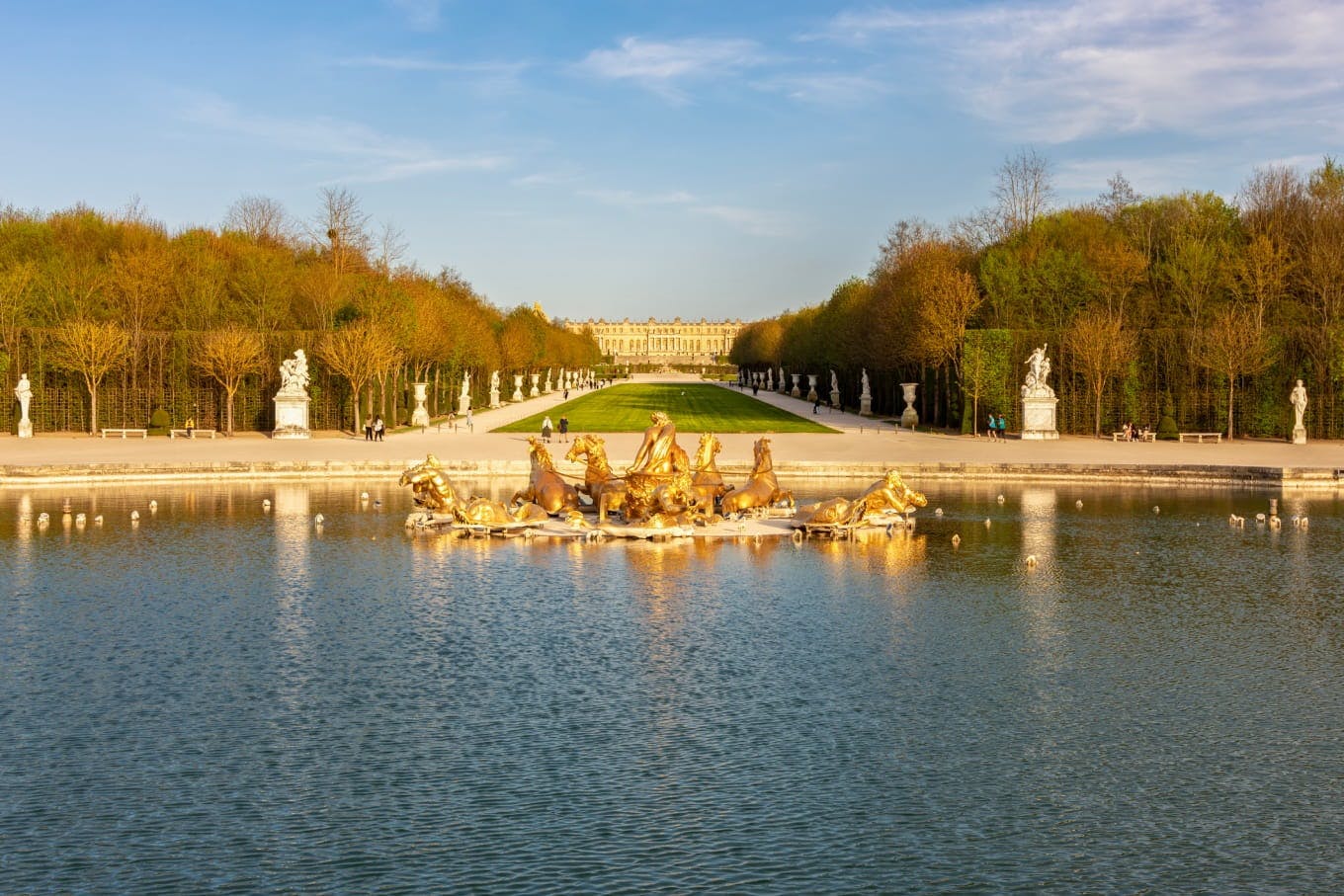
Built in the seventeenth century during the reign of Louis XIV, the Palace of Versailles welcomes nearly 8 million visitors each year.
A symbol of the grandeur of royal power with its 2,300 rooms and 800 hectares of estate, it offers a sumptuous journey through time.
A castle and gardens to visit
Wandering through the Hall of Mirrors and its ornate ceiling remains an experience in its own right. But if the interior of the palace does not satisfy you, the show continues outside: the French gardens, the grand canal of the park, the Trianon estate or the Marly estate will complete your Versailles experience.
How to get to the Palace of Versailles by public transport?
- RER C : Versailles Château Rive Gauche station + 15 min walk
- Line N : Versailles Chantiers station + 25 min walk
- Line L : Versailles Rive Droite station + 20 min walk
Our practical advice
- Best time to go: on weekdays as soon as it opens at 9am, the crowds arrive after 11am, remember to book your ticket online.
- Bonus: on weekends from June to September, take advantage of the Musical Fountains Show to see the fountains dance to the rhythm of baroque music.
- Good to know : in winter the Gardens are free and open to all (they are paid in the summer)