Your return to transport
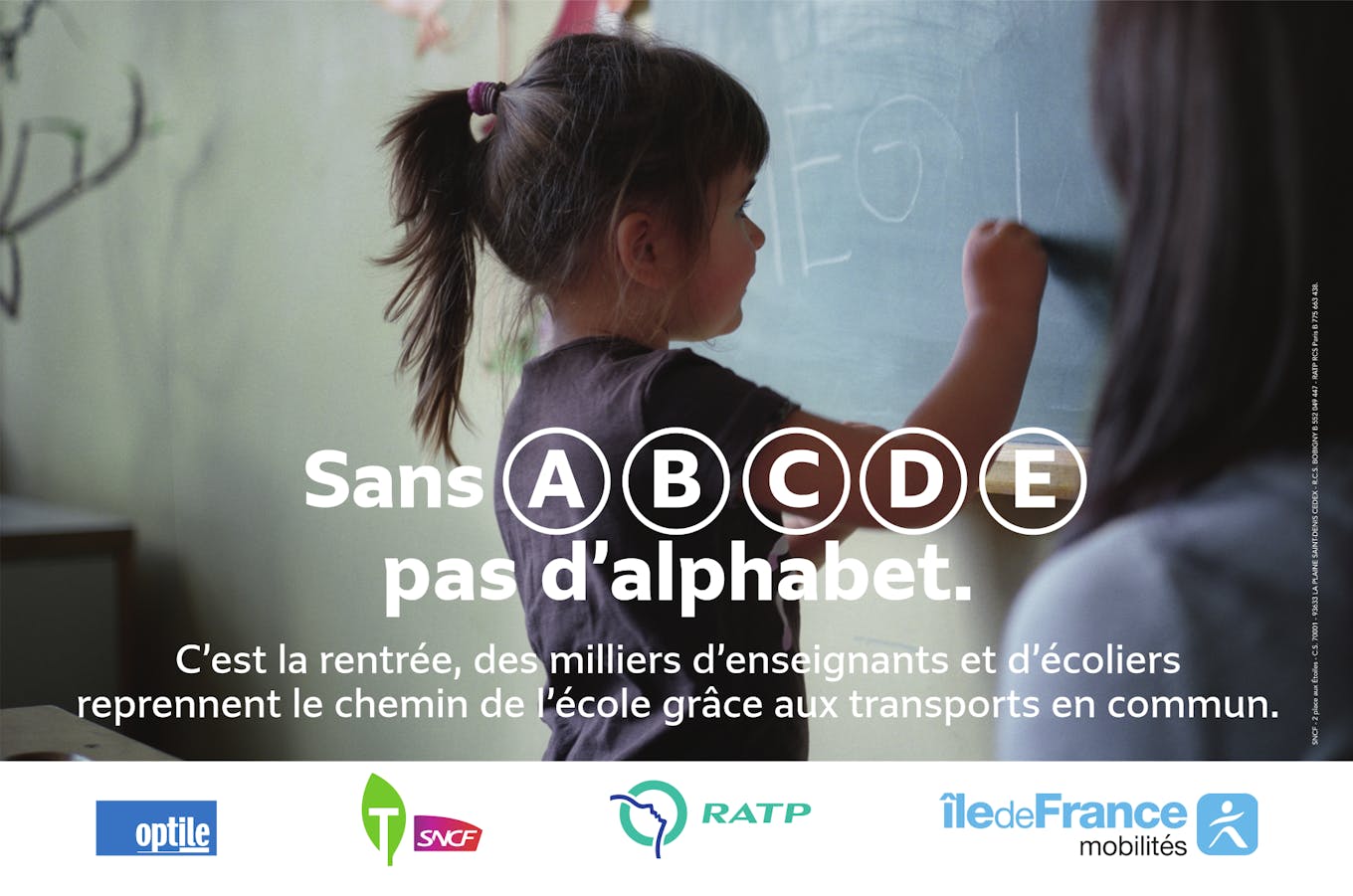
Without (RER) A B C D E, no alphabet. It's the start of the new school year, thousands of teachers and schoolchildren are going back to school thanks to public transport.
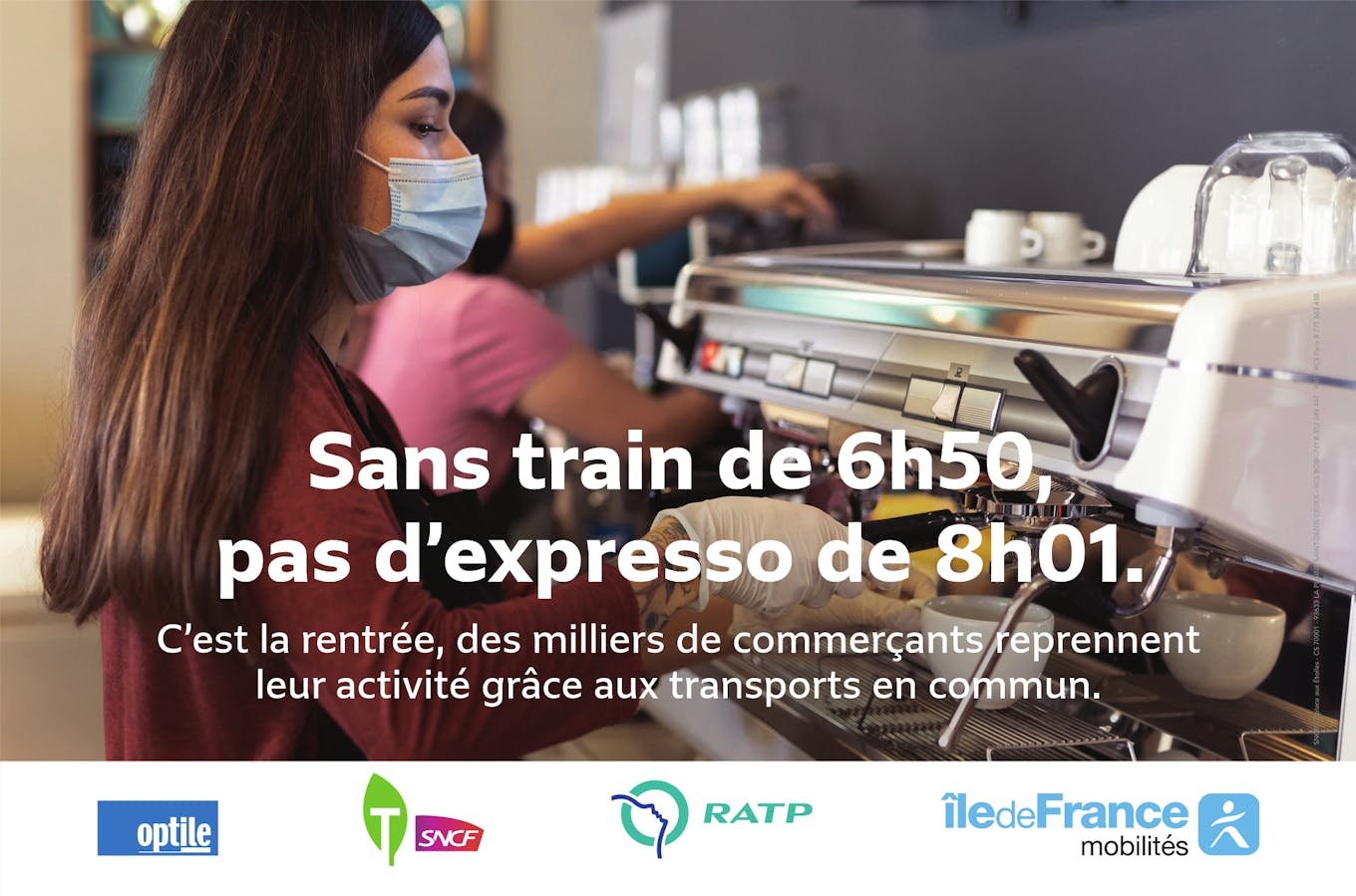
Without a 6:50 a.m. train, no 8:01 a.m. espresso. It's back to school, thousands of shopkeepers are resuming their activity thanks to public transport.
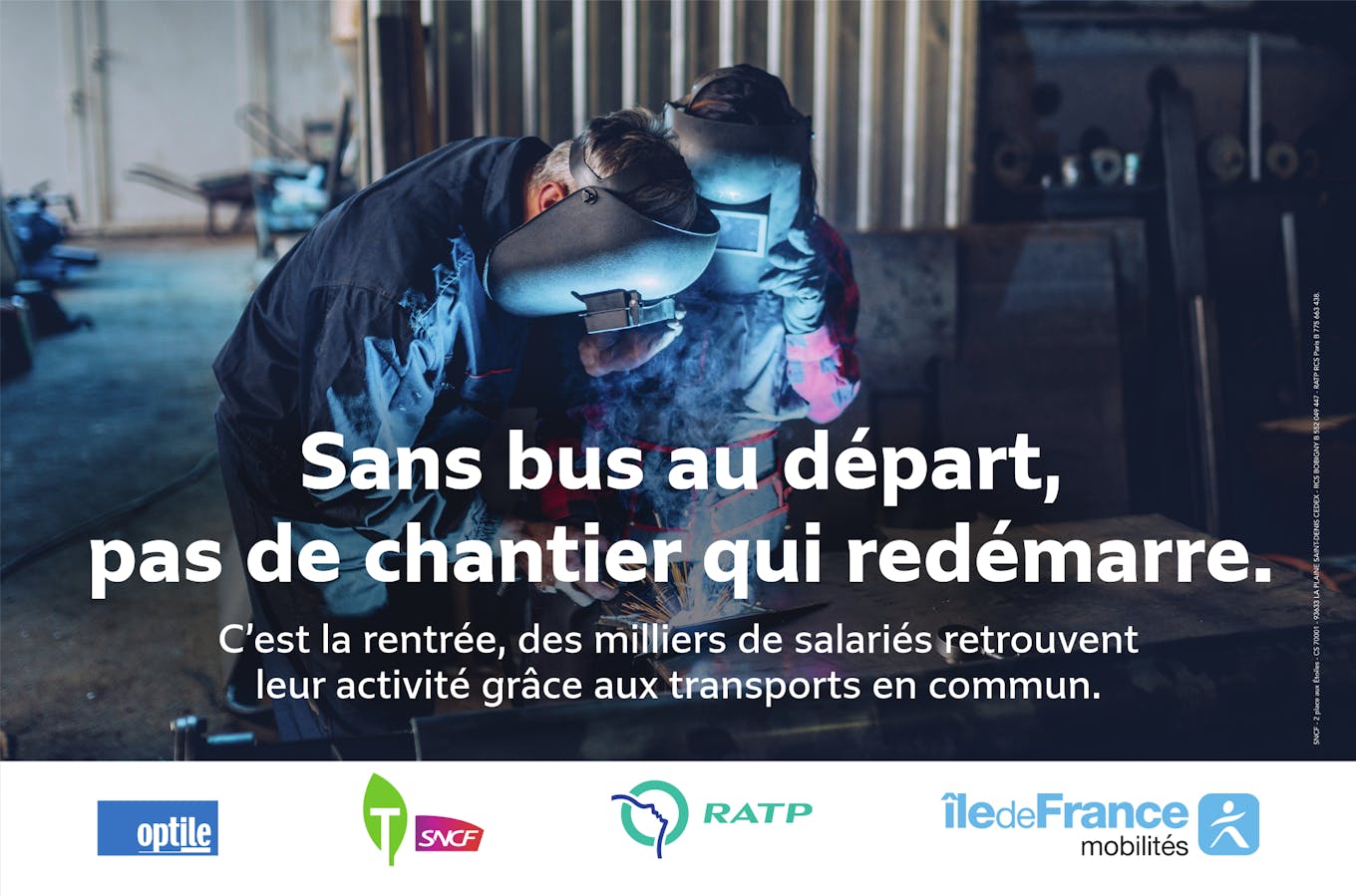
Without a bus at the start, no construction site will restart. It's back to school, thousands of employees are back to work thanks to public transport.
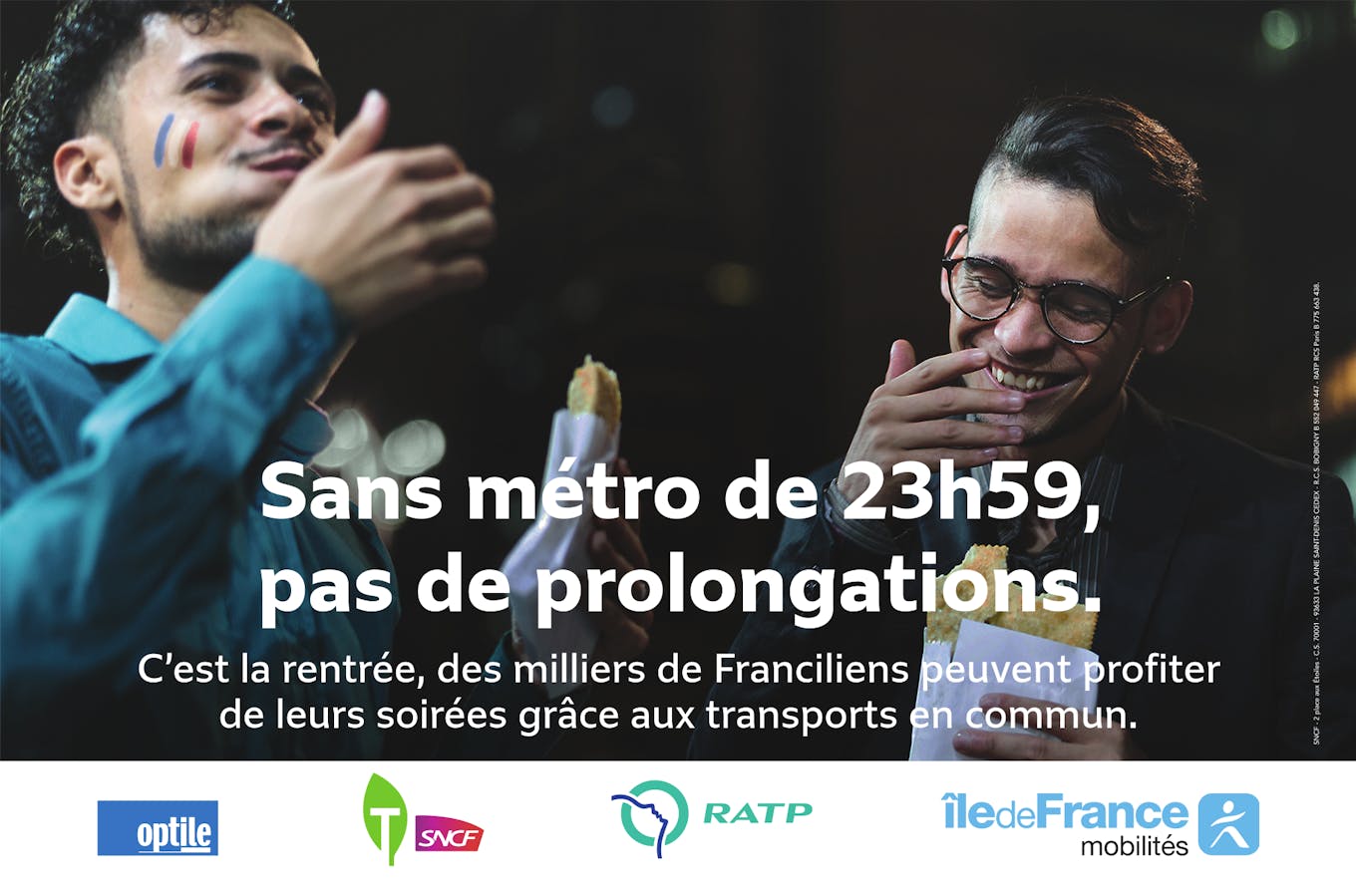
Without the 11:59 p.m. metro, there will be no extensions. It's back to school, thousands of Ile-de-France residents can enjoy their evenings thanks to public transport.
Covid-19: let's stay mobilized for a safe return to school
In order for the start of the new school year to go as smoothly as possible, everyone must be an actor and act at their own level.
We do everything we can to ensure that travel takes place in the best conditions. The cleaning of stations and vehicles is doubled, with detergent and virucidal products:
- at least two daily disinfection actions are carried out in addition to the usual cleaning in metros, trains and trams;
- Cleaning and thorough disinfection is carried out every night or every day in the depots for all buses with virucidal products (by spraying or nebulisation), supplemented by concentrated cleaning on the contact surfaces during the day.
You can also act by respecting the barrier gestures that are essential so that everyone can approach the start of the school year serenely:
- wear a mask for everyone's safety;
- wash your hands before entering the transport network and when you leave it;

Reminder of barrier gestures: wearing a mask, washing your hands, coughing or sneezing into your elbow or a tissue, use single-use tissues and throw it directly in the garbage, greet without shaking hands and avoid hugging.
- use contactless payment methods for your transport tickets;
- avoid traveling during rush hour whenever possible;
- maintain teleworking as much as possible when possible;
- Think about alternative mobility that can be adapted for some of your journeys.
A unique transport network to meet your needs
The health crisis has had a strong impact on public transport ridership, but on average over the past few years, 9.5 million daily trips were made by public transport in Île-de-France! The transport network is also a driving force for the employment of Ile-de-France residents: 100,000 people work to ensure that it runs smoothly.
Every year, no less than 4.6 billion passengers use the network, the scale of which is recalled by the figures below:
- 1,800 km of metro, train and tram:
- 1,500 bus lines;
- 14 metro lines, 4 under construction, and 3 extended;
- 9 tram lines, 4 under construction;
- 13 train and RER lines.
No need to count buses or metros, it would take you a lot of time so we tell you everything! There are about 10,000 buses running on the Île-de-France network, more than 1200 train/RER trains, more than 700 metro trains, and more than 250 tram trains. In short, enough to travel throughout the country.
And because, like you, the transport network is evolving, major work is taking place to further expand the network in addition to the maintenance of existing equipment.
You can find all the projects on the dedicated page:
Services that may be useful to you
Because your journey is not limited to the train, metro and bus, many services are available on the Ile-de-France network. For what purpose? Improve your comfort by making transport more accessible, and by promoting the use of complementary mobility solutions:
- numerous Park & Ride facilities and bicycle parks near Île-de-France train stations to facilitate access to transport;
- 200 micro-working spaces throughout the network to allow you to work;
- Demand-Responsive Transport in order to serve sparsely populated areas and connect them easily to "heavy" modes such as trains or metros;
- carpooling, in particular available via the Vianavigo application,
- Finally, the Véligo Locationelectrically assisted bike rental service, which is continuing its development one year after its launch.
To ensure that you can travel with peace of mind, the emphasis is also on security with more than 900 security and mediation agents, dog detection teams (interventions on suspicious packages), or with the implementation of the emergency number 31 17 available throughout the network.
Transport network and services, to find out more, go to the dedicated page:
See you soon on the network!